Ever wondered whether you should use rubber bands, sinew, or kite string for tie dye? Each one creates totally different results — more or less white space, sharper or softer lines, and different levels of control. So in this post, I’m breaking down the pros and cons of all three and showing you exactly when to use each method.
For this comparison, I dyed three tote bags using Dharma Trading Co. dyes in Coral and Sea Glass. I used the hot water immersion method because it’s quick — you can finish a project in about 20 minutes — and it shows results clearly.
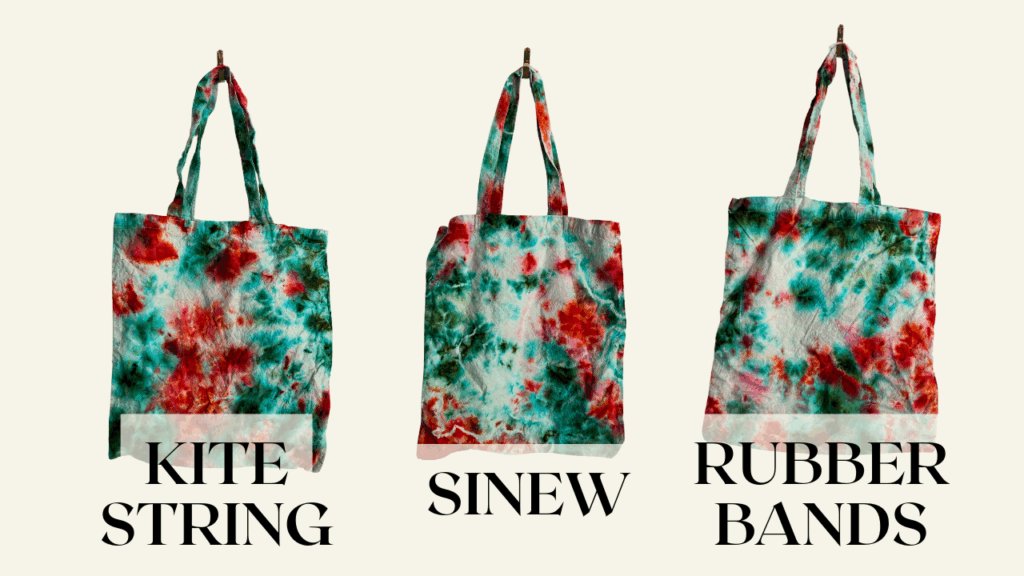
Below you’ll find what each tying method looks like, when I recommend using it, and what to avoid. If you’re new to tie dye or want to explore more fold options, don’t forget to grab my free printable of 12 tie-dye folds — linked below!
I’ve got this post in video form if you’d prefer to see that!
Rubber Bands
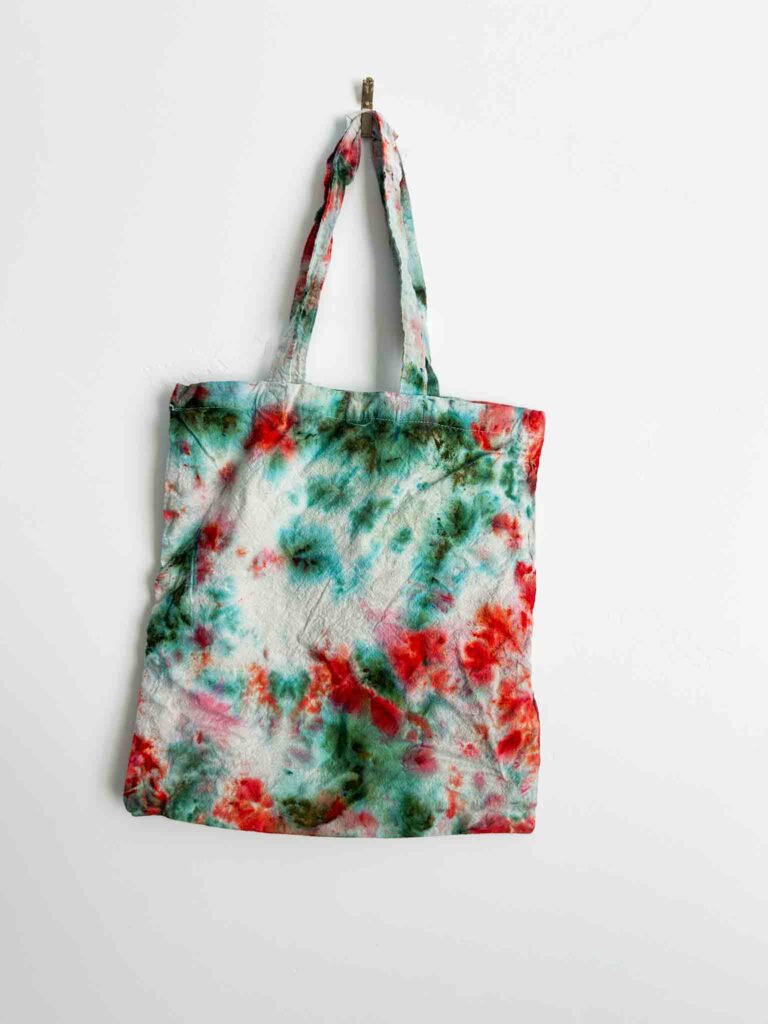
Rubber bands are the fastest and easiest way to bind fabric. You simply scrunch or fold your project and wrap the rubber band around it. Easy, beginner-friendly, and no special tools needed.
✅ Pros
- Fastest method — takes seconds to apply.
- No special tools required.
- Great for beginners and quick projects.
- Works for ice dye, liquid dye, and hot water immersion.
⚠️ Cons
- Creates a “puffy” ball shape — fabric scrunches vertically and horizontally.
- More random white space.
- Can be hard to remove — sometimes needs to be cut off.
- Less control for shapes like hearts, mandalas, or geodes.
🎯 Best For
- Quick scrunch or crumple tie dye.
- Kids or beginners.
- When you want organic, unpredictable patterns.
- Most methods: ice dye, liquid dye, and hot water immersion.
Sinew (Waxed Thread)
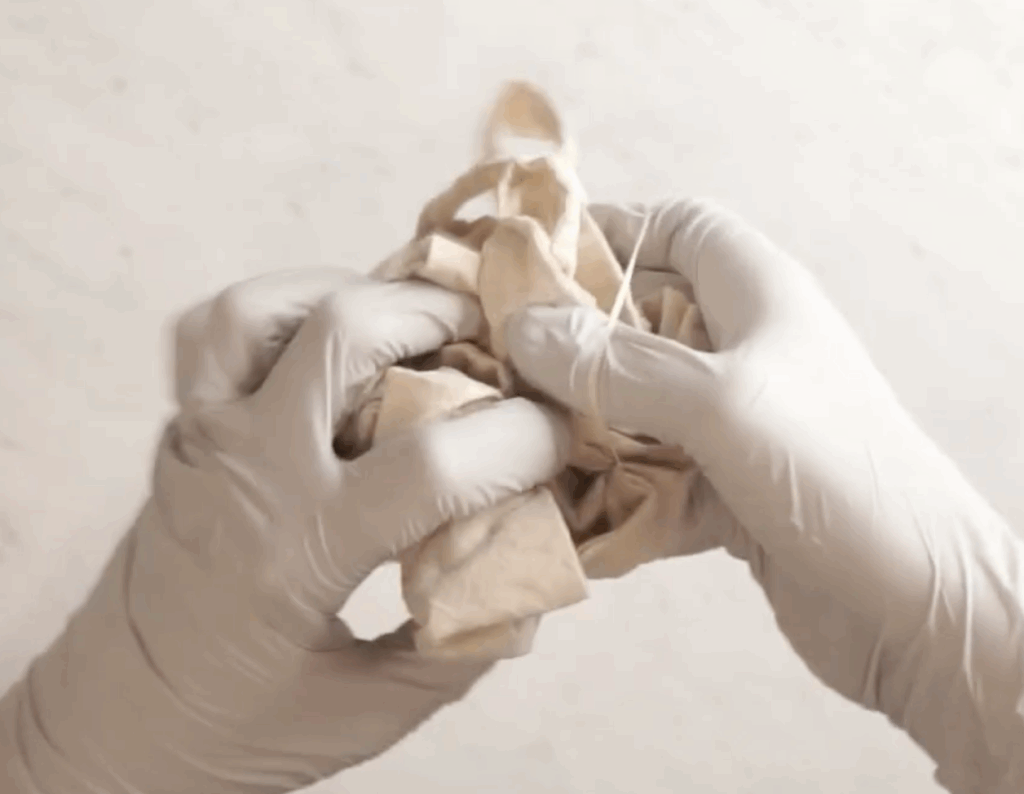
Sinew is a stretchy, waxed cord that locks into itself when pulled tight. It’s what I use for geodes, hearts, mandalas, Jack-o’-lantern faces, and anything that needs crisp, defined lines.

✅ Pros
- Creates super sharp, clean white lines.
- Perfect for detailed shapes.
- Stays tight — no need for rubber bands over top.
- Easy removal — you just unwind.
⚠️ Cons
- Most time-consuming method.
- Can leave a lot of white space if tied very tightly.
- Takes practice to wrap evenly.
🎯 Best For
- Geode tie dye (my favorite use!)
- Hearts, mandalas, pumpkins, or any drawn shape.
- Ice dye and liquid dye — especially when you want dramatic veining.

Kite String
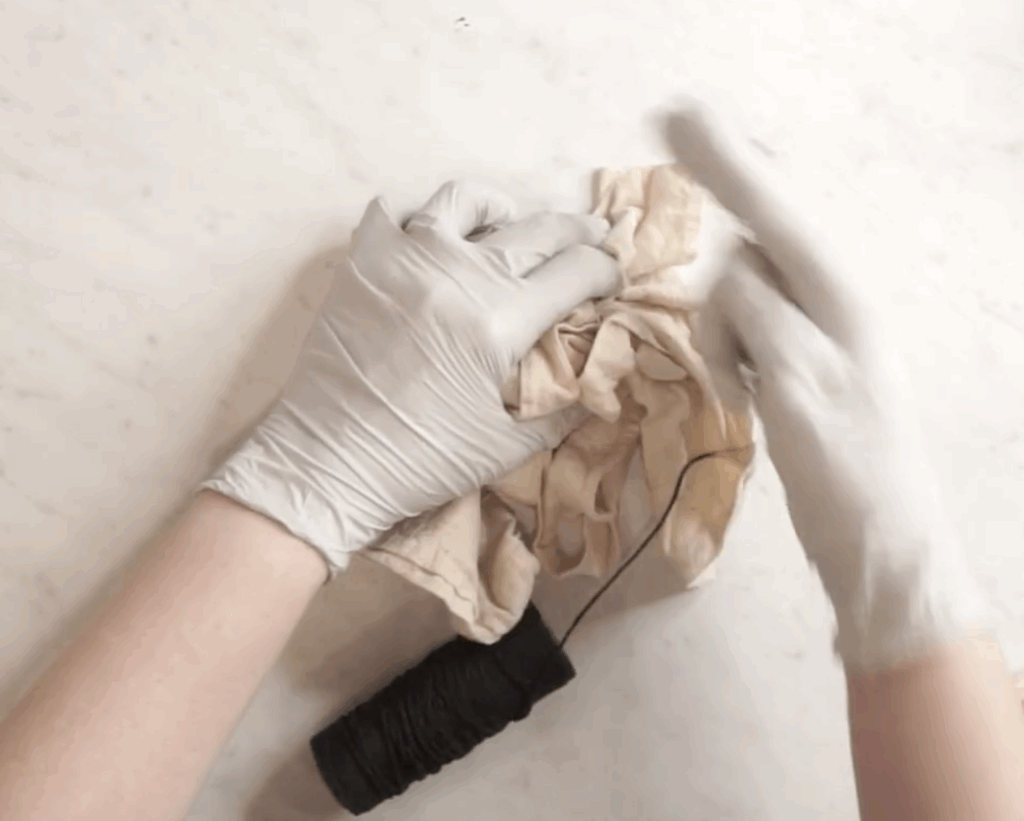
Kite string is similar to sinew, but it doesn’t lock into itself and doesn’t create as much tension. I mostly recommend it for liquid dye projects or when you want to hold fabric flat.

✅ Pros
- Keeps fabric flatter than rubber bands.
- Less white space — more overall color coverage.
- Good for liquid dye or applying color with squeeze bottles.
- Can act like “Magic Tracks” if you don’t have them.
⚠️ Cons
- Not very tight — dye can seep in more.
- Requires scissors to remove.
- Not great for ice dye because you still need Magic Tracks to hold ice.
🎯 Best For
- Liquid dye projects.
- When you want your fold to stay flat.
- Simple scrunches or spirals where clean lines don’t matter as much.
Side-by-Side Results
| Method | Time Required | White Space | Best For |
|---|---|---|---|
| Rubber Bands | Fast | Medium | Scrunch, crumple, beginners |
| Sinew | Slow | High (controlled) | Geodes, shapes, crisp lines |
| Kite String | Medium | Low | Liquid dye, flat folds |
Which One Do I Use Most?
For my ice dye and geode projects, I almost always reach for sinew. If I’m doing quick scrunch dye on shirts, socks, or tote bags — rubber bands all the way. Kite string is the one I use the least, but it’s a good swap if you don’t own Magic Tracks or you’re using liquid dye.
Supplies I Used
- Dharma Dye Colors: Coral & Sea Glass
- Tote Bags: (Add link if you want)
- My Favorite Tie-Dye Tools & Supplies (Amazon Storefront): https://www.amazon.com/shop/annamcnamara?ref=ac_inf_tb_vh
Frequently Asked Questions
Sinew is better if you want sharp, clean lines and controlled shapes like hearts, mandalas, or geodes. Rubber bands are faster and better for loose scrunch or beginner projects.
Yes — sinew is one of the best tools for ice dye because it holds tight and creates bold white veining in geodes and detailed folds.
Kite string is useful for liquid dye or hot water immersion when you want the fabric to stay flatter and don’t need super crisp lines. It’s not ideal for ice dye unless paired with magic tracks.
Rubber bands are the quickest method. They’re perfect for scrunch and crumple dyes but don’t offer as much control as sinew.