If you have ever searched “how to tie dye” and ended up more confused than when you started, this guide is for you. I have been tie dyeing professionally for years, and I wanted to write the resource I wish existed when I started: one place that walks you through the whole process in plain language, without the gatekeeping.
This tie dye guide covers everything a beginner needs: what supplies to buy, how to prep your fabric, four basic folds, the difference between ice dye and liquid dye, common mistakes to avoid, and how to wash your finished pieces so the colors stay bright.
Bookmark it. Come back whenever you need a refresher. Let’s get into it.
1. Supplies You’ll Need to Get Started
The beauty of tie dye is that you do not need much to start. A handful of supplies will get you through your first ten projects. Here’s what to gather before your first dye day.
The must-haves
- Cotton or rayon blanks. Shirts, socks, bandanas, tote bags, pillowcases. Anything 100% cotton or rayon will take dye beautifully. Polyester will not.
- Fiber reactive dye. This is the only kind of dye that bonds permanently to cotton. I use Dharma Trading and Jacquard (my code ANNA gets you 20% off Jacquard).
- Soda ash. The activator that makes fiber reactive dye bond to cotton. Without it, your colors will rinse out.
- Squeeze bottles. For applying liquid dye. Most dye kits include these. If yours doesn’t, hair dye applicators from the drugstore work great.
- Rubber bands or sinew. For binding your folds. Sinew creates crisper resist lines but rubber bands are easier for beginners.
- Nitrile gloves. Latex tears too easily. Get a box and keep them in your dye supplies.
- A bucket or tub. For the soda ash soak.
- A wire rack and tray. Especially important for ice dye, where melt water needs to drain.
- Plastic bags. For the resting stage. Gallon ziplocs work perfectly.
What to avoid
Skip all-in-one kits if you want the brightest possible results. They’re convenient, but the dye is usually weaker than what you get from a dedicated dye company. They work for casual tie dye parties, but if you want vivid, long-lasting colors, invest in real fiber reactive dye.
Also skip anything labeled “all-purpose dye” (like Rit) unless you’re dyeing protein fibers like wool or silk. Rit and similar dyes will fade fast on cotton even if they look bright at first.
Find all my favorite tie dye supplies on my Amazon storefront and Walmart storefront.
2. The Basic Tie Dye Process (Step by Step)
Every tie dye project follows the same five steps. Once you understand the process, you can change up the folds and colors infinitely. Here’s the full sequence from start to finish.
Step 1: Prep your fabric
Pre-wash your blanks in hot water with no fabric softener to remove the sizing that manufacturers add to new clothes. Then mix soda ash with warm water (1 cup per gallon) and soak your fabric for at least 20 minutes. Wring it out so it’s damp, not dripping.
This step is non-negotiable. Skipping it is the number one reason beginner projects fail. Full fabric prep guide here.
Step 2: Choose your fold
The fold determines the pattern. Scrunch gives you a soft organic look. Spiral gives you the classic pinwheel. Bullseye gives you concentric rings. Accordion creates stripes. Pick one and band it tightly with rubber bands or sinew.
The tighter you bind, the crisper your resist lines will be. See my favorite folding techniques here.
Step 3: Apply your dye
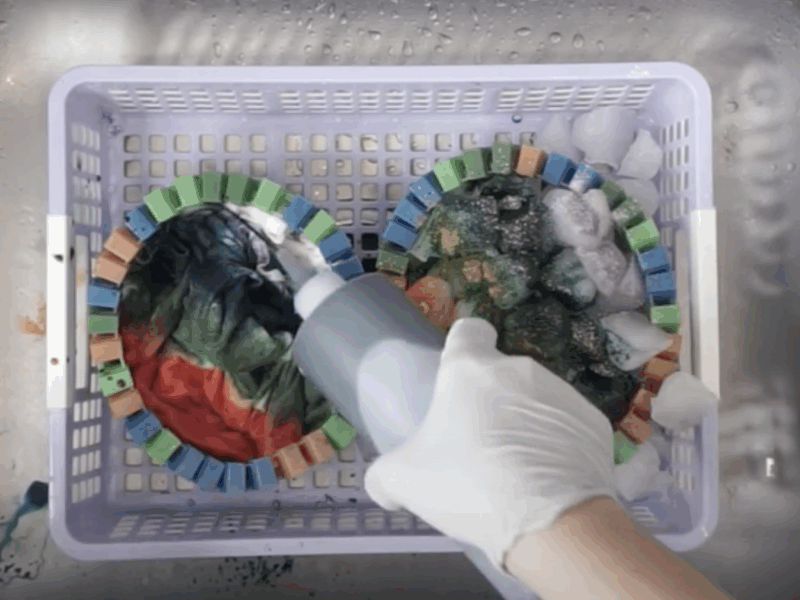
You have two main methods: liquid dye and ice dye. Liquid dye gives you precision and control. You mix the dye with water, fill squeeze bottles, and apply it directly to your folded fabric. Ice dye gives you organic watercolor-esque patterns. You pile ice on top of your folded fabric, sprinkle dye powder over the ice, and let everything melt and develop.
Squeeze dye into the folds (don’t just dab the surface), and flip the bundle to dye the back side too. Compare ice dye vs liquid dye side by side here.
Step 4: Let it batch
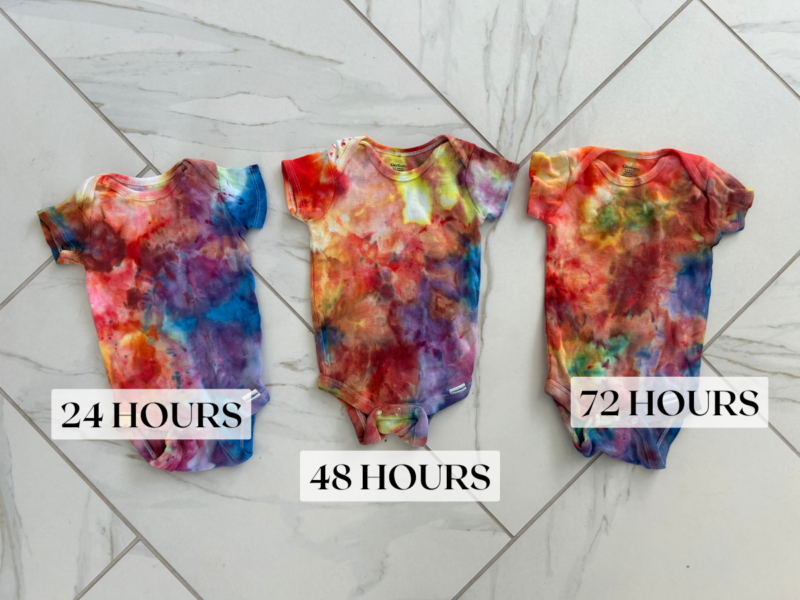
Put your dyed bundle in a plastic bag and let it rest for 8 to 24 hours at room temperature. This is when the chemical reaction between the dye, the soda ash, and the cotton actually happens. Rinse too early and your colors will be dull. The full 24 hours gives you the most vibrant results, especially in cooler rooms.
For thicker fabrics like hoodies, let it rest the full 24 hours. More on batching times here.
Step 5: Rinse and wash
Rinse in cold water with the bands still on until the water runs mostly clear. This pulls out the excess dye before it can bleed onto your white spaces. Then remove the bands, rinse again, and wash the piece in hot water with regular detergent. Wash it alone or with other brand new tie dye for the first wash only.
After this first wash, your tie dye is permanent and can go in with regular laundry. Full washing instructions here.
3. Tie Dye Folding Techniques for Beginners
Your fold determines your pattern. Same dye, same colors, totally different result depending on how you fold the fabric. Here are the four folds I teach to every beginner.
Scrunch fold
The easiest fold there is. Push your fabric into random folds and crumples, flatten everything into a loose disc, and band it lightly. The result is a soft, organic pattern with patches of color and white space. It’s hard to mess up, which makes it perfect for kids or first-timers. It also looks incredible with ice dye.
Spiral fold
The classic tie dye look. Pinch the center of your fabric and twist it flat against your work surface, keeping it on the table as you turn. Band it into wedges (think pie slices), then dye each wedge a different color. The result is the rainbow pinwheel everyone recognizes as tie dye. Full spiral tutorial here.
Bullseye fold
Pinch the front center of your shirt and pull straight up, then band it into sections from top to bottom. Each band creates a ring, so you end up with concentric circles in different colors. It’s bold, simple, and great for one-color or two-color designs. Check out a full tutorial of that here.
Accordion fold
Lay your fabric flat and fold it back and forth like a paper fan, creating long even pleats. Band the bundle in a few spots along its length. The result is stripes. Vary the width of the pleats and the placement of the bands to create different stripe patterns.
Want photo-based instructions for 12 of the most popular folds? Grab my Free Tie Dye Folding Ebook. It’s the resource I wish I had when I started.
Once you’ve mastered the basics, try folding more specific items like socks.
4. Ice Dye vs. Liquid Dye: Which Method Should You Try?
There are two main ways to apply fiber reactive dye, and they give very different results. Most beginners start with liquid dye because it’s easier to control, but ice dye is what I recommend trying once you’ve nailed the basics. Here’s the difference.
Liquid dye
You mix dye powder with water in a squeeze bottle and apply it directly to your folded fabric. The result is bold, defined patterns with strong color separation. Liquid dye gives you precise control over where each color lands, which makes it great for designs like spirals, hearts, and bullseyes.
Best for: beginners, kids, designs with clear shapes, color-block effects, and any project where you want predictable results.
Ice dye
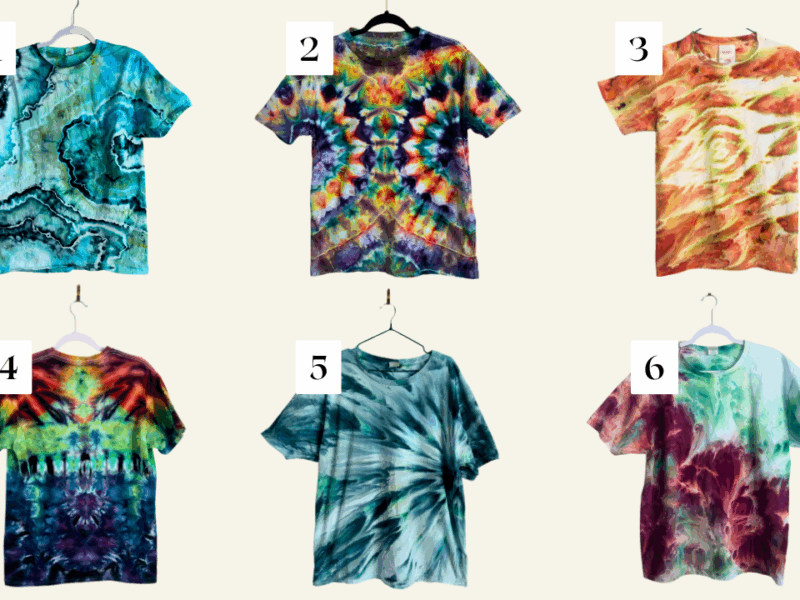
You pile ice on top of your folded fabric, then sprinkle dye powder directly on the ice. As the ice melts, the dye drips through onto the fabric. The melting process slows everything down and creates organic, watercolor-like patterns with beautiful color splits (where a dye separates into its component colors as it travels through the ice). The result is more unpredictable, but the patterns are genuinely stunning.
Best for: organic and watercolor effects, geode patterns, scrunch folds, multi-color blends, and pieces where you want texture and depth.
If you want to see both methods side by side on identical shirts, check out my ice dye vs liquid dye comparison. And for a full ice dye walkthrough, see how to ice dye a shirt.
5. Reverse Tie Dye: A Guide for Dark Fabric
Fiber reactive dye only adds color to fabric. It cannot lighten or remove color. So if you want a tie dye pattern on a black or dark-colored shirt, you need to do the opposite: remove color in patterns, then optionally add color back in. This is called reverse tie dye.
Reverse tie dye with bleach
Bleach is the most common method. You fold and band your dark fabric the same way you would for regular tie dye, then apply diluted bleach to the surface. The bleach lifts the dye out of the exposed areas, creating light patterns on a dark background. Always work in a ventilated area and stop the reaction by rinsing thoroughly once you reach the color you want.
Reverse tie dye with toilet bowl cleaner
Yes, really. Bleach toilet bowl cleaner contains bleach, which removes dye from cotton more controllably than liquid bleach. The results tend to be more orange or coppery instead of pure white, but it’s a great option if you want a vintage look. Full toilet bowl cleaner tutorial here.
Reverse tie dye with White Brite
White Brite is a laundry whitener that works as a gentler alternative to bleach. It removes color more slowly and produces softer, more even results. Best for beginners who want to try reverse dyeing without the harshness of bleach with damage to the fabric. See White Brite vs bleach compared here.
6. Common Tie Dye Mistakes (and How to Fix Them)
I have made every single one of these mistakes at least once. Save yourself the trouble.
- Skipping the soda ash soak. Your colors will rinse out in the wash. There’s no skipping this step. If you forgot, you can spray soda ash solution onto the bundle after dyeing, but pre-soaking is always better.
- Using polyester or blend fabrics. Fiber reactive dye does not bond to synthetic fibers. Always check the tag and look for 100% cotton or rayon.
- Rinsing too early. The dye needs at least 8 hours (24 for thicker fabrics) to fully react. Rinsing at 4 hours gives you dull, patchy colors.
- Mixing complementary colors next to each other. Red next to green, blue next to orange, purple next to yellow all turn muddy brown where they touch. Stick with analogous colors (next to each other on the color wheel) or leave white gaps between contrasting colors.
- Not using enough dye. Skimping on dye makes pastel, washed-out results. It’s better to mix less dye at full strength than to water down what you have.
- Only dyeing one side. Flip your bundle and dye the back. Dye does not soak through dense folds on its own.
- Washing the first wash with regular laundry. Unreacted dye bleeds. Wash new tie dye alone or with other brand new tie dye for the first cycle only.
For more troubleshooting (faded colors, bleeding, color mistakes, and more), see 15 tie dye mistakes and how to avoid them.
7. Beginner-Friendly Tie Dye Project Ideas
Once you’ve got the supplies and the basic process down, here are easy projects that look impressive without being complicated.
One-color tie dye
Start with a single color. The white space becomes the design, so the focus is on your fold rather than color blending. Stunning results, very low pressure. See one color tie dye project ideas.
Ice dye scrunch shirt
The easiest “wow” project there is. Scrunch your shirt, pile ice on top, sprinkle dye powder over the ice, and walk away. The results look like watercolors and feel impossible to mess up. Full ice dye tutorial here.
Black tie dye
Counterintuitive but striking. True black dye on white fabric produces gorgeous gradients of gray, blue, and purple as the dye separates. It’s also one of the most forgiving dyes because there’s no risk of muddy color mixing. How to tie dye with black.
8. Next Steps (Once You’ve Got the Basics)
When you’re ready to move beyond beginner projects, here’s where to go next – 6 Tie Dyes Ranked by Difficulty.
- Geode tie dye. Dramatic, mineral-inspired patterns made with sinew. The most rewarding intermediate technique. Geode tutorial.
- Heart folds. A favorite for gifts and birthday parties. Heart fold tutorial.
- Multi-color ice dye. Layering several dyes in one ice dye project creates extraordinary color splits and depth.
- Hoodies and thicker garments. Bigger surface area, more dye, more dramatic results. How to tie dye a hoodie.
Frequently Asked Questions
What are the essential supplies for tie dye?
The five essentials are 100% cotton or rayon fabric, fiber reactive dye, soda ash, rubber bands or sinew for binding, and nitrile gloves. Everything else (squeeze bottles, buckets, drop cloths) is convenience rather than necessity.
What’s the best tie dye kit for beginners?
For convenience, kits like the Tulip One-Step or Create Basics tie dye party tub from Walmart give you everything in one box for around $10 to $20. For better results, I recommend buying fiber reactive dye, soda ash, and squeeze bottles separately from Dharma Trading or Jacquard. The dye is significantly more vivid.
Where can I buy professional-grade tie dye supplies?
Dharma Trading Company and Jacquard Products are the two main sources for professional-grade fiber reactive dye in the US. Both ship internationally, and both have a much wider color selection than craft store kits. My code ANNA gets 20% off at Jacquard.
Is tie dye eco-friendly?
Fiber reactive dyes are considered relatively low-impact compared to other textile dyes. They bond directly to the fiber, which means there’s less unreacted dye in your wastewater. To make your tie dye practice more sustainable: use natural fibers, buy quality blanks that will last, dispose of unused dye responsibly, and consider dyeing thrifted clothing instead of buying new.
Can I tie dye polyester or polyester blends?
Fiber reactive dye will not bond to polyester. A 50/50 blend will dye but the colors will be muted (basically half-strength because only the cotton portion takes the dye). For 100% polyester, you’d need a special disperse dye and a much more involved process. Stick with 100% cotton or rayon for beginner projects.
How long does tie dye last?
Fiber reactive dye is permanent. If you’ve used soda ash and let the dye batch for the full time, your colors should stay vibrant for years and many washes. The biggest fading culprit is using all-purpose dye like Rit instead of fiber reactive dye.
Final Thoughts
Tie dye does not have to be complicated. A few good supplies, a basic process you can repeat, and a willingness to experiment are all you really need. Your first project might not be perfect, and that’s the best part: every project teaches you something for the next one.
Bookmark this page and come back whenever you need a refresher. And if you make something you love, tag me. I love seeing what you create.
Happy dyeing,
Anna
- Free Ebook: 12 Tie Dye Folding Techniques
- Shop my handmade tie dye: Practical and Pretty on Etsy
- Supplies I use: Amazon storefront and Walmart storefront