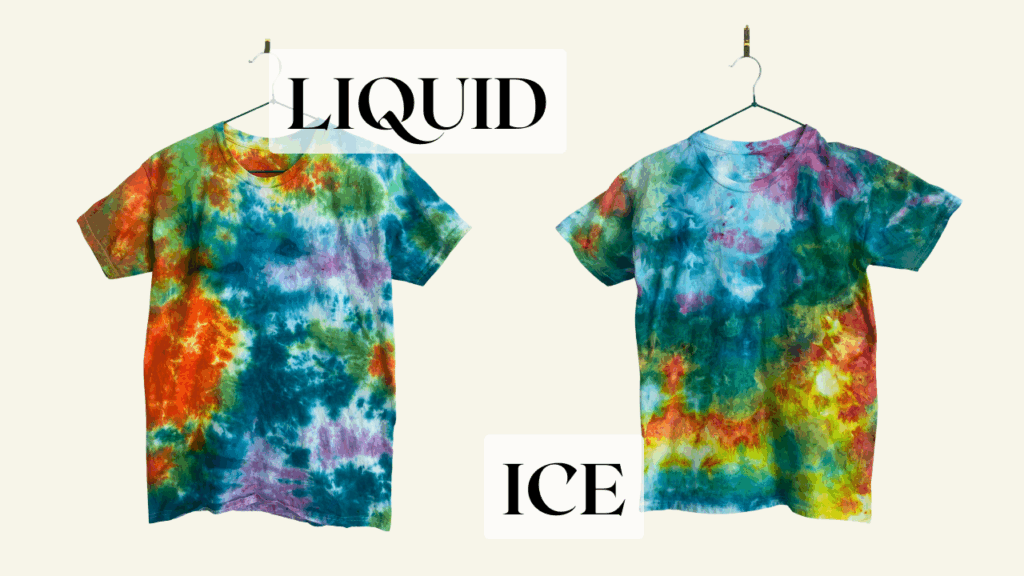
If you’ve ever wondered about the real difference between ice dye vs liquid dye, you’re not alone! Both methods create stunning results, but the process (and the final look) can be very different. In this post, I’m breaking down the results of a simple scrunch tie dye pattern using the same colors in both liquid and ice dye form—so you can see exactly how they compare.
What’s the Difference Between Ice Dye and Liquid Dye?
- Ice Dye: You sprinkle powdered dye over ice cubes sitting on the fabric. As the ice melts, it carries the dye through the folds, creating unexpected blends and dramatic color splits.
- Liquid Dye: You mix powdered dye with water and apply it directly with a squeeze bottle. It’s more controlled but often produces more solid blocks of color with less splitting.
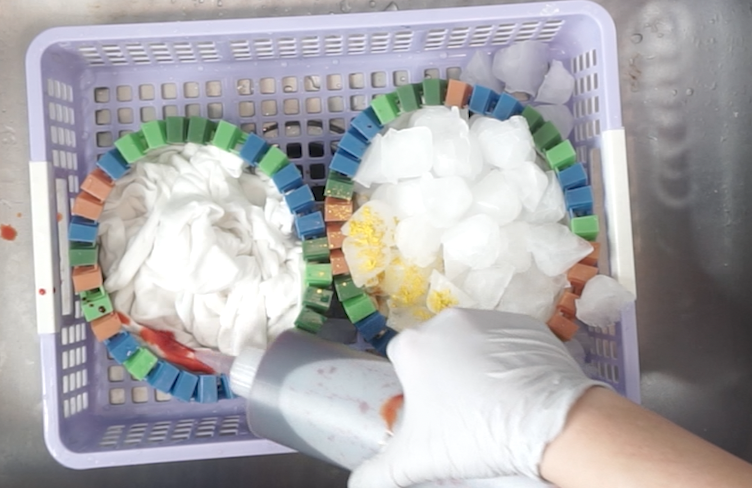
Both methods use the same fiber-reactive dyes (I used Dharma Trading dyes here), but the application method changes the outcome.
🧊 Ice Dye vs 💧 Liquid Dye: Side-by-Side Comparison
| Feature | Ice Dye | Liquid Dye |
|---|---|---|
| Application | Sprinkle powdered dye over ice cubes that melt onto the fabric | Mix dye with water and apply using squeeze bottles |
| Look & Style | Organic, watercolor-like blends with dramatic color splits | Solid, bold color blocks with less blending |
| Control | Less control over placement, results are more random | High control—great for spirals, hearts, mandalas |
| Mess Factor | Less messy—ice does the work | Messier—liquid drips and bottles can leak |
| Batching Time | Longer (must wait for ice to melt + set time) | Shorter (set time starts immediately) |
| Supplies Needed | Ice, rack, powdered dye, mask for safety | Squeeze bottles, gloves, mixing containers |
| Color Vibrancy | Often brighter due to unexpected splits | Truer to the original dye color |
| Best For | Geodes, scrunch patterns, abstract looks | Controlled designs, kids’ projects, group tie-dye |
Before you start, make sure you have the right supplies! I put together a full guide to the Best Tie-Dye Supplies I use for every project — check it out here.
My Experiment: Scrunch Tie Dye Pattern
To really compare ice dye vs liquid dye, I did a side-by-side test using the scrunch method. Both shirts were 100% cotton and pre-soaked in soda ash to help the dye bond.
- Colors Used: Tangerine, Dragon Heart, Kingfisher, and Sweet Pea
- Ice Dye Setup: Shirt scrunched on a rack with ice cubes on top, dye sprinkled over ice
- Liquid Dye Setup: Shirt scrunched on a rack, dye applied with bottles directly to the fabric
Always remember to prep your fabric for tie dye the right way before you begin!
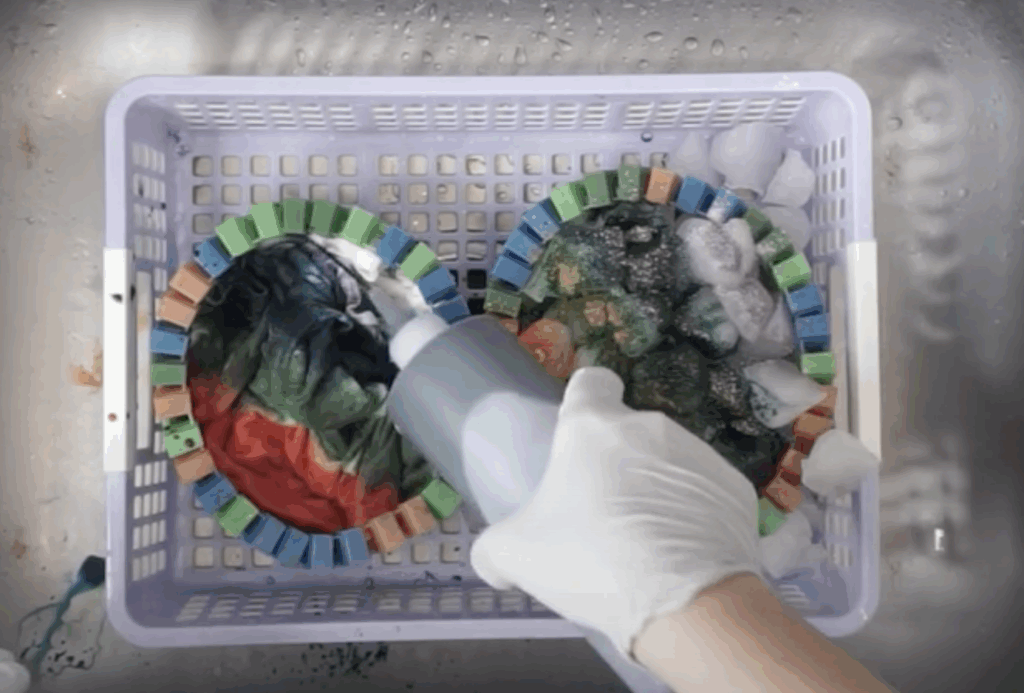
The Results: Ice Dye vs Liquid Dye
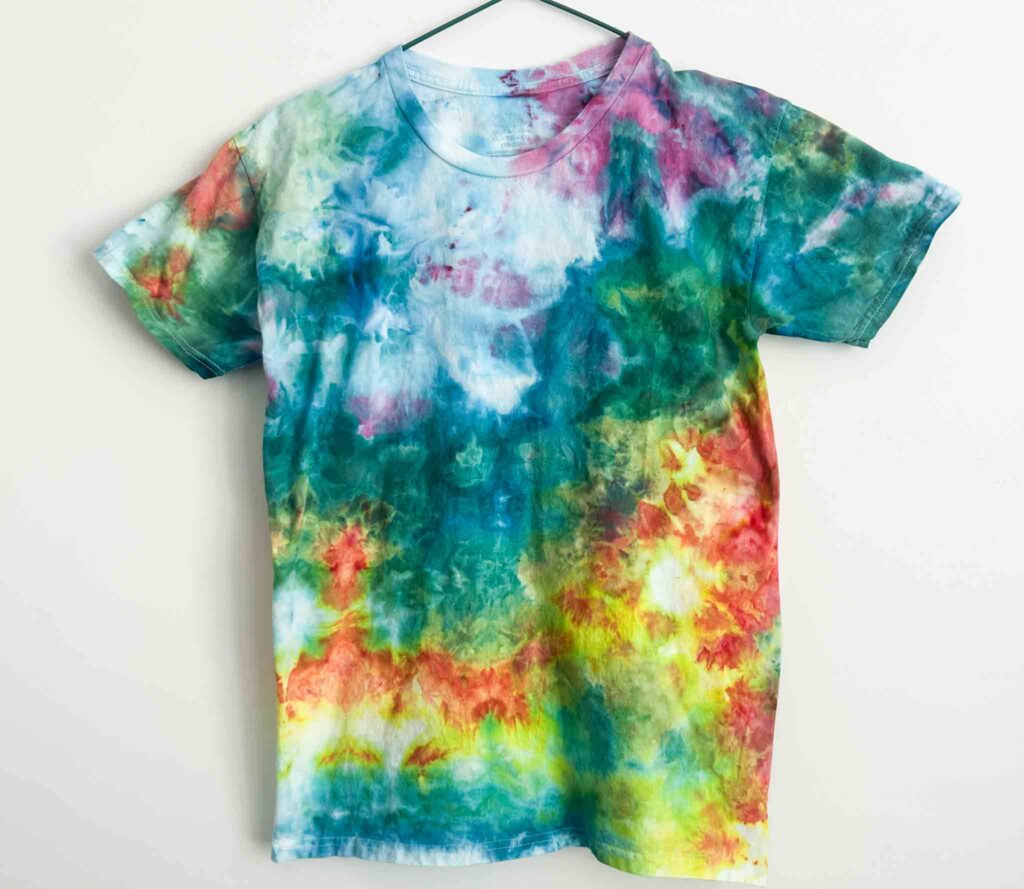
✨ Liquid Dye
- Colors stayed more true to their original tone (Tangerine was orange with a hint of yellow split, Dragon Heart turned into a deep green).
- Coverage was uneven unless I flipped the shirt and applied dye to the back.
- Messier to work with—liquid dye tends to drip and leak during prep.
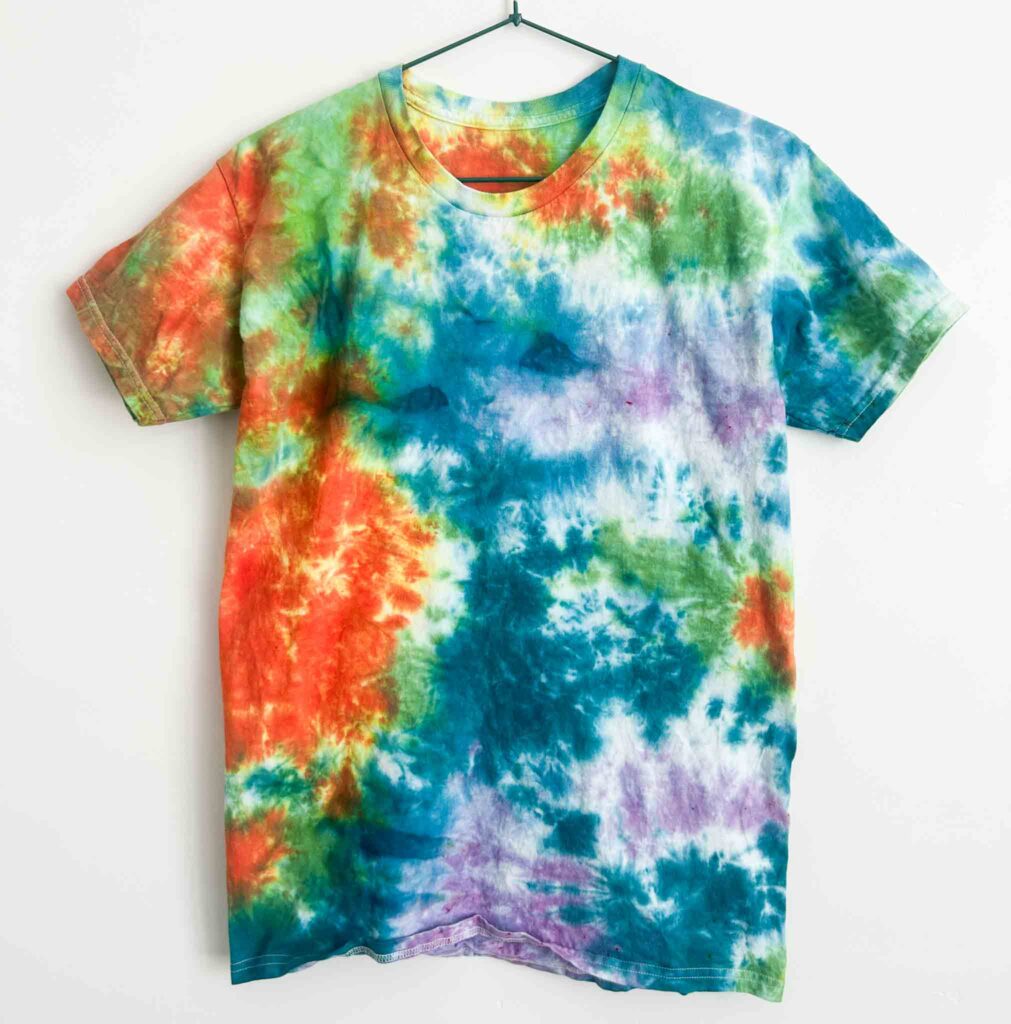
❄️ Ice Dye
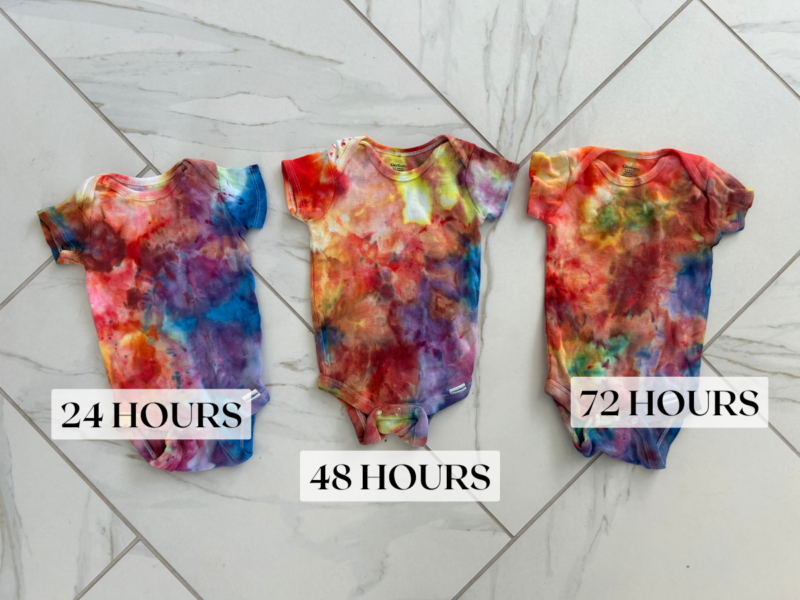
- Tons of variation and blending. Tangerine split into orange and yellow, Sweet Pea split into blue and purple.
- Dye penetrated through the whole shirt without flipping.
- Easier cleanup—just let the ice do the work.
Want to know what kind of ice works best for ice dye? I have that covered for you.
Final Breakdown of Pros and Cons
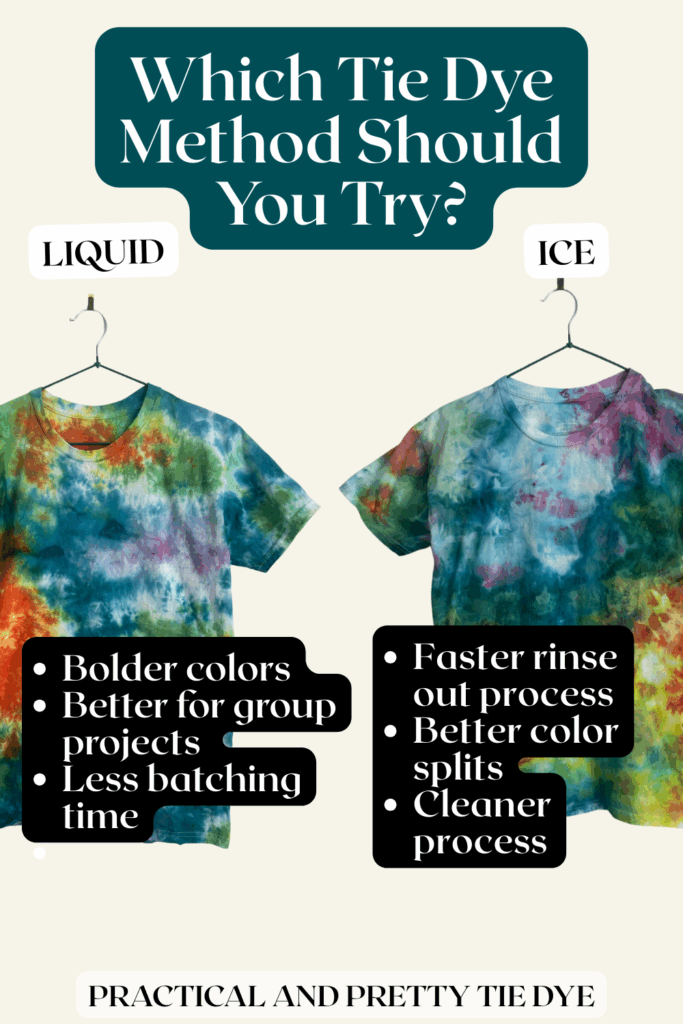
Liquid
Pros
- Great option for groups because you can mass produce it and the batching time is shorter.
- Batching time is shorter because you don’t have to wait for the ice to melt.
- Great control for specific folds like hearts, mandalas or other shapes.
Cons:
- Quite messy. I have pretty high quality bottles and they leak and splatter.
- Requires prep. You need to prepare the bottles and mix the liquid.
- The washout process is longer.
- You can waste dye if you mix too much and then you’ll have it in liquid form which goes bad after about 2 weeks (more like 2 hours if you add soda ash!)
For smome examples of classic tie dye mistakes check out this post here.
Ice Dye
Pros:
- Less messy. Just add some ice and sprinkle the dye. It doesn’t require a big plastic sheet to protect your area if you’re careful!
- Splits! You won’t achieve beautiful splits with liquid, as you can with ice.
Cons
- Batching time begins after the ice melts, so it takes a bit of time.
- Harder to control the dye placement.
- Sometimes you might get some speckles from the powdered dye.
- Requires protective gear like a mask because of the nature of the powder.
Which One Should You Try?
- Want more control? Go with liquid dye.
- Love surprises and blended colors? Ice dye wins every time.
It depends on your goals:
For me, ice dye takes the crown. The color splits and organic patterns it creates are hard to beat, especially for scrunch tie-dye patterns.
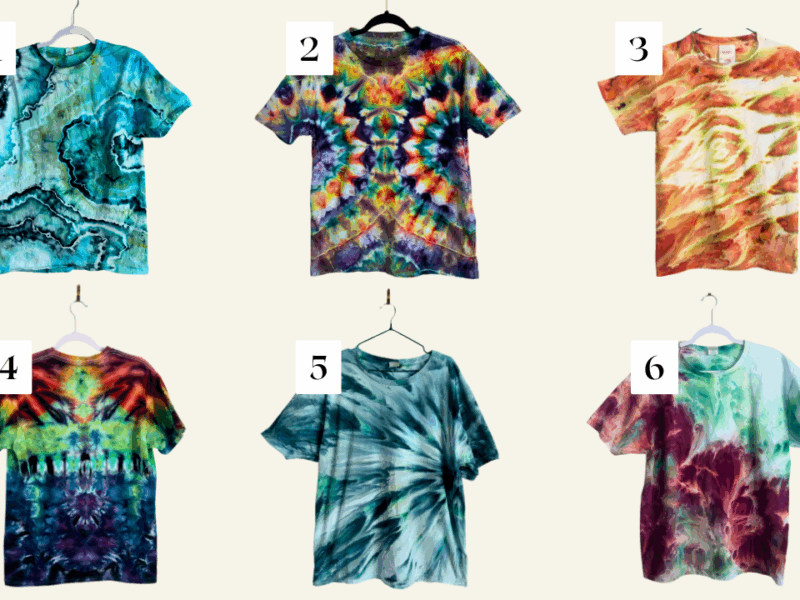
More Tie Dye Tutorials You’ll Love
- How to Ice Dye a Shirt
- One Color Tie Dye Projects That Still Look Amazing
- How to Tie Dye with Black (and Get True Results)
Liquid VS Ice Dye Technique FAQs
Yes! If you are using procion dyes (Dharma, Jacquard, Dyespin) then you need soda ash. I suggest creating a soda ash soak solution.
As long as they are both done with proper steps, one will not last longer than the other. They should both hold up well with continued washes and wear.
In my experience, yes. Because you can’t always predict how much liquid you’re going to need, inevitably, some of the dye will be left over, leaving you a bit of waste. The more you do it, the more you’ll get a feel for how much liquid you need.
I would say ice dye is better for beginners because it requires less setup; however, I do recommend a mask. So for that reason, kids may do better with liquid. Just know it’s easy to get liquid everywhere, so it can be much messier.
Recommended Supplies
To see all the supplies in one place you can check out my Amazon Storefront here.
Liquid Dyeing Supplies
Ice Dyeing Supplies
- Rack of some sort (I use these letter organizers but you can use a cookie rack as well)
- Tote for run off
- Gloves
- Mask
- Dye
- Soda Ash
- Spoon to distribute dye
Final Thoughts
Whether you choose ice dye vs liquid dye, you can’t really go wrong. Both methods create unique shirts that are one of a kind. But if you’re after vibrant tie dye patterns with lots of dimension, give ice dye a try—you might just fall in love with the results!
📚 Grab my free Tie Dye Folding eBook with 12 beginner-friendly patterns → Download here
🛍 Shop my one-of-a-kind tie dye pieces → Visit my Etsy store
🛒 My favorite tie dye supplies → Check my Amazon storefront
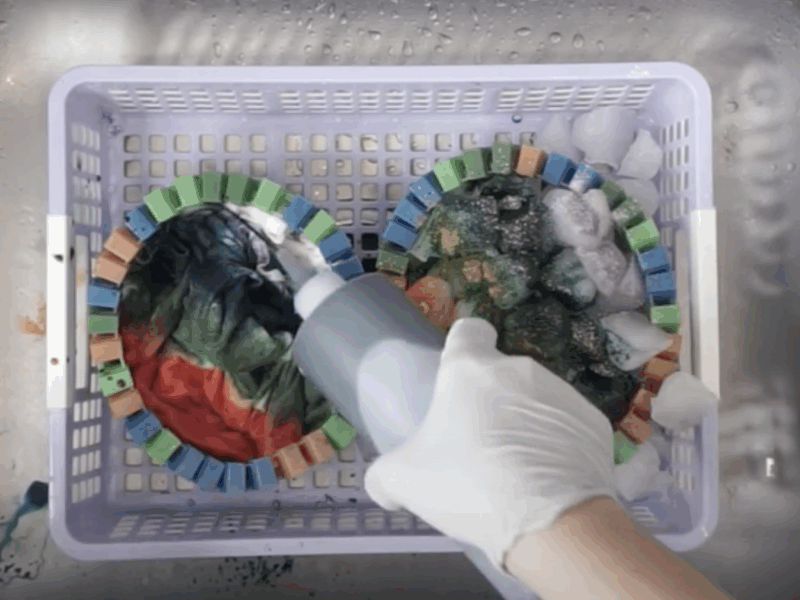
In one of your photos you have a little fence around 2 projects. Is this just to keep them apart? On your Amazon store, you have two different types. Do you recommend one over the other?
PS: Love your site and love your instructions.
Hey Jan! I recommend magic tracks over the silicone molds but it’s really up to what is available (sometimes you can find them used on Facebook or thrift stores)! Some people even create them out of things they find at the dollar store. I’ve also used tin foil. Really it’s just a way to keep the ice on top of the project so I don’t have to balance it!