Summer is not the only time to tie dye! Fiber reactive dye (like Procion MX) bonds to cotton through a chemical reaction, and that reaction slows way down in a chilly room. If the dye doesn’t have enough time or warmth, a lot of it rinses right down the drain.
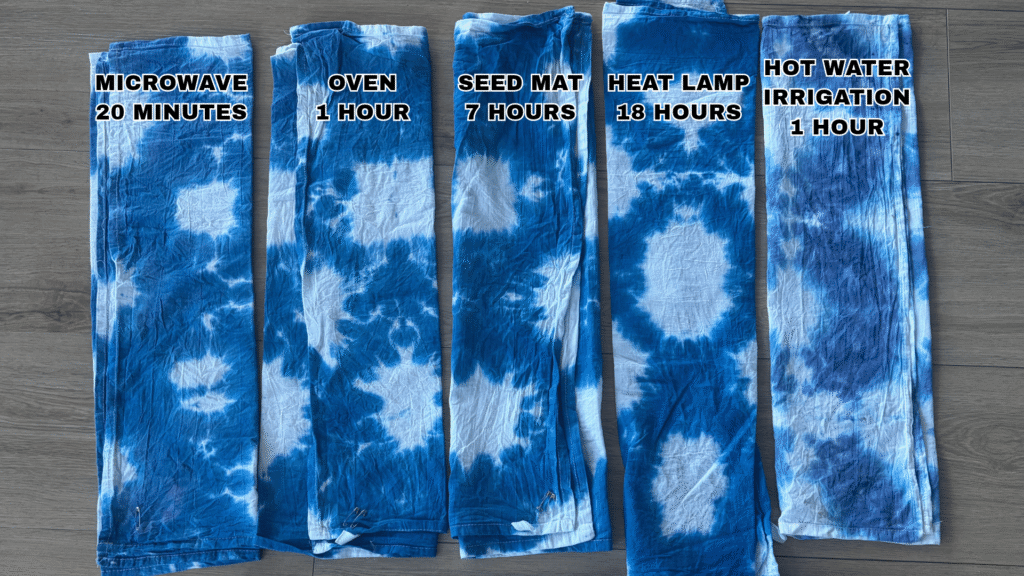
So I tested 5 different ways to warm up your tie dye. I used the microwave, the oven, a seed mat, a heat lamp, and hot water irrigation, and I took the temperature of the fabric along the way. These also work any time you want to finish a project faster.
How I Set Up the Test
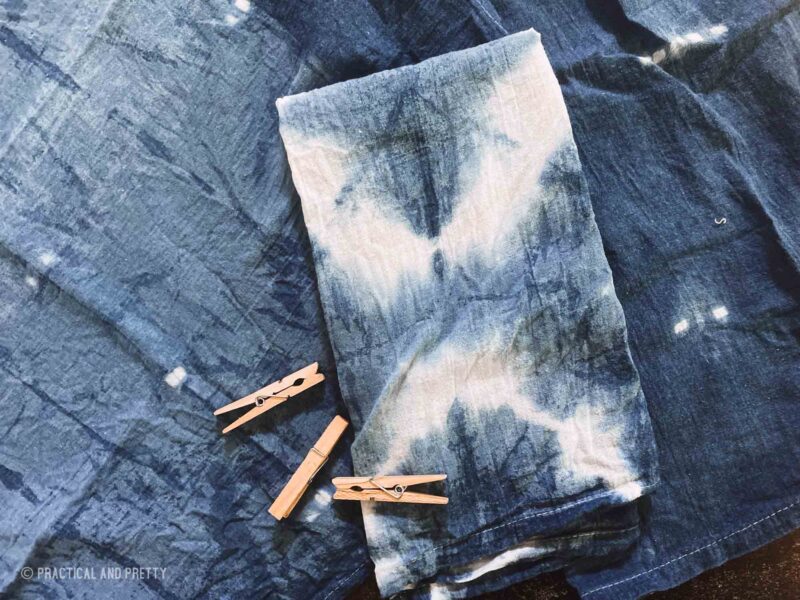
I tied a stack of tea towels in a triangle fold and dyed each one the same way. I ran the color along the long edge of the triangle and left some white space at the top. The color is Bamboozled, a special edition true blue I have way too much of.
I used liquid dye on purpose. Ice melts at different speeds depending on how warm it is, and I didn’t want that messing with the results. Ice dye works with every one of these methods too. Just start your clock once the ice has fully melted.
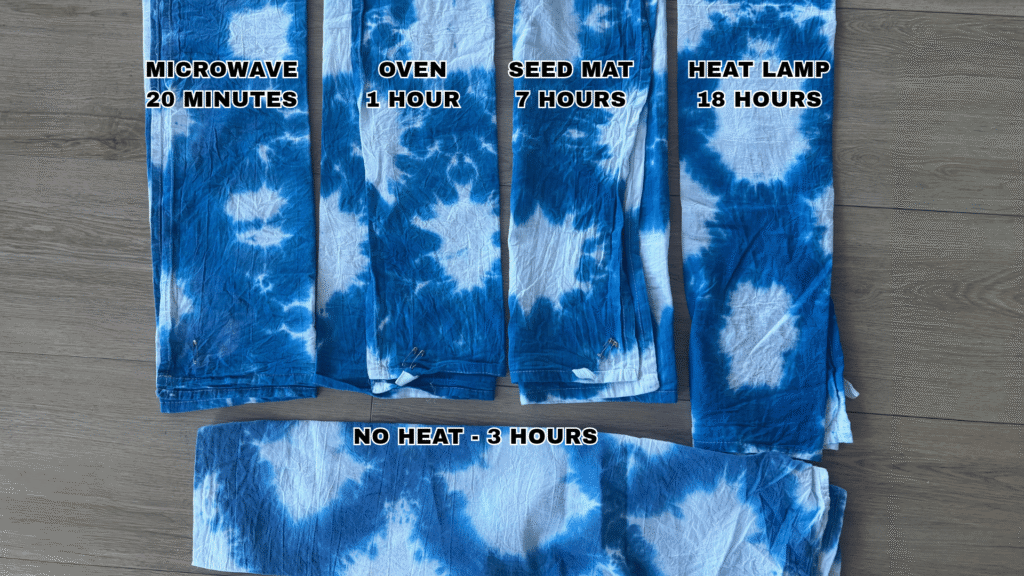
One towel was my control. It got no extra heat at all, and I rinsed it out after only 3 hours. Everything else went to its own warming method.
To check the temperature, I used a regular meat thermometer tucked into a fold. My room was 76°F, and the fabric started out at about 70°F.
Below you will find a general guide I use when batching.

Results at a Glance
| Method | Fabric temp | Time until rinse | Result |
|---|---|---|---|
| Microwave | 132°F, cooling to 95°F | About 20 minutes | Good color, could have sat longer |
| Warm oven | 120°F after 1 hour | About 1 hour | Bold, even better than the microwave |
| Seed mat | 84°F at 1 hour, 92°F at 3 hours | 6.5 hours | Rich, even blue |
| Heat lamp | About 81°F | 24 hours | Good color, slow |
| Hot water irrigation | 80 to 99°F | About 20 minutes | Lighter, with purple splits |
| Control (no heat) | 77°F | 3 hours | Noticeably faded |
1. Microwave: The Fastest Option
The microwave is by far the quickest way to tie dye. My towel was rinsed and done in about 20 minutes.
I meant to microwave it for 30 seconds and accidentally left it in for 45. It came out steaming at 132°F. That’s hot enough that the dye can stop reacting, so don’t go much past that. After 15 minutes of sitting it had cooled to 95°F, and I rinsed it out. The color looked pretty good, though I think it could have used a little longer.
- Make sure your project is damp. You never want it bone dry in the microwave.
- Wrap it up tightly or put it in a microwave-safe container.
- Microwave for about 30 seconds and check the temperature.
- Let it sit for 15 to 20 minutes, then rinse.
The catch: You need a microwave that’s only for dyeing. Don’t use the one you heat up food in. A secondhand one from a thrift store works great.
2. Warm Oven: Fast and You Already Have One
The oven towel came out even better than the microwaved one. It took about an hour total. My oven heated up in around 5 minutes, and the towel sat inside for an hour.
Turn the light on and leave it on, I learned this trick from making bread. After an hour, the fabric was at 120°F and ready to come out.
- Wrap your project up really tight so no dye can drip.
- Set your oven to 170°F, then turn it off once it’s warm.
- Turn on the oven light.
- Put your project inside and leave it for about an hour.
If your oven has a proofing setting, that works great too.
The catch: Dye that drips onto your oven can contaminate it, and an oven is a big expensive appliance you don’t want to ruin. Keep your fabric wrapped tight, or set it in a pan you only use for dyeing. Some people believe doing anything like this in your oven will contaminate it no matter how wrapped up your project is. So keep that in mind.
3. Seed Mat: My New Favorite
Seed mats are heat mats made to help seeds sprout. I had never used one before this test, and it surprised me. I figured it would hover around 80°F. After an hour it was at 84°F, and by the 3 hour mark it had climbed to 92°F. With this you need the project close to the mat. Racked projects didn’t work as great for this method but I didn’t have them fully covered either.
I rinsed it out at 6 and a half hours and got a gorgeous, rich blue. That’s pretty quick for such good color.
- Plug in the seed mat.
- Set your project in whatever you normally batch in. I used a glass cake pan. (Not racked)
- Lay a cover over the top to hold the heat in.
- Let it sit for about 6 hours, then rinse.
I got two seed mats for about $15.
This is the method I’d recommend most to a new tie dyer. It’s cheap and works with whatever setup you already batch in.
4. Heat Lamp or Warm Room: Slow but Simple
A heat lamp is what I’ve always used in the winter. You’re basically warming up a small room so it feels like batching in the summer.
I set my towel in front of the heat lamp and checked it after an hour. It was only at 81°F, and it stayed right around there. My control towel in the same room was at 77°F, so the difference wasn’t huge in my already warm room. If you’re starting in a 60°F garage, a heat lamp or space heater might make a bigger difference.
This towel took 18-24 hours to batch. The color turned out good. It just took a long time and used a lot of electricity to heat the whole room.
- Pick a small room you can close off.
- Set your project near the heat lamp or space heater.
- Let it batch for about 24 hours, then rinse.
Safety note: Keep fabric, plastic bags, and dye bottles a safe distance from any heater, and don’t leave one running unattended.
After this test, I’m switching to the seed mat.
5. Hot Water Irrigation: No Mixing Required
Hot water irrigation lets you tie dye without mixing any liquid dye at all. You sprinkle dye powder right on the fabric and spray it with boiling water. The heat comes from the water, so it works great in winter.
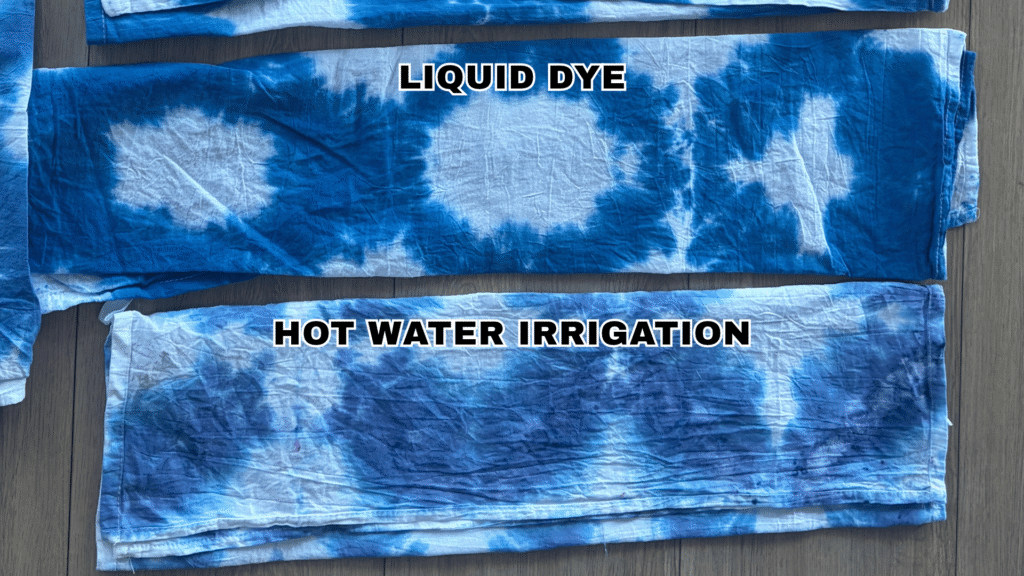
I used the same Bamboozled powder and sprinkled it where I had squirted the liquid dye on the other towels. The fabric read 80°F in some spots and 90°F on top. After I flipped it and sprayed the other side, it was at 99°F. I let it sit for about 20 minutes and rinsed it out.
The color came out lighter than the others. I don’t think my water was quite hot enough and I should have let it sit longer. Like ice dye, the powder also split a little, so I got some purple showing up in the blue.
- Sprinkle dye powder directly onto your tied project.
- Boil water and pour it into a pump sprayer. Twist the top on tight so no air escapes.
- Spray the hot water over the powder until it dissolves. Flip and repeat.
- Let it sit for about 20 minutes, then rinse.
Pump sprayers come in half gallon, one gallon, and two gallon sizes. I used a gallon, and half a gallon would have been plenty. The water splatters a bit, so working in a sink helps.
Safety note: Boiling water burns fast. Wear gloves and point the nozzle away from yourself.
What Happens When You Don’t Batch Long Enough
My control towel sat in a 77°F room with no extra heat. I rinsed it at 3 hours, which usually isn’t enough time, and the blue came out noticeably faded next to the oven towel.
That’s the whole reason to warm up your dye. When it doesn’t get enough time and warmth, it never fully bonds to the fabric, and the extra color washes away.
I’d give any project at least 6 hours, and longer if your house runs cool.
Bonus: Crock Pot
I didn’t test a crock pot, but a lot of people batch in one. You can usually find one at a thrift store for a few dollars.
I’m skipping it because a crock pot doesn’t fit much. In the winter I’m usually batching hoodies, sweatshirts, and sweatpants, and those just won’t fit. If you mostly dye smaller things, it could work well for you.
- Use a crock pot that’s only for dyeing. Never cook food in it again.
- Set it to Warm. Low and High get too hot.
- Keep a little liquid in it at all times so your project never dries out.
Which Method Should You Use?
If you’re new to tie dye, get a seed mat. It’s inexpensive, safe to leave running, and gave me beautiful color in 6 and a half hours.
Need something done today? The oven is a great choice since almost everyone has one. Wrap your project tight so your oven stays dye-free. If you have a microwave you can set aside just for dyeing, that’s the fastest of all.
A heat lamp works in a pinch, especially in a small room. It’s just slower and uses more power. Hot water irrigation is a fun one to play with if you already have a pump sprayer.
How do you keep your tie dye warm in the winter? Let me know in the comments!
Need Something to Dye This Winter?
Once your dye has a warm spot to sit, all that’s left is picking a fold. My free ebook, 12 Tie Dye Folds, walks you through some of my favorites step by step. It’s a great place to start if you’re new or just looking for something different to try on a cold day.
Winter Tie Dye FAQ
Can you tie dye when it’s cold?
Yes! Fiber reactive dye just needs warmth and time to bond. Dye indoors, then batch your project somewhere warm, like on a seed mat or in a warm oven.
What is the fastest way to batch tie dye?
The microwave. My towel was ready to rinse in about 20 minutes. Use a microwave that’s only for dyeing, and keep the fabric damp.
Here is a good option for an inexpensive, small microwave.
How long should tie dye sit in the winter?
It depends on the temperature. My heat lamp towel at about 81°F needed 24 hours. On a seed mat at 92°F, 6 and a half hours was plenty. Give it at least 6 hours no matter what.
Can I put tie dye in the oven?
Yes. Heat the oven to 170°F, turn it off, and put your tightly wrapped project inside for about an hour. Keep it wrapped well so no dye drips into your oven. Note some people believe even wrapped, tie dye can ruin your oven.
Why did my tie dye come out faded in the winter?
It probably didn’t batch long enough or warm enough. My control towel rinsed at 3 hours came out noticeably lighter than the ones I warmed up.