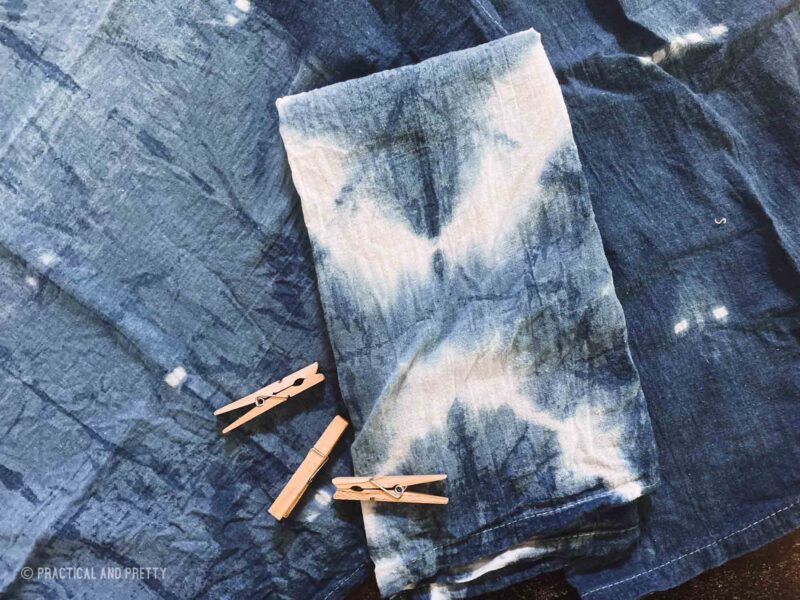
If you’ve ever wondered can you tie dye rayon, the short answer is yes, but it behaves a little differently than cotton, and there are a few things you’ll want to know before you start.
Rayon is softer, stretchier, and more delicate than cotton. That doesn’t mean you should avoid it, it just means your folding, tying, and dyeing process needs a bit more intention.
Can You Tie Dye Rayon Successfully?
Yes, you can absolutely tie dye rayon using fiber reactive dyes like Procion MX. The key is understanding how rayon reacts to tension, moisture, and dye placement.
Rayon is made from regenerated cellulose, which means it dyes beautifully — often with rich, saturated color — but it’s more prone to stretching and damage if handled incorrectly.
If you’d like to watch the video format of this post check it out here.
What Makes Rayon Different From Cotton?
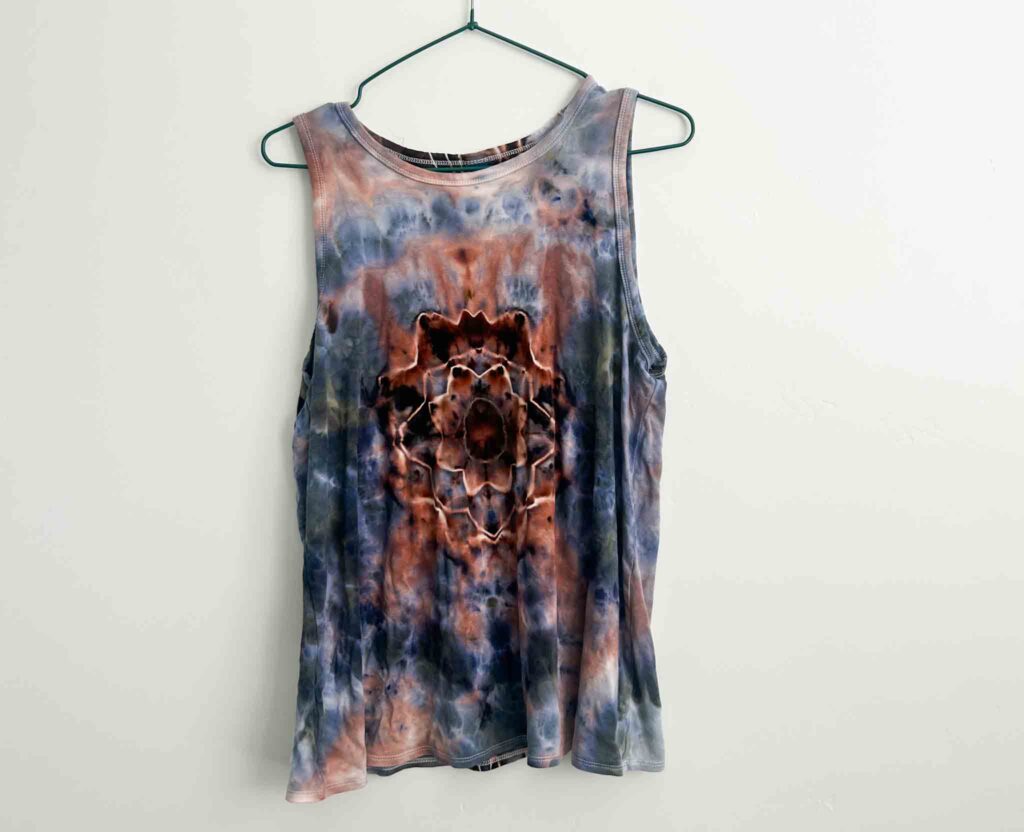
The biggest difference you’ll notice when tie dyeing rayon is the stretch. That stretch affects how folds hold their shape, especially for designs like mandalas.
Because rayon stretches so easily:
- Mandalas can look slightly softer or more organic
- Folds can shift more easily if pulled too tight
- Sinew tension matters more than it does on cotton

How to Prep Rayon for Tie Dye
Proper prep makes a huge difference when working with rayon. Here is a post about how to prep fabric for tie dye.
- Soak the fabric in soda ash (at least 20 minutes)
- Spin out excess water, fabric should be lightly damp or completely dry.
- Avoid tying rayon while it’s fully wet.
Tying rayon when it’s soaking wet increases the risk of stretching or damaging the fibers, especially if you’re using sinew. People have reported completely cutting the fabric off at the sinew line by pulling too tight.
Using Sinew on Rayon (Important)
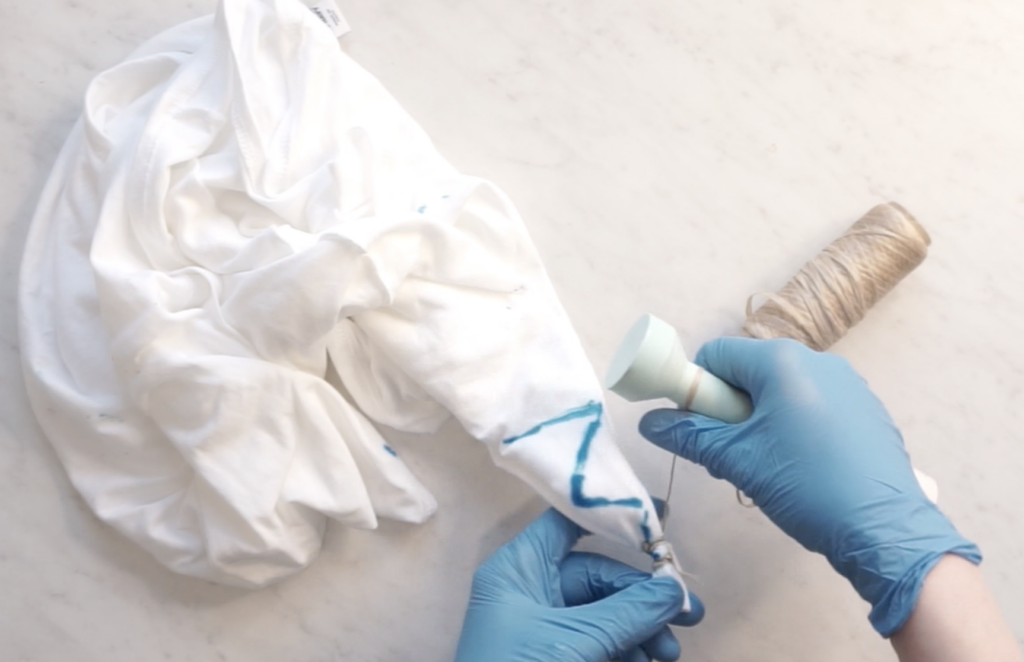
You can use sinew on rayon, but you don’t need to pull it as tight as you might on cotton. Pulling too aggressively can cut or weaken the fabric.
A good rule of thumb: secure, not strangled. If your fabric is lightly damp or dry, you’re far less likely to damage it.
Ice Dyeing Rayon: What to Expect
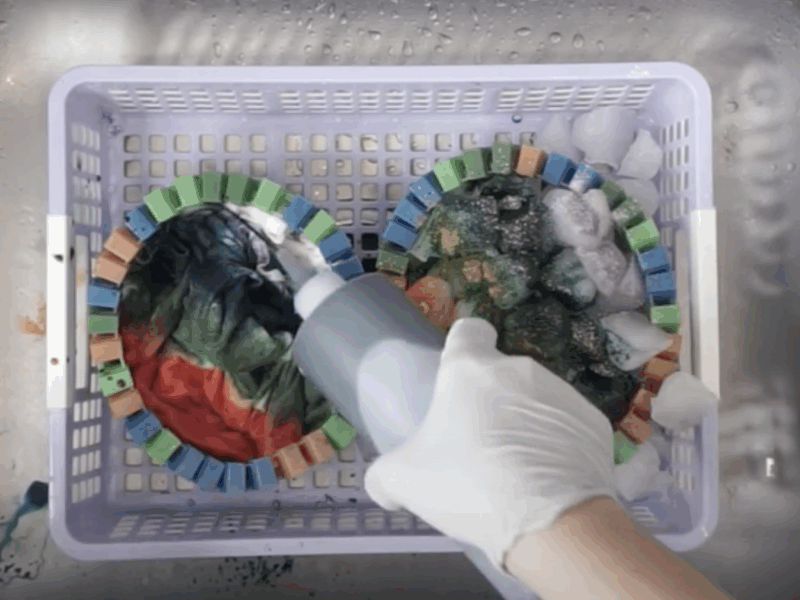
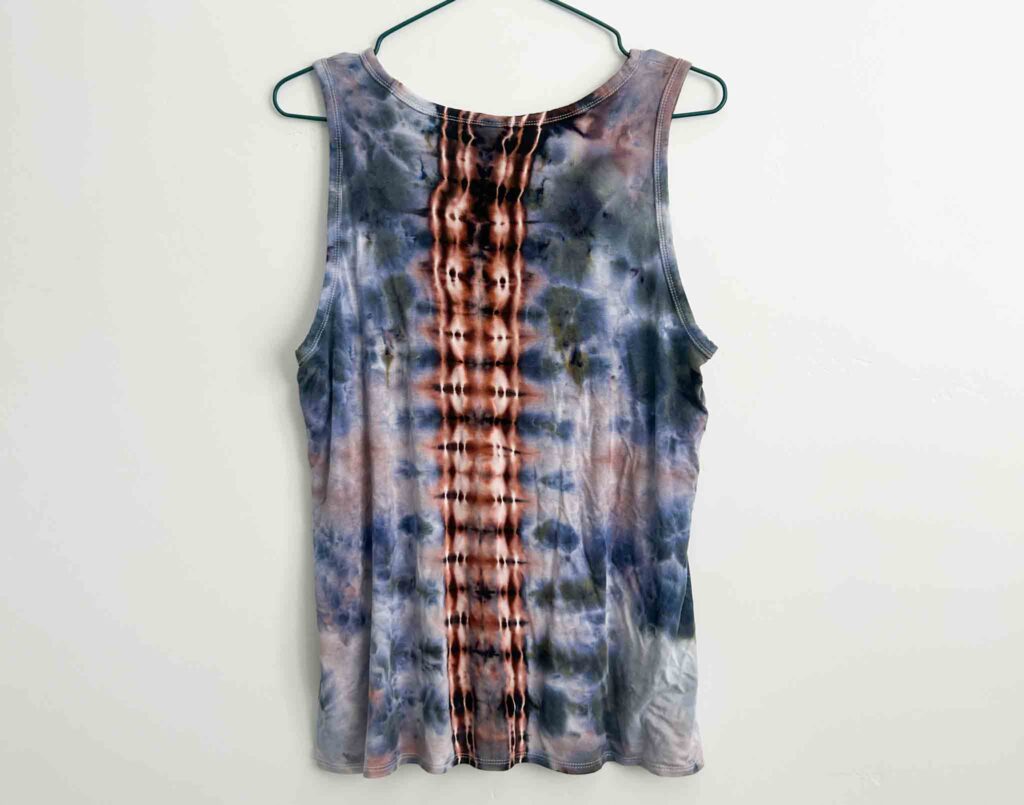
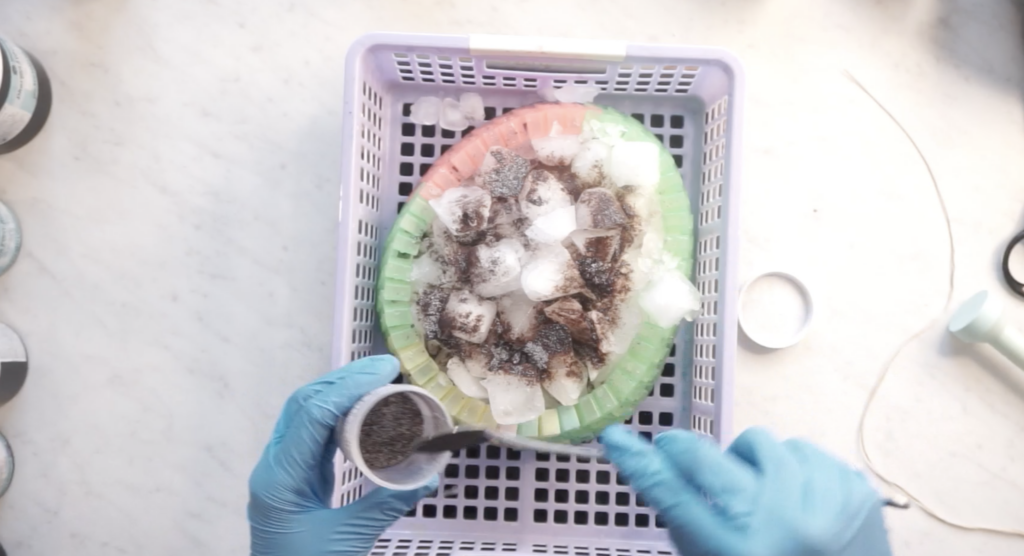
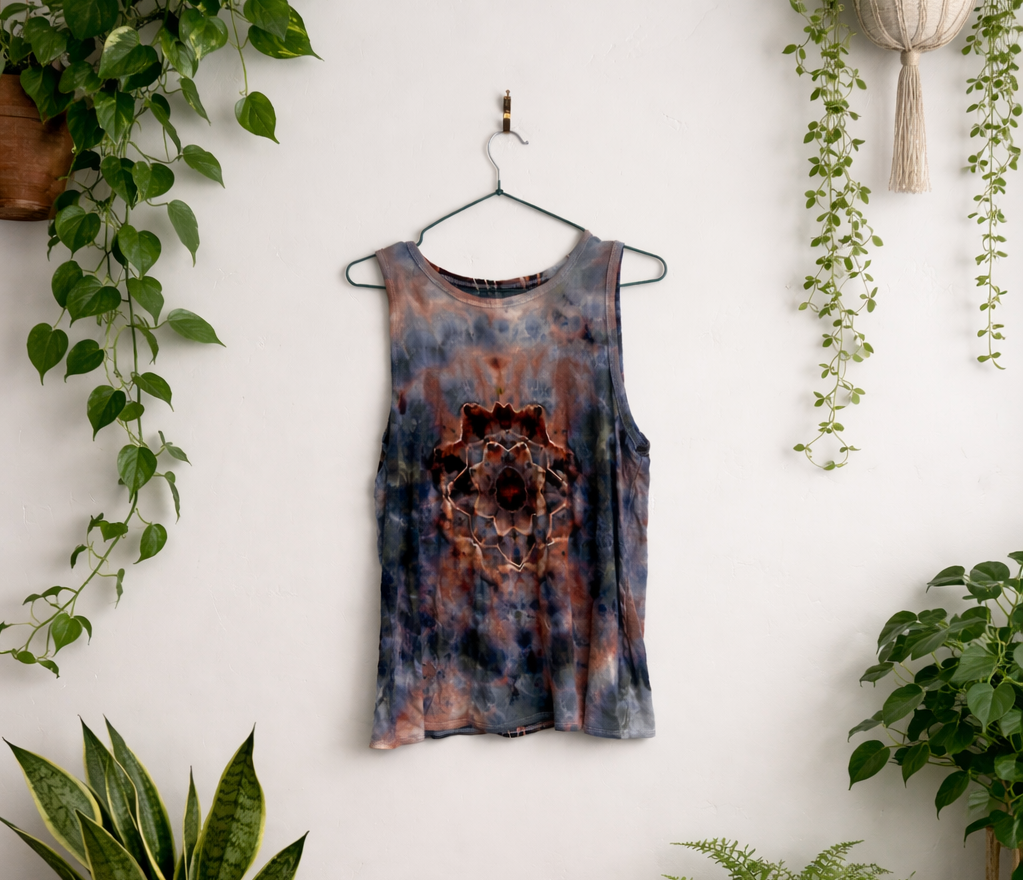
Ice dyeing rayon works beautifully, especially for designs like mandalas and spines. Dye placement can make a difference so it can be fun to play around with.
- Dye under the ice creates bolder, more defined lines
- Dye over the ice produces softer, more blended areas
- Rayon often shows color variation very clearly
Because rayon absorbs dye so well, small changes in placement can create noticeably different results.
Rinsing and Washing Tie Dyed Rayon
Rinse rayon gently, starting with cool water and gradually moving to warm or hot water. Use a mild detergent like Dawn dish soap to remove excess dye. I have a full step by step breakdown of how I do my tie dye rinse out here.
Optional but helpful: adding color catchers in the wash can help pull out extra dye, especially with darker or more saturated colors.
Final Thoughts: Should You Tie Dye Rayon?
If you’ve been asking can you tie dye rayon, the answer is yes — and it can look absolutely stunning when done thoughtfully.
Just remember: lighter tension, careful prep, and intentional dye placement go a long way. Once you understand how rayon behaves, it’s a really fun fabric to work with.
If you want to see this process step by step, I’ve shared the full ice dyeing tutorial in the video linked below.
Can You Tie Dye Rayon? Common Questions Answered
Yes, rayon holds tie dye very well. Because rayon is made from regenerated cellulose, it reacts similarly to cotton when dyed with fiber reactive dyes. In many cases, rayon actually produces richer, more saturated color than cotton.
Rayon absorbs dye extremely well. This is why colors on rayon often look bold and vibrant, especially when ice dyeing. Small changes in dye placement can create noticeable differences in the final result.
The main disadvantages of rayon are its stretch and fragility when wet. Rayon can stretch out of shape, tear, or weaken if pulled too tightly: especially when using sinew or tying while soaking wet.
The best dye for rayon is fiber reactive dye, such as Procion MX. These dyes chemically bond with cellulose fibers, creating long-lasting color. All-purpose dyes like Rit can work, but the results are often less vibrant and less colorfast. Tulip kits work but are also a little less color fast and the colors are less vibrant (from my experience). Here is a breakdown of some of the most popular tie dye brands compared.
Yes, Rit dye can be used on rayon, but it’s not ideal for traditional tie dye techniques. Fiber reactive dyes give more predictable results, especially for ice dyeing and detailed folds.
Rayon can be dyed with natural dyes, but it often requires additional steps like mordants, and results may vary. For consistent, vibrant tie dye results, fiber reactive dyes are the easiest option.
Yes, rayon can be dyed black, but achieving a true, deep black takes patience. Using a high-quality fiber reactive black dye and allowing enough batching time will give the best results. If you really want true black, I suggest tie dyeing with liquid, here’s how!
Fabrics that are 100% synthetic—like polyester, acrylic, or nylon—do not work well for traditional tie dye with fiber reactive dyes. These fabrics require different dyes and heat to bond properly. (Such as Rit Dyemore)
You can tie dye 50/50 cotton-polyester blends, but the results will be muted. Only the cotton fibers accept the dye, leaving a softer, pastel look.
Color remover can work on rayon, but it may damage the fabric if left too long. Gentle application and close monitoring are important to avoid holes or thinning. If you’ve never used color remover, here’s a tutorial.
You can attempt reverse tie dye on rayon-spandex blends, but the spandex fibers will not react the same way as rayon. This can lead to uneven results and increased risk of fabric damage.
Vinegar does not remove dye transfer from rayon or other cellulose fibers. Proper rinsing, detergent, and color catchers are more effective for preventing dye bleed.
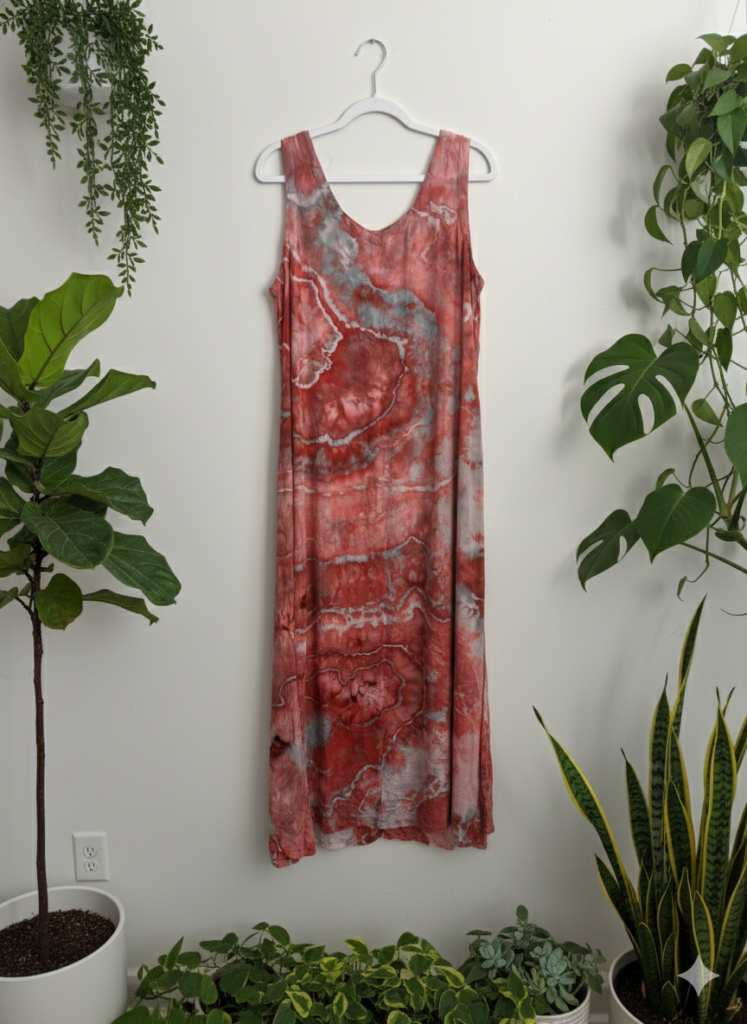
Below is what a geode looks like on a rayon dress. This project is, to this day, one of my favorite things I’ve ever dyed!