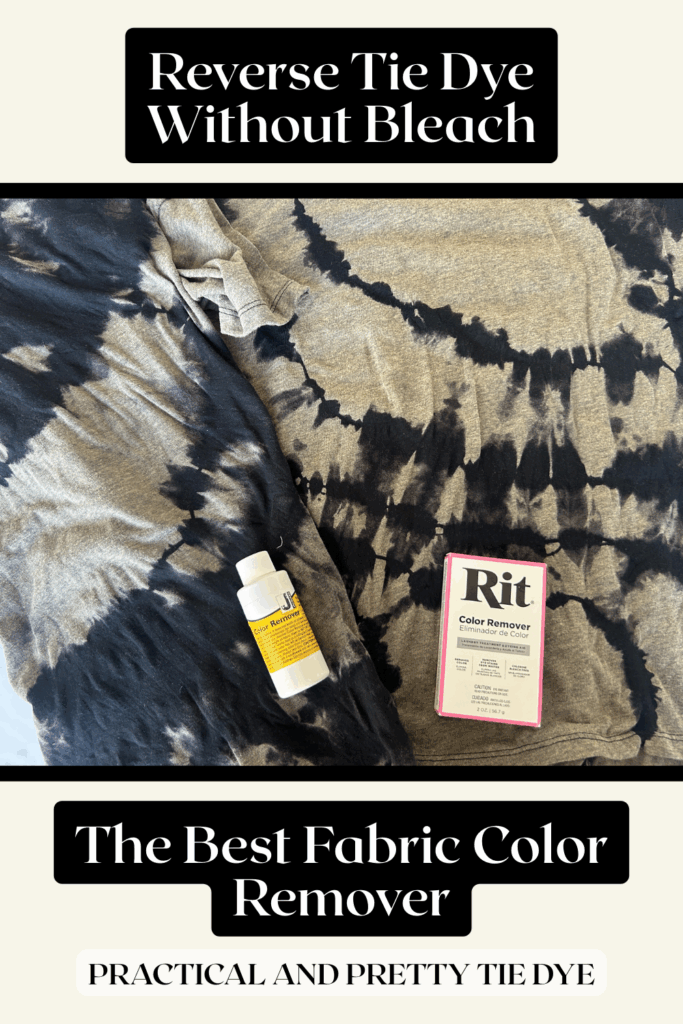
Have a shirt you want to reverse tie dye? Or maybe you just need to strip out some stubborn color before re-dyeing? A fabric color remover can save the day. But with different options out there, which one is actually the best color remover for clothes?
I tested the two most popular choices, Rit Color Remover and Jacquard Color Remover, to see how they stack up. Here’s everything you need to know before you buy, including step-by-step instructions, how long the process takes, and side-by-side before and after photos.
Prefer to watch? Here’s the full video walkthrough.
Why Use a Fabric Color Remover?
Color removers (sometimes called dye removers, fabric colour removers, or color strippers) are different from bleach. Instead of eating away at your fibers and leaving behind yellow stains, a good fabric color remover gently strips dye so you can start fresh with intact fabric underneath.
Common reasons to use one:
- Reverse tie dye projects (without the damage of bleach)
- Fixing mistakes on a tie dye piece you don’t love
- Stripping thrifted clothes to give them a new look
- Prepping previously dyed fabric for a new round of dye
- Lightening overdyed pieces to a softer shade
If you’re curious about other ways to reverse dye, check out my comparison of reverse tie dye with toilet bowl cleaner and my White Brite vs bleach test.
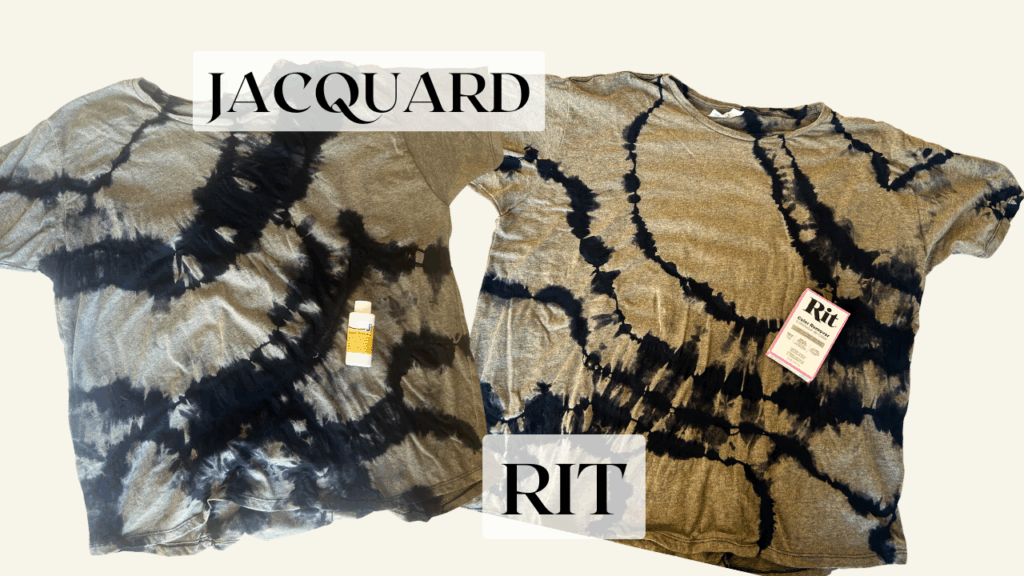
Rit Color Remover vs Jacquard Color Remover
Both Rit and Jacquard offer powdered dye removers designed to work in hot water. They’re widely available online, and you can usually find Rit at big box stores while Jacquard tends to be more common through craft suppliers.
Rit Color Remover
Affordable and easy to find in stores. Rit Color Remover comes in a 2 oz powder packet (one packet treats up to 3 pounds of fabric) and is sold at most major retailers including Walmart, Target, Joann, and Amazon. It’s the most widely available color remover in the US, which is why most people start here.
Buy Rit Color Remover on Amazon or browse my Walmart storefront.
Jacquard Color Remover
Similar price point, sometimes easier to buy online than in stores. Jacquard Color Remover is the brand most professional tie dye artists reach for because Jacquard makes professional-grade fiber reactive dyes. If you already buy Jacquard dyes (use code ANNA for 20% off), grabbing their color remover at the same time makes sense.
Buy Jacquard Color Remover on Amazon.
On paper, their directions are nearly identical. Both call for boiling water and a tablespoon or so of powder per shirt. So is there really a difference? I tested both side by side to find out.
How to Use Rit Color Remover (Step-by-Step Instructions)
The process is the same for both Rit and Jacquard Color Remover. Here’s exactly what to do:
- Boil water on the stove. You want enough water to fully submerge your fabric. For one shirt, about 3 quarts works well.
- Add the color remover. Roughly a tablespoon per shirt for Jacquard, a little more for Rit. Stir until fully dissolved.
- Add your fabric. The directions say to add dry fabric, but I have added mine wet and it still worked fine. Dry penetrates slightly better.
- Keep the water hot. Maintain a low simmer. The reaction works best with sustained heat.
- Stir occasionally. Use tongs or a wooden spoon to move the fabric around so the color lifts evenly.
- Watch for color change. You’ll see the dye start to lift off and tint your water. Keep going until the fabric reaches the lightness you want.
- Rinse in cold water, then wash with regular detergent immediately to prevent the lifted dye from resettling on the fabric.
Ventilate your kitchen while doing this. The fumes are not toxic, but they have a strong sulfur smell that hangs around if your space is closed up.
How Long Does Rit Color Remover Take?
Most projects take 10 to 30 minutes of active stovetop time. Here’s what affects the timing:
- Light or pastel colors: 10 to 15 minutes. These lift quickly.
- Medium colors like green, purple, orange: 15 to 25 minutes.
- Reds and oranges: 10 to 20 minutes. Surprisingly easy to lift.
- Blues and turquoises: 25 to 40 minutes. These are stubborn.
- Blacks and navies: 30 to 45 minutes. May never fully strip.
If the color isn’t lifting after 45 minutes, more time probably won’t help. You’ve reached the limit of what color remover can do on that particular dye. At that point your options are to accept a lighter version of the original color, or move to bleach if you’re willing to risk fiber damage.
My Side-by-Side Test: Before and After
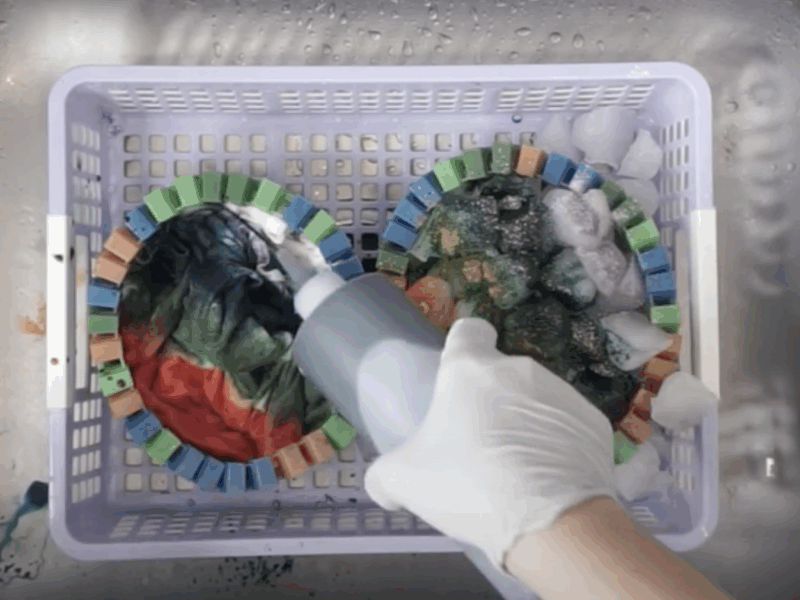
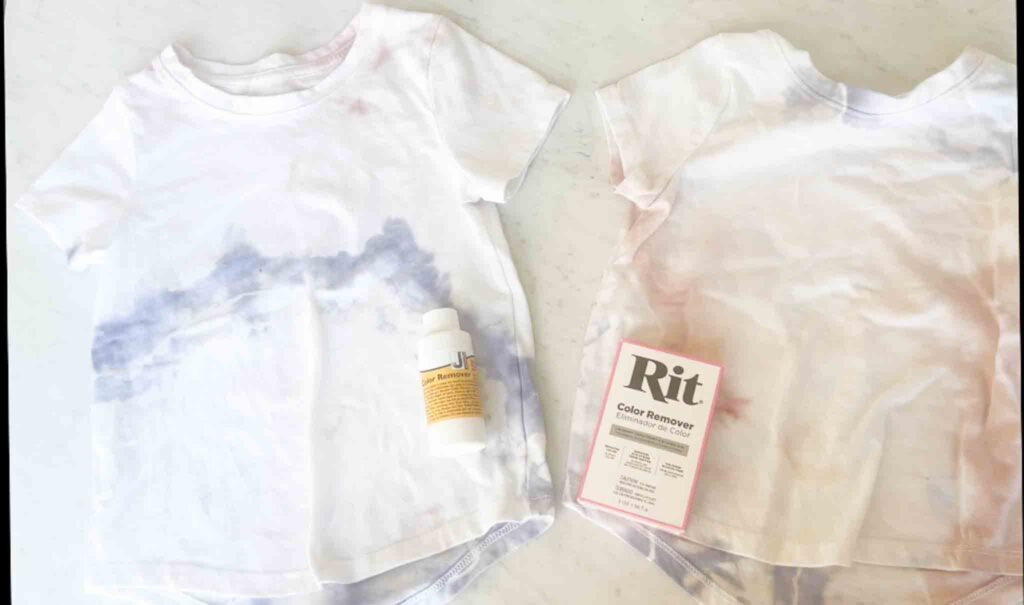
To compare Rit vs Jacquard fairly, I dyed two identical shirts with bold colors and tied them in a geode fold. I chose geode because the sharp resist lines make it easy to see how each remover performs on different dye colors.


What I observed
- Reds and oranges lifted really well with both removers. Within 15 minutes, both shirts had dramatically softened.
- Blues and turquoise didn’t strip completely. This is normal with any color remover. Blue dyes bond tightly to cotton.
- Blacks looked unchanged when wet, but once dried, you could see where the color had lifted.
- The final results were practically identical. I couldn’t tell which shirt was which without checking my notes.

Verdict: Rit Color Remover and Jacquard Color Remover are equally effective. The best color remover for clothes is simply the one that’s cheapest and easiest for you to buy.
Tips for Using Fabric Color Remover Successfully
- Start with dry fabric when possible. It helps the remover penetrate more evenly.
- Use boiling or near-boiling water. The hotter, the better. The chemical reaction needs heat to work.
- Stir occasionally. Keeps the fabric exposed to fresh remover and prevents uneven results.
- Don’t expect miracles on black or dark navy. These dyes resist color removal. Plan for a faded version of the original, not pure white.
- Wash immediately after to prevent any leftover dye particles from resettling onto the fabric.
- Ventilate your space. The sulfur smell is intense but harmless.
Color Remover vs Bleach: Which Should You Use?
Bleach and fabric color remover are often used interchangeably, but they work very differently.
- Bleach breaks down the fiber itself. It removes color but also weakens the fabric and often leaves behind a yellow-orange tint. Great for high-contrast reverse tie dye on dark shirts. Less great for actually stripping color cleanly.
- Color remover strips dye chemically without breaking down the fabric. Leaves the fabric intact (and usually back to white or near-white) so you can re-dye it. Best for prep work, fixing mistakes, or genuine color removal.
For a deeper dive, see my full comparison of White Brite vs bleach.
Frequently Asked Questions
Yes. In my side-by-side test, Rit Color Remover effectively lifted reds, oranges, yellows, and most purples. Blues and blacks are harder to remove completely but still fade noticeably. The key is using boiling water and giving the process enough time.
Bleach and fabric color remover work very differently. Bleach breaks down the fiber and often leaves behind a yellow-orange color. Color removers chemically strip the dye but leave the fabric intact. Use bleach when you want high-contrast reverse tie dye on a dark shirt. Use color remover when you want to remove dye cleanly so you can re-dye the fabric.
Partially. Black dye is the hardest color to remove from cotton. In my test, the black sections of the shirt did lighten noticeably, but they did not return to white. Expect to take black to a faded gray or muted shade, not back to the original fabric color.
For color removal specifically, Jacquard and Rit perform identically in my testing. For actual tie dye though, Jacquard’s fiber reactive dyes outperform Rit’s all-purpose dyes significantly. See my comparison of the best tie dye brands for more.
About a tablespoon of powder per shirt, mixed into enough hot water to fully submerge the fabric. One 2 oz packet of Rit Color Remover can typically treat 3 to 4 shirts depending on size.
Rit Color Remover is designed for natural fibers like cotton, linen, and rayon. It will not remove dye from polyester or polyester blends effectively. Always check your fabric tag before starting.
Ready to Try It Yourself?
If you want to start experimenting, grab a box of whichever remover you find first. And don’t forget to prep your fabric in a fun fold before re-dyeing. Geode folds are my favorite for this, but you can grab 12 of my go-to tie dye folds in a free printable ebook here: 12 Favorite Tie Dye Folds.
And if you’d rather buy a finished piece than DIY, check out my shop for one-of-a-kind tie dye creations: Practical and Pretty on Etsy.
Pin this for later.