Is cheap tie dye worth it? I found a cheap tie dye on Amazon with a one-star rating, and I couldn’t scroll past it. I’ve been tie dyeing professionally for years, so I wanted to know what went wrong.
Here’s the review that caught my eye. The buyer said she followed the directions exactly, and when she rinsed, every bit of the dye washed out. Nothing stayed on the fabric.
My first guess before opening the package was that the instructions were the problem. I suspected a fiber reactive dye that never told buyers to use soda ash. So I tested it twice: once following the package exactly, and once my own way.
What the package instructions say
The instructions are short. Here’s the gist:
- Fold damp fabric into your favorite tie dye pattern and secure it with rubber bands.
- Mix 3 g of powder with 120 ml of water.
- Apply the dye, then seal the fabric in a bag. Use separate bags for different colors.
- Let it sit for 24 hours somewhere cool and out of the sun.
- Rinse without detergent the first time, then hand wash separately for the first few washes.
A few of the “warm tips” are actually good advice. They say it works best on natural fibers like cotton and linen and won’t work on synthetic fabric. That line might explain the one-star review. If that buyer used polyester, the dye had nothing to grab onto.
Test 1: Following the Instructions Exactly
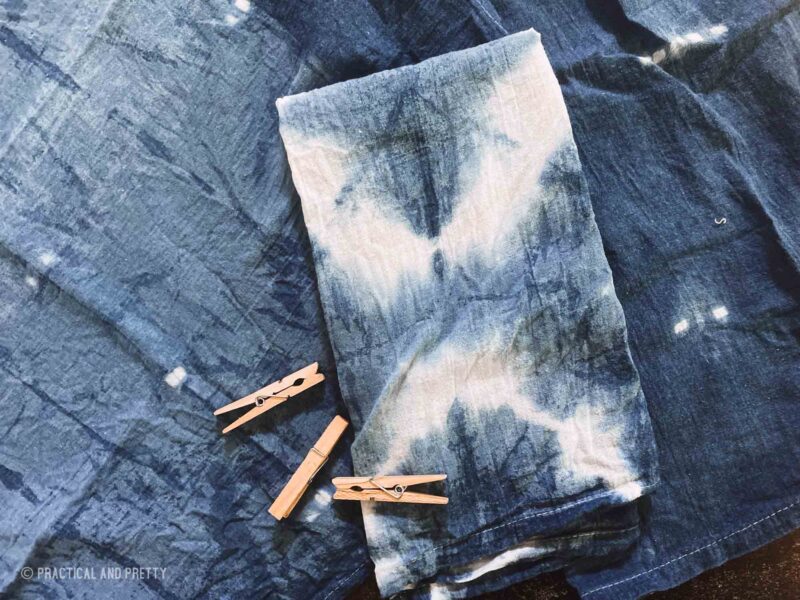
I didn’t want to waste money on a shirt, so I used flour sack towels from Walmart. They’re about a dollar each and perfect for testing.
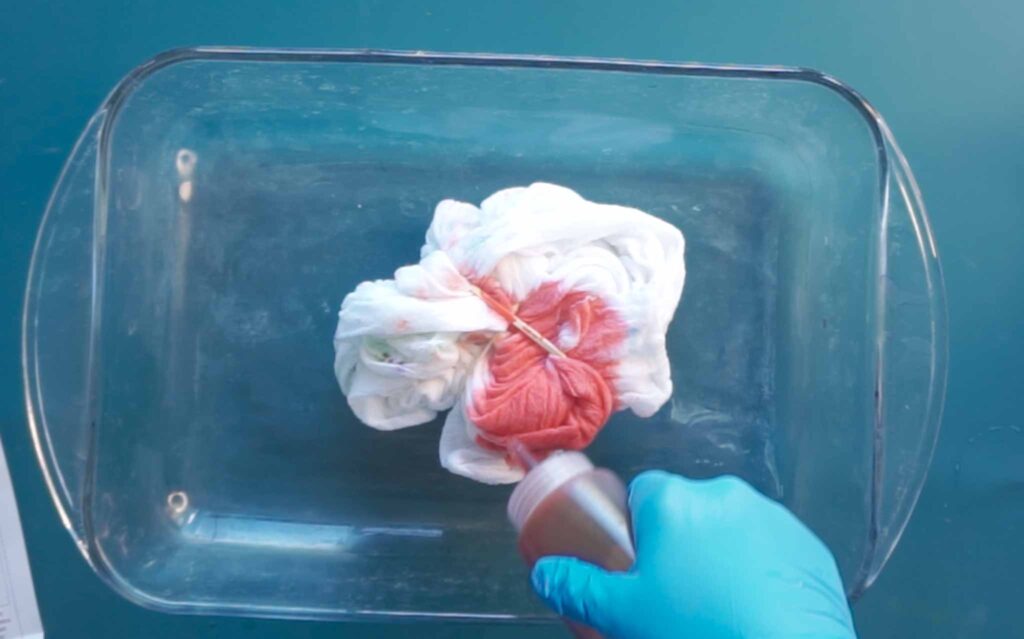
I dampened the towel, pinched the center, and twisted it into a spiral. Then I added rubber bands. Your spiral will squish a bit when you band it, and that’s totally normal.
For the dye, I measured 3 g of powder into 120 ml of water. If you’re in the US like me, 120 ml is right around 4 oz. Three grams looked like roughly a teaspoon of powder, maybe a little less.
I chose red, which had the lowest ratings of all the colors. That makes sense to me. Red is one of the hardest colors to work with because it loves to bleed pink into your white space.
To check for bleeding, I only dyed half the towel. The color was a vibrant red going on. I bagged it like the instructions said and left it for the full 24 hours. Usually 6 hours is plenty for this kind of project, but I wanted to play by their rules.
Test 2: my usual method with soda ash
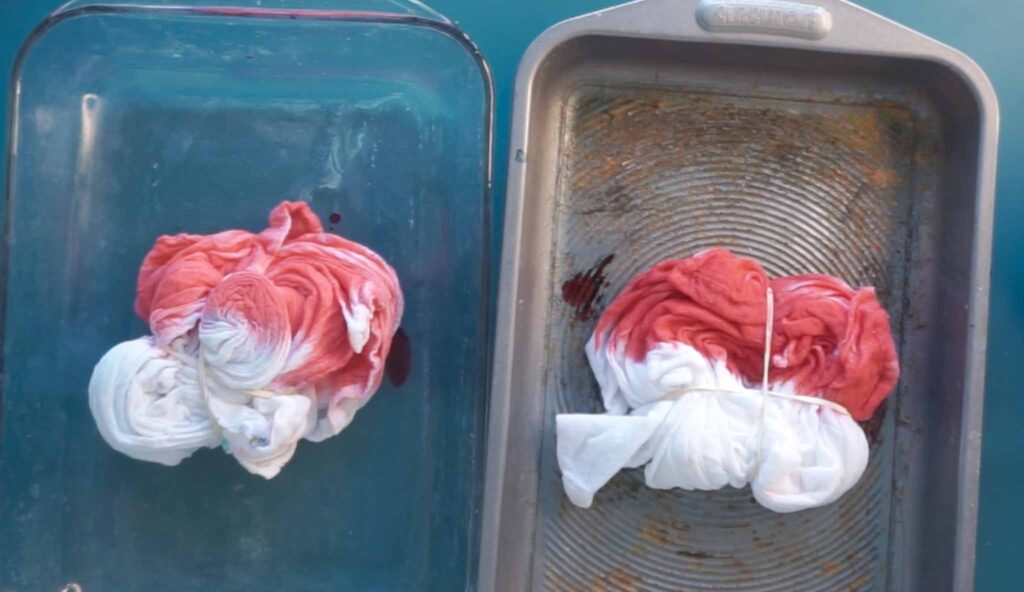
For the second towel, I mixed the dye the way I mix my Dharma fiber reactive dyes: 1 teaspoon of powder per 4 oz of water. I also added soda ash right into the bottle, since I still suspected this was a fiber reactive dye.
The difference in the bottle was obvious. Mine was a much deeper red.
Quick tip if you try this at home. Once soda ash goes into your dye bottle, the clock starts ticking. You get about an hour before the colors start turning pastel, because the soda ash breaks the dye down over time.
I bagged this one too and gave it the same 24 hours. If I’m being honest, I usually skip the bag. As long as the fabric stays damp, the dye keeps setting.
Bonus: ice dye test
I already had the powder, so I figured why not try an ice dye too. Ice dye is my favorite way to tie dye anyway.
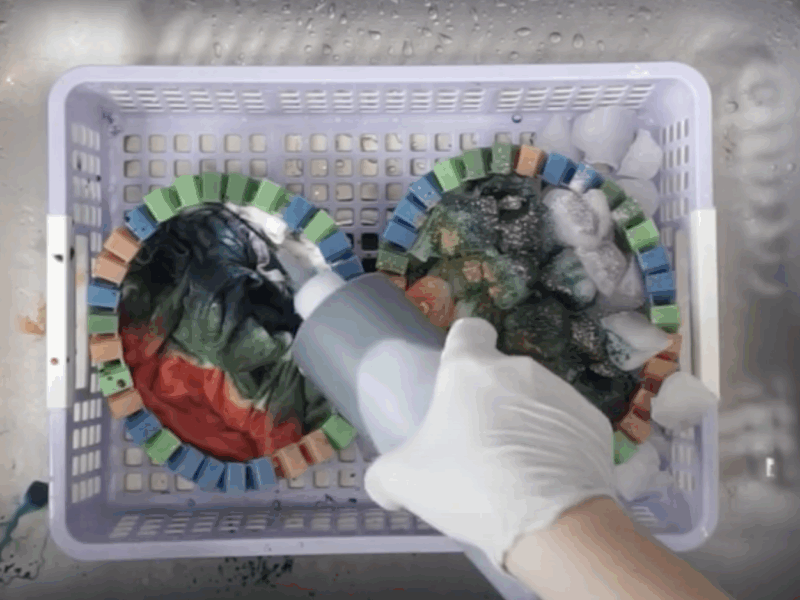
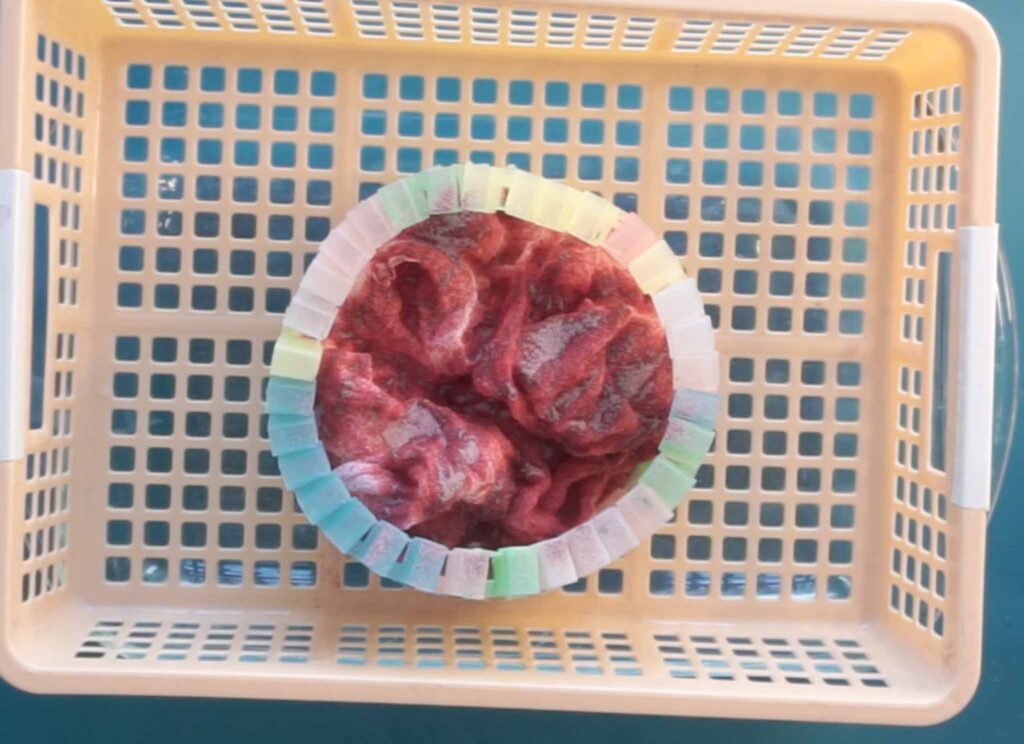
I wrapped the folded fabric with Magic Tracks, which is actually a kids’ race track toy. It keeps the ice cubes from sliding off. If you’ve ever watched your ice tumble onto the table mid-project, this little trick fixes it.
I piled on the ice and sprinkled the dye powder over the top. Interestingly, the powder had tiny white specks in it that made me wonder if soda ash was already mixed in. I added soda ash anyway just in case, then let the ice melt.
The results
The package doesn’t include any rinse-out directions, so I used my normal process. I rinse in cool water, then hot water, then wash with a little Dawn dish soap. After that, everything went into the washing machine on hot.
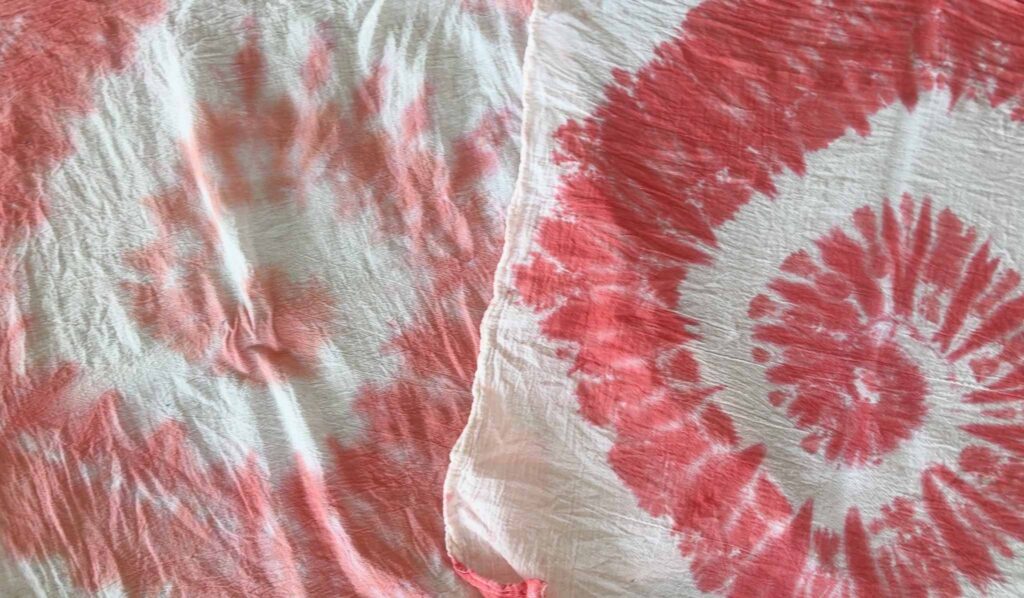
The color did not wash out. That surprised me after reading the review.
| Towel | Mix | Soda ash | Result |
|---|---|---|---|
| Test 1 | 3 g per 120 ml (package) | No | Melon pink, color stayed |
| Test 2 | 1 tsp per 4 oz (my usual) | Yes | True red |
| Ice dye | Powder over ice | Yes | Lovely color variation |
The towel I dyed by the package came out more of a melon color than red. The one I mixed stronger came out a true red. Soda ash didn’t seem to change much, since the color stayed in both towels. The real difference was how much dye went into the bottle.
I was impressed by one thing. The red barely bled into the white space, which is tough to pull off even with Procion dyes.
So what kind of dye is this?
After seeing both results, I think this behaves a lot like Rit. All-purpose dyes like that work more like a stain than a true fiber reactive dye. They don’t need soda ash, and they tend to fade with every wash.
That means the one-star buyer probably used a synthetic fabric. It also means your shirt will likely look a little duller each time it goes through the laundry.
How to tie dye on a budget
Most of my savings come from the supplies around the dye, so I still use professional dye and spend less everywhere else.
| Supply | What I use | Approx. cost |
|---|---|---|
| Blanks for practice | Flour sack towels from Walmart | About $1 each |
| Dye | Dharma fiber reactive red | About $4 per color |
| Fixer | Soda ash | One bag lasts a long time |
| Ties | Rubber bands | Whatever’s in your junk drawer |
For comparison, the one-star Amazon pack cost me $6 for one color with nothing else included.
A few more ways I keep costs down:
- Practice new folds on towels before you dye a shirt you care about.
- Mix only what you’ll use within the hour once soda ash is in the bottle.
- Try ice dye. You sprinkle powder straight over ice, so there are no squeeze bottles to buy.
- Skip the plastic bags. Damp fabric keeps setting on its own.
Is Cheap Tie Dye Worth It? My Verdict: 2.5 Stars
One star was a little harsh. You do get color, and the red stayed out of my white space better than I expected. I still wouldn’t buy it again.
The pack cost me $6 for a single color. No bottle, no rubber bands, no gloves. A red from Dharma costs around $4, which is actually less than I paid here, and it’s a professional Procion dye that won’t fade on you.
I get why so many people grab the cheapest option on Amazon. Most beginners don’t realize how affordable the good stuff is. Yes, Procion dyes need soda ash, but a bag of soda ash lasts a long time.
If you want to start with Procion dyes, here are my go-tos:
- Dharma Trading Co. fiber reactive dyes
- Jacquard Procion MX (use code ANNA for 20% off)
Want to try more than a spiral?
Grab my free ebook, 12 Tie Dye Folds. It walks you through folds that go way beyond a scrunch or spiral. I also have a video on my favorite ways to fold tie dye.
If you want me to review more products like this, leave a comment and tell me what to test next!
FAQ
Why did my Amazon tie dye wash out?
The most likely reason is the fabric. Many cheap dyes only work on natural fibers like cotton and linen, so polyester or other synthetics will rinse almost clean.
Do I need soda ash for cheap tie dye?
In my test, this dye held its color without soda ash. It behaved like an all-purpose dye such as Rit, which doesn’t need it. Procion fiber reactive dyes do need soda ash to bond to the fabric.
How much is 120 ml of water in ounces?
120 ml is about 4 oz.
Is cheap Amazon tie dye worth it?
I don’t think so. A professional Procion dye costs about the same or less, and the color lasts much longer in the wash.
How do I rinse out tie dye?
Rinse in cool water first, then hot water, then wash with a little Dawn dish soap. Finish with a hot cycle in the washing machine.
How long do tie dye dyes last?
Once you add soda ash to a dye bottle, use it within about an hour before the colors start turning pastel. On fabric, Procion dyes hold their color through washing. Stain-type dyes like the one I tested fade a little more with every wash.
Can you tie dye with rubber bands?
Yes. Rubber bands are what I used for the spiral in this test. Your fold will squish a bit when you band it, and that’s normal.