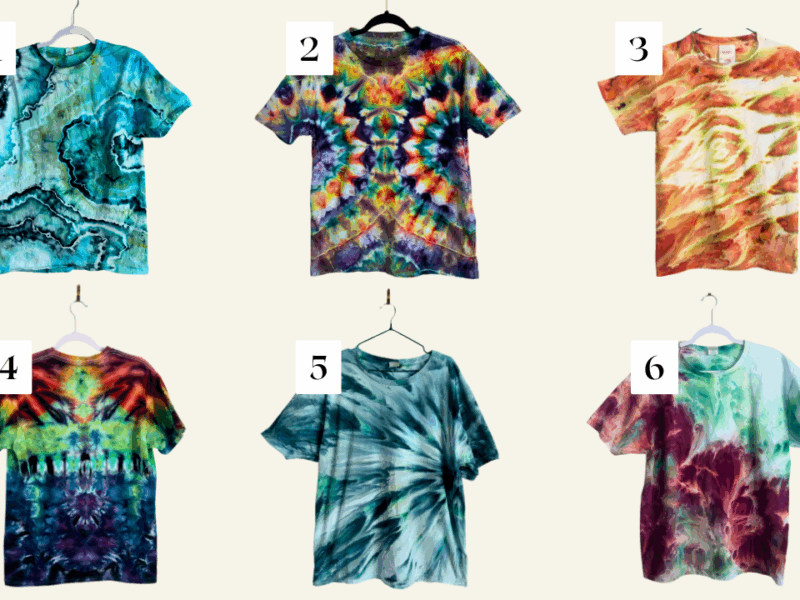
Wondering if the Tulip One-Step Tie Dye Kit is worth it? In this honest review, I share my results, pros and cons, and real photos of the finished projects.
If you’ve ever wandered through the craft aisle at your local store and wondered if the Tulip One-Step Tie-Dye Kit is worth it, you’re not alone. I recently gave this popular kit a full test run, and as a professional tie-dyer, I had some thoughts. Here’s my honest, no-fluff review, based on a hands-on trial with the 18-color set, and yes — there’s a video included so you can see everything in action!
🎥 Watch the Full Video Review Here
Where can I buy the Tulip One Step Tie Dye Kit?
I bought mine on Amazon. You can find it at your local craft store or even Walmart too!
🧵 What’s in the Box?
Let’s start with the unboxing. I was genuinely impressed with the portable plastic container — way more practical than the cardboard boxes most dye kits come in. Inside the 18-color kit, you’ll find:
- 18 squeeze bottles (each pre-filled with just the right amount of dye powder — no measuring needed)
- A pack of strong, stretchy rubber bands (surprisingly good quality!)
- Disposable gloves (we’ll get to those in a moment…)
- A plastic tablecloth
- A basic instruction sheet with folding techniques
✅ Pros
- Convenient packaging: The storage tote makes this kit easy to haul around — perfect for group events or camping trips.
- No measuring required: Just add water and shake. That alone saves a ton of prep time.
- High-quality rubber bands: Not the flimsy kind that snap mid-project.
- Tablecloth included: Helps protect your surface — and it’s durable enough to reuse a few times.
- Bottle tops are color-coded: A small but super helpful feature for keeping track of colors.
❌ Cons
- The gloves? Trash. Seriously — too baggy, too slippery. I ditched them almost immediately for my trusty nitrile gloves.
- Minimal instructions: You’ll definitely want to supplement with YouTube tutorials if you’re a beginner. The folding guides were sparse and a bit confusing.
- Color names not labeled: The bottles aren’t marked with names, so if you’re trying to replicate a design, good luck figuring out which pink is which.
🎨 Color Testing & Techniques
I put this kit through three different tie-dye techniques to see how the colors held up:
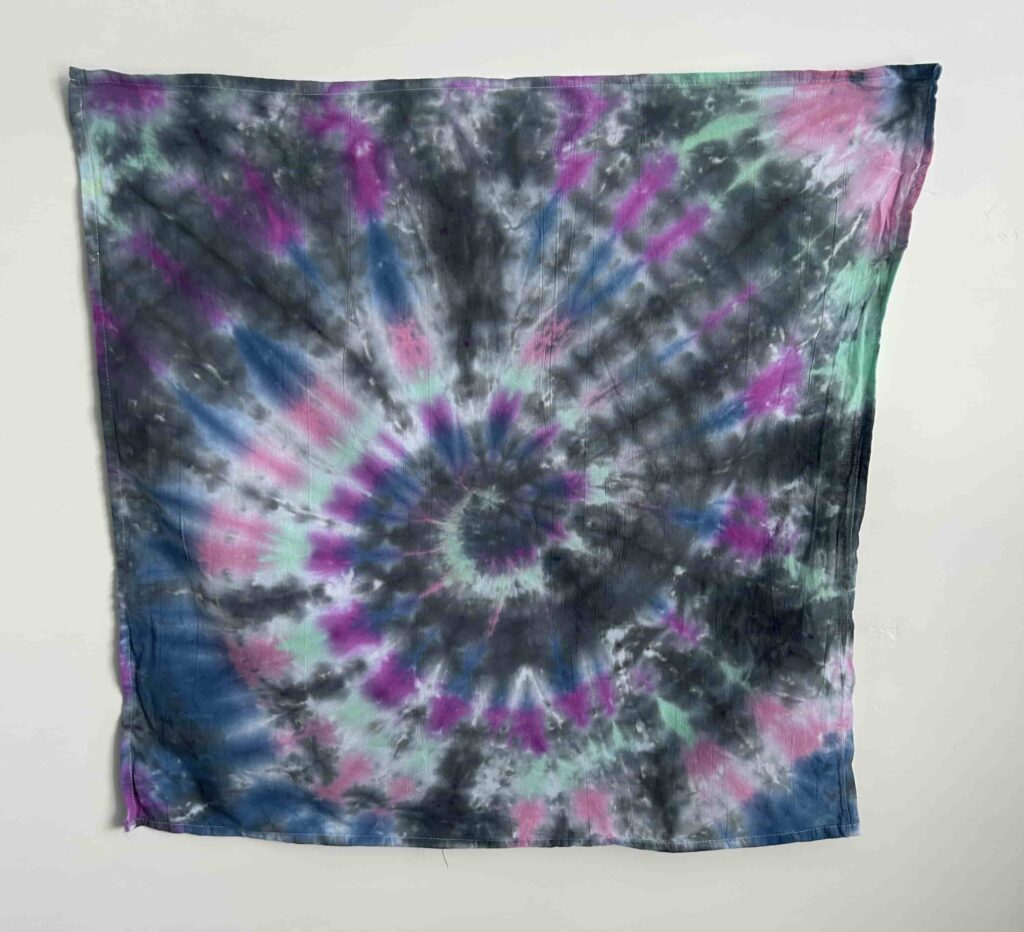
1. Basic Spiral Design
I used a teal-pink combo on one side and solid black on the other. The rubber bands held strong, and the dye application was easy thanks to the bottle design. But the black? It turned out gray — a common issue in many tie-dye kits, not just Tulip.
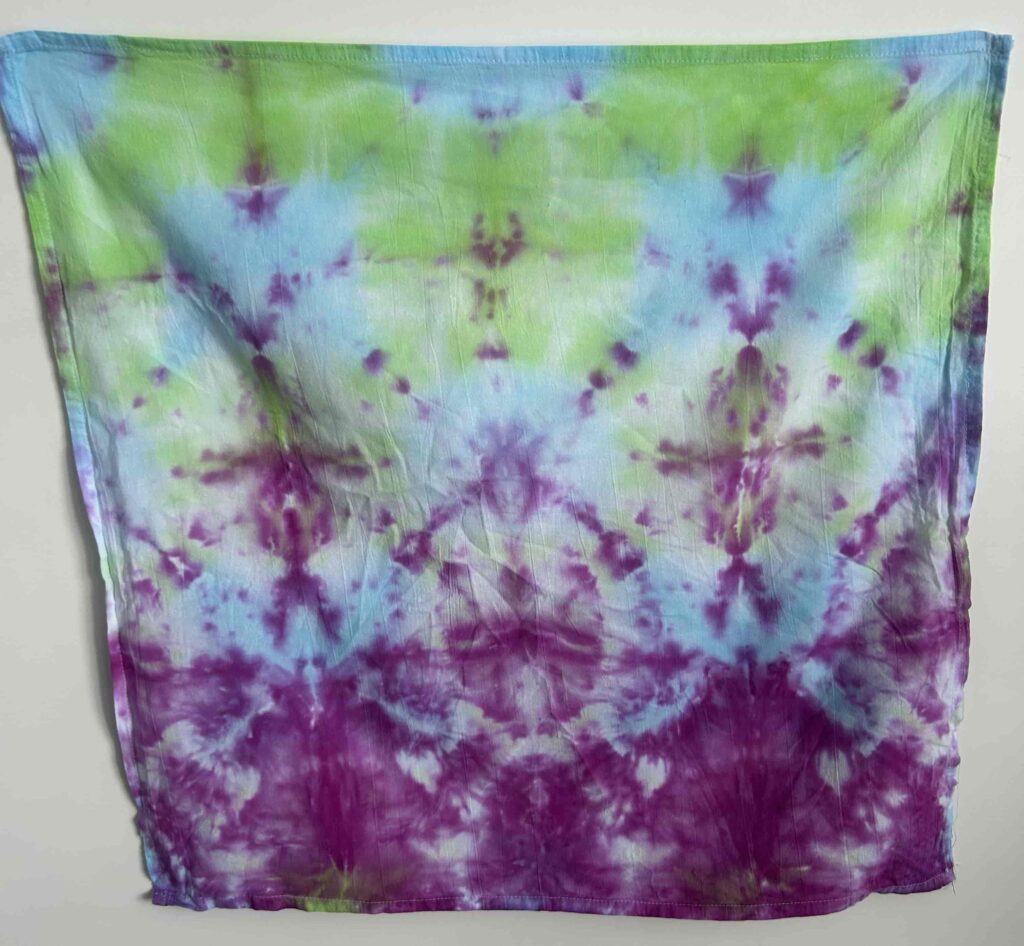
2. Shibori Fold
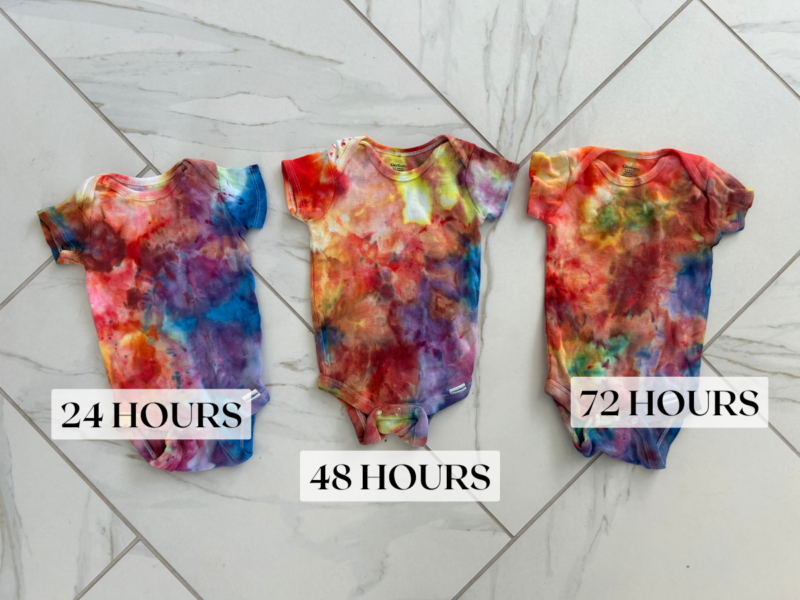
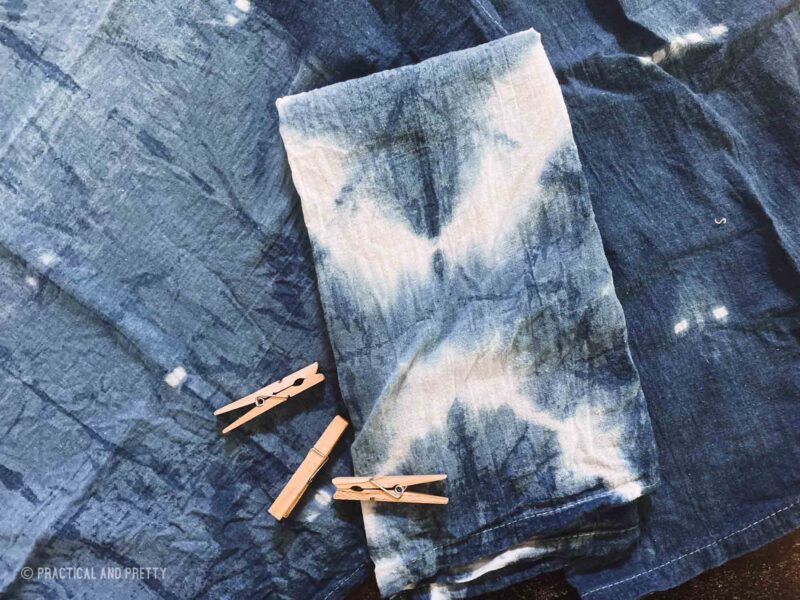
Here, I tested a green and blue combo. Verdict? The green was weak, and the blue completely washed out — even after I let it sit for 8 hours (Tulip recommends 4–6, which honestly seems way too short). Turquoise-based dyes are notoriously fickle, even with professional-grade dyes, but this was still a letdown.
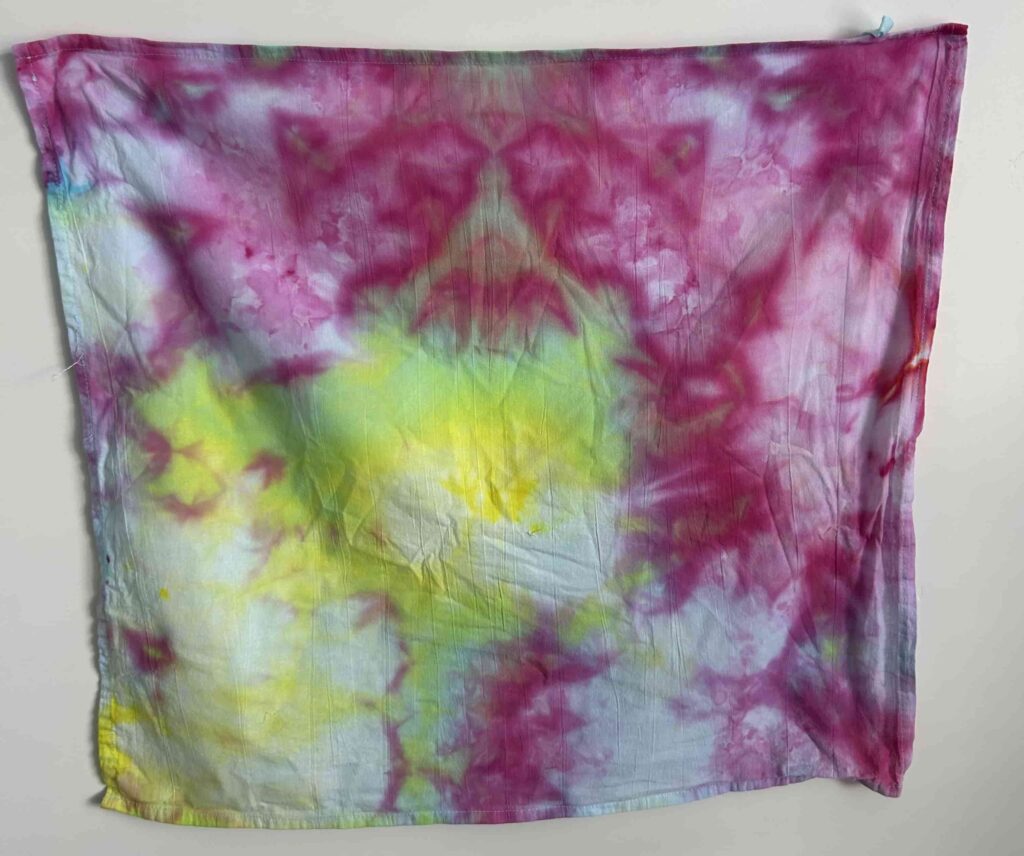
3. Ice Dyeing
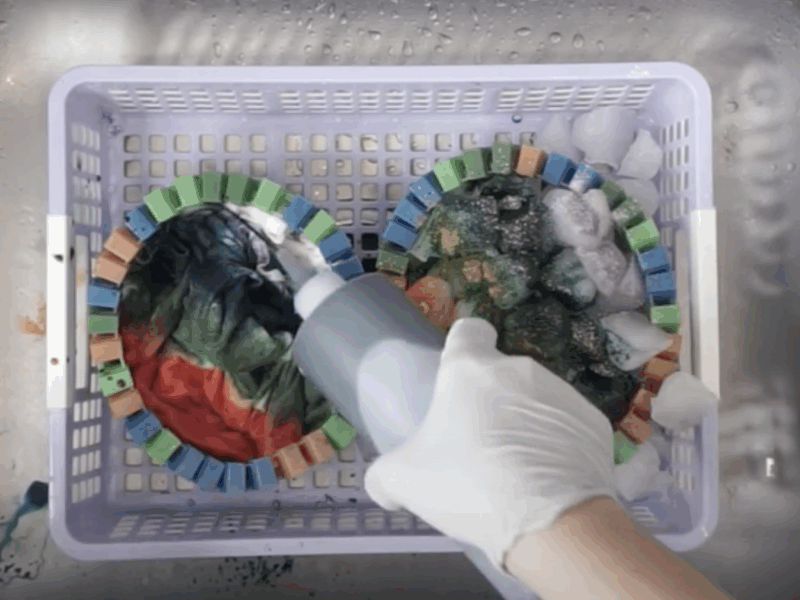
Using unmixed powder and store-bought ice, I tried an ice dye technique — letting the dye melt and soak in naturally. Surprisingly, this was the most vibrant and interesting result! You do use a lot more powder this way, but the color separation and watercolor effect were worth it.
If you’re interested in how to ice dye here’s my full run down!
🧼 The Wash Test
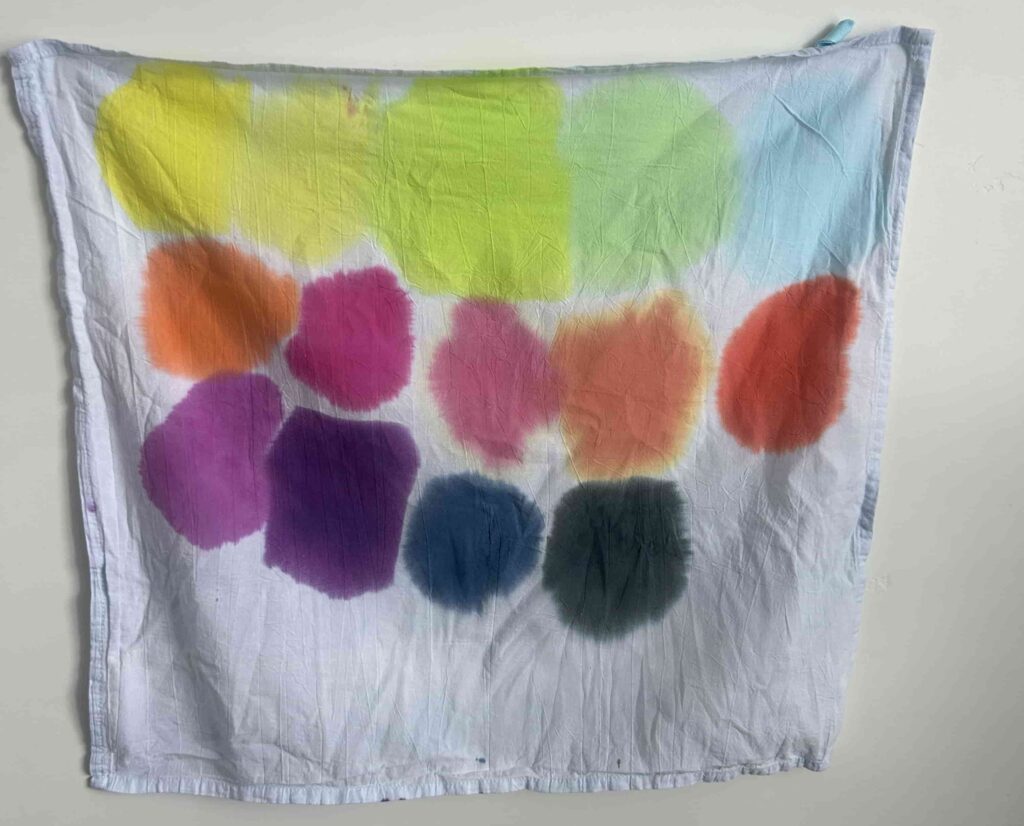
After rinsing in cold and then hot water (with Dawn dish soap), I was eager to see how the colors held up post-wash. Some notes:
- The white space remained clean, which is a huge plus (looking at you, Rit dye…)
- Many colors faded quite a bit after the wash and dry cycle
- The shibori piece turned out muddy and unappealing — definitely not my best work, but a good experiment
🧠 Final Thoughts
If you’re a beginner or just doing a fun family project, the Tulip One-Step Tie-Dye Kit is a solid choice. It’s easy to use, reasonably priced, and widely available. But if you’re looking for bold, professional-level results, especially long-lasting colorfastness, this kit has some limitations.
Would I use it again?
Yes — for casual crafting, group activities, or experimenting with color combos. But for my professional work? I’ll stick with more specialized dye brands like Dharma.
⭐ Overall Rating: 6/10
Best for: Beginners, kids, camping trips, casual fun
Not ideal for: Long-term wearables, serious color retention, or high-detail designs
📹 Don’t forget to check out the full video to see the process and results in real time! Watch it now ➜
Got questions or want me to review another kit? Drop a comment below! 👇