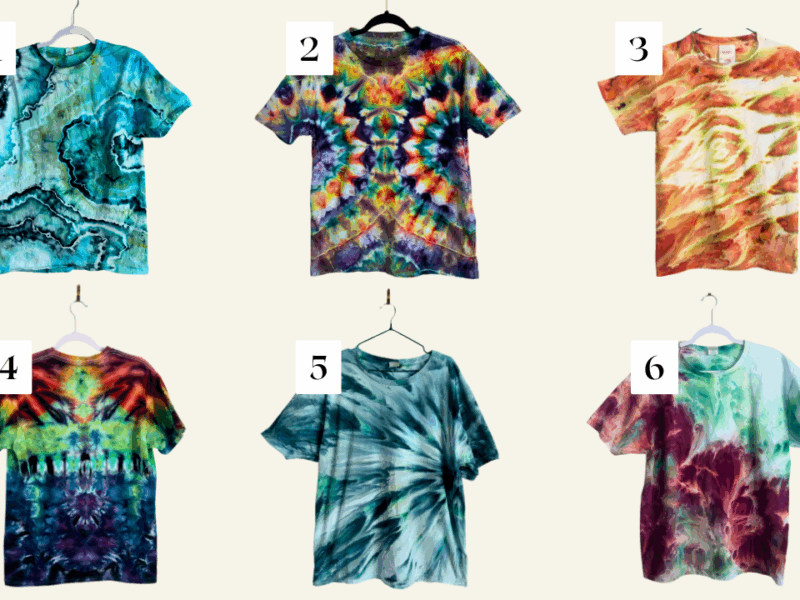
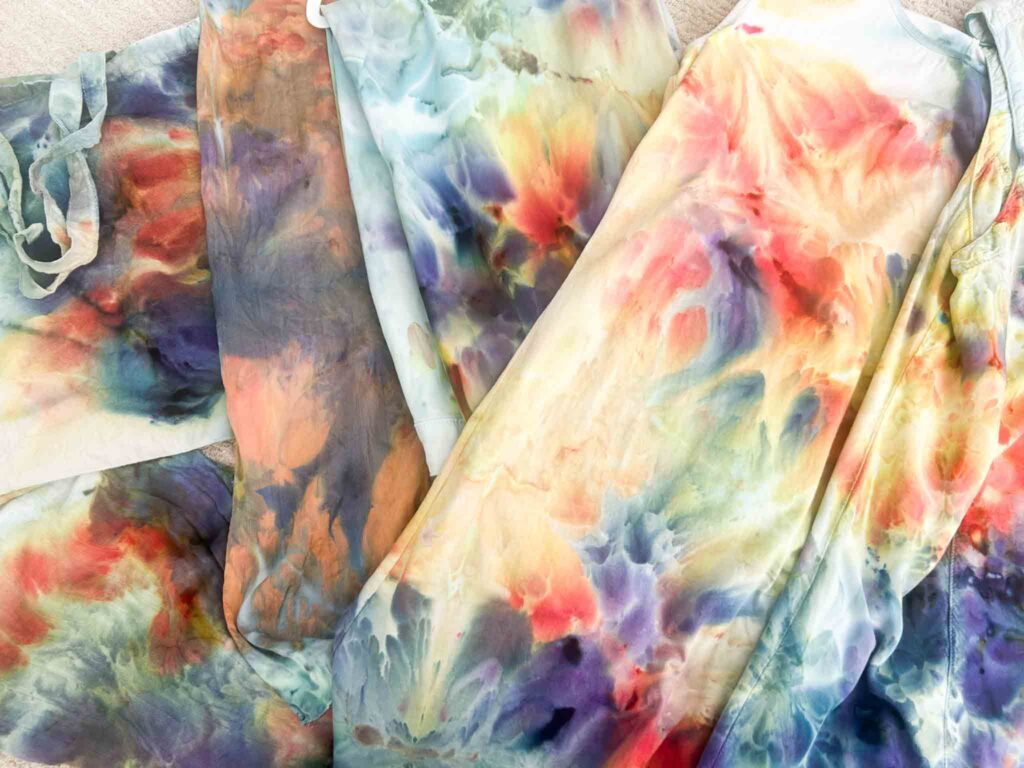
If you’ve ever wondered what fabrics you can tie dye, you’re not alone. Most people know that cotton works beautifully, but what about rayon? Silk? Bamboo? Canvas? Denim? I decided to put six different fabrics to the test using the exact same dye colors and exact same folding method so we can finally see how each one performs side by side.
For this experiment, I used two Dharma Trading Co. colors that split beautifully: Phoenix Flame (an orange that splits yellow/green) and Avalon (a blue that splits purple). These colors together give a wide range of tones that make fabric differences easier to see.
Prefer to watch this experiment? Here’s the video!
Why Test Multiple Fabrics?
Tie dyeing isn’t just about color — it’s about how the fabric absorbs water, how the fibers react to splits, and how the folds allow (or don’t allow) dye to move. Using one consistent process lets you clearly see which fabrics:
- Take color vibrantly
- Allow beautiful gravity flow
- Become muddy or muted
- Rinse out easily (or… not)
This experiment shows real results from real fabrics, not theoretical charts. Let’s get into it!
The Setup: Same Fold, Same Colors, Same Conditions
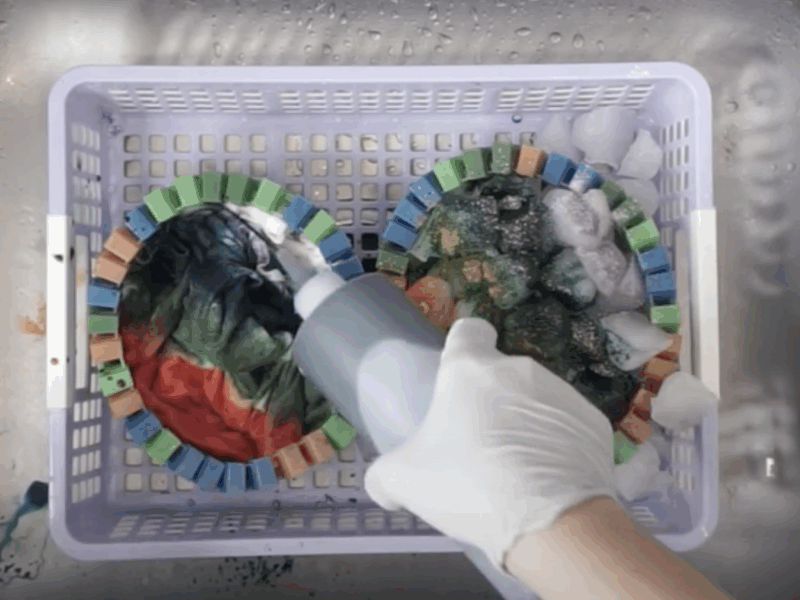
I used the tall deep scrunch gravity method (originally created by Corki Lorenz — she’s amazing). This fold uses fleece underneath the fabric to create deeper peaks and valleys, which gives super dramatic flow.

- Fleece underlay for deep scrunch movement
- Magic Tracks to hold the scrunch in place
- A silverware organizer for drainage
- A slight incline to encourage gravity flow
- Full ice coverage before dyeing
Every fabric was dyed this same way so we could make a true 1:1 comparison.
The Fabrics I Tested
Results: What Fabrics Can You Tie Dye?
Rayon
Verdict: AMAZING. Bright, vibrant, saturated color with gorgeous flow. Rinsed out easily in just a few minutes. Rayon might be my new favorite fiber for ice/flow techniques.
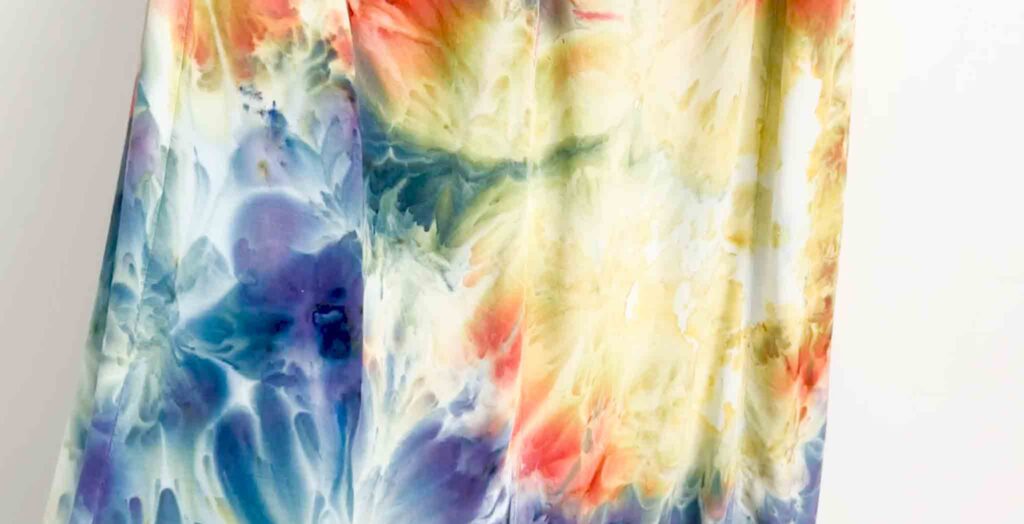
Cotton Jersey
Verdict: Very Good. Slightly less vibrant than rayon but still beautiful. Rinse-out was longer than rayon, but the final look was almost identical. Great choice for beginners.

Denim
Verdict: Surprisingly Good. This denim behaved more like heavy cotton. It gave flow and held color well. Not a dramatic fabric, but still very pretty.

Silk
Verdict: Wildly Different. Silk absorbed almost all dye and became much darker than every other fabric. The flow was soft and muted. The rinse-out was the easiest of all—nearly no bleeding. Beautiful, but unpredictable.

Canvas
Verdict: Good but Deep. Because this was an off-white canvas, the colors came out darker than on white fabrics. It didn’t take gravity flow as dramatically, but still produced a pretty pattern.

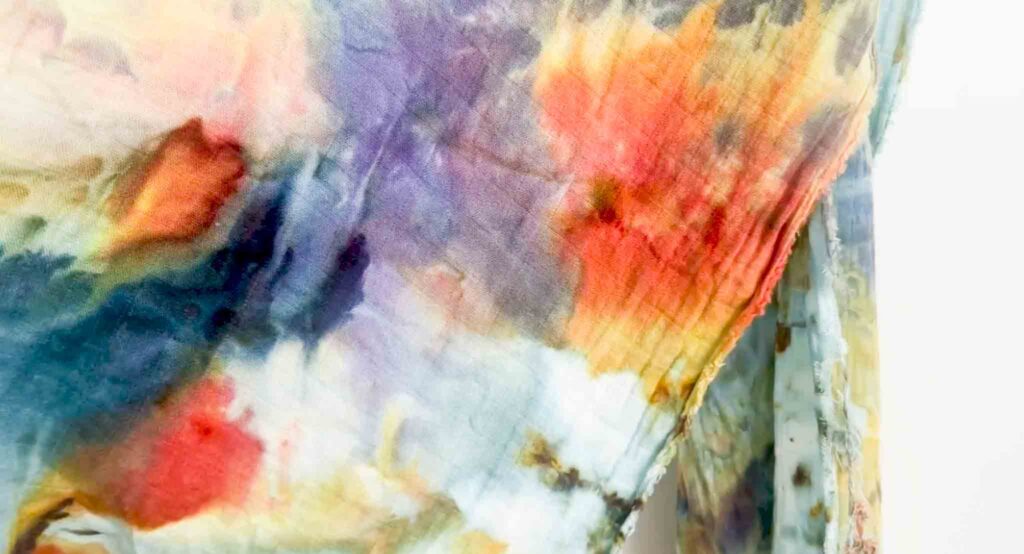
Bamboo Gauze
Verdict: Gorgeous Saturation, Minimal Flow. Bamboo didn’t behave like cotton at all in gravity dyeing. It absorbed dye well but didn’t let it move. If you want crisp flow lines, this isn’t the fabric. If you want dreamy watercolor softness, this is your girl.
Side-by-Side Comparison
Here’s a quick summary of how each fabric reacted in this test:
- Rayon: Brightest color, best flow
- Cotton Jersey: Safe and reliable, great results
- Denim: Works better than expected
- Silk: Dark, dramatic, unpredictable but beautiful
- Canvas: Deep tones, subtle flow
- Bamboo: Saturated color, very little flow
So… What Fabrics Can You Tie Dye?
The short answer: You can tie dye almost any natural fiber. But the results will vary dramatically depending on the fabric type.
If you want bold color and dramatic gravity movement, rayon and cotton jersey are your best options. For artistic, soft, or experimental pieces, silk and bamboo offer a gorgeous alternative. And yes — even denim and canvas can surprise you.
Want to Learn More Tie Dye Techniques?
Grab my FREE printable guide: 12 Tie Dye Folds — it’s perfect for beginners and gives you tons of pattern inspiration.
And if you want to shop supplies I use, check out my Amazon storefront or browse finished pieces in my Etsy shop.