I tested Rit Color Remover on different types of fabric, dye colors, and even old stains. Below you’ll find step-by-step instructions for both the stovetop and washing machine methods, before and after photos from my tests, and answers to the questions I get most about Rit Color Remover (including whether it works on polyester).
Ever messed up a dye job, or wished you could start fresh with a piece of fabric you no longer love? That’s where Rit Color Remover comes in. In this complete guide (and video) I’ll walk you through exactly how to use it, what fabrics it works on, how long it takes, and the real results you can expect.
What is Rit Color Remover?
Rit Color Remover (sometimes searched as Rit Dye Remover or Rit Colour Remover) is a powdered laundry product designed to strip dye out of fabric. Unlike bleach, it doesn’t break down the fibers themselves. It chemically lifts the dye while leaving the fabric intact, which makes it the go-to product when you want to re-dye something.
People typically use Rit Color Remover for:
- Correcting a dye job that didn’t turn out
- Stripping color from a thrifted piece so you can re-dye it
- Reverse tie dye projects (without the fiber damage of bleach)
- Lightening a piece that’s too bold
- Removing dye that bled onto another garment in the wash
It comes as a powder in a small 2 oz packet (one packet treats up to 3 pounds of fabric or about 3 to 4 shirts). It’s widely available at Walmart, Target, Joann, and Amazon for under $4.
What You’ll Need
- Rit Color Remover (1 packet per 3 pounds of fabric)
- A natural fiber fabric item (100% cotton, linen, rayon, or silk)
- A stainless steel pot large enough to fully submerge your fabric (don’t use a pot you’ll cook with again)
- Tongs or a wooden spoon for stirring
- A stove with a vent or a well-ventilated room
- Nitrile gloves
Find all my favorite tie dye and color removal supplies on my Amazon storefront and Walmart storefront.
How to Use Rit Color Remover: Stovetop Method (Step-by-Step)
The stovetop method gives you the most control and the best results. It’s what I always recommend if you want to actually strip the color rather than just fade it.
- Prepare your garment. Start with a clean, dry fabric item. Make sure it’s free from any oily stains or residues.
- Boil water. Fill your stainless steel pot with enough water to fully submerge your fabric. For one shirt, about 3 quarts is plenty. Bring it to a rolling boil.
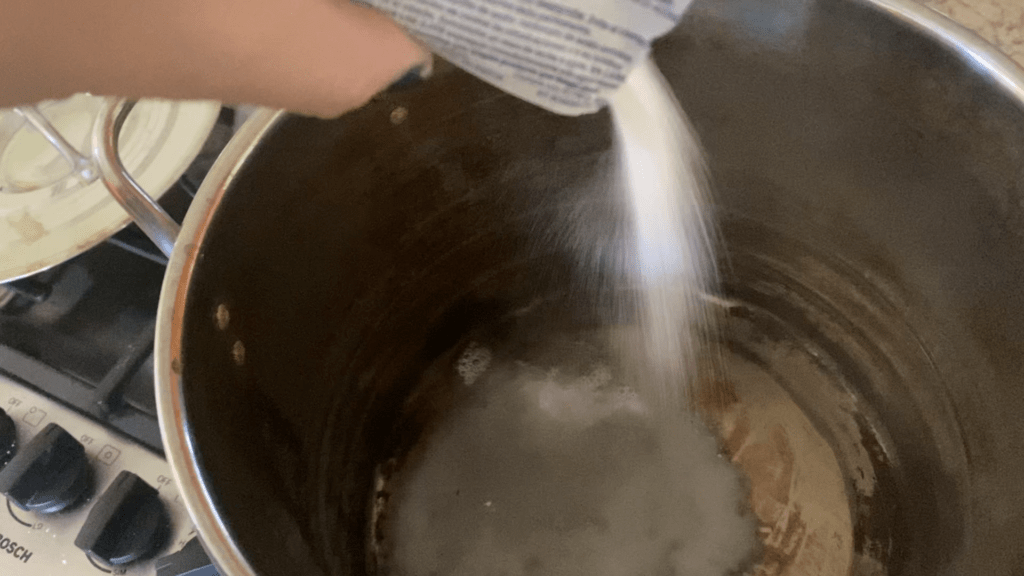
- Dissolve the Rit Color Remover. Add the powder to the boiling water and stir until fully dissolved. You’ll see the water turn slightly milky.
- Add the fabric. Submerge the garment fully, pushing it down with your tongs so the entire piece is in contact with the solution.
- Stir and agitate. Gently move the fabric around every minute or two so the remover lifts color evenly. Keep the water at a low boil or strong simmer.
- Watch for the color to lift. You’ll see the dye start to tint the water. Check the fabric every few minutes. When it reaches the color you want, you’re done.
- Rinse and wash. Remove the fabric with tongs, rinse in cold water until the water runs clear, then wash with regular detergent right away. This prevents lifted dye from resettling.
Heads up: Rit Color Remover smells strongly of sulfur as it works. Turn on your stove vent or open a window. The smell does not stick to the fabric after washing, but it lingers in your kitchen for a couple of hours if you don’t ventilate.
How to Use Rit Color Remover in the Washing Machine
If you don’t want to deal with the stovetop (or you have a larger item like a hoodie or sheet), the washing machine method works. It’s less aggressive than stovetop, so expect more fading than full color removal.
-
- Set your washer to the hottest water setting. Hot water is non-negotiable. Color remover needs heat to activate.
- Start filling the washer. Once the water starts coming in, add the full packet of Rit Color Remover directly to the water (not to the detergent dispenser).
- Wait for it to dissolve. Let the water finish filling and the remover fully dissolve before adding fabric.
- Add your fabric. Submerge the garment in the water.
- Run a full hot wash cycle. Don’t add detergent.
- Wash again immediately with detergent. Run a second hot wash with regular detergent to rinse out the remover and any loose dye.
The washing machine method is convenient for bulk items, but the stovetop method strips color more thoroughly. If your goal is to fully prep a piece for re-dyeing, use the stovetop.
Rit Color Remover Before and After
Here’s exactly what Rit Color Remover can (and can’t) do on different colors and fabric types. These are real before and after photos from my own testing.
Bright colors (purple, orange, red)
These came out the most dramatically changed. A dark purple shirt and a bright orange towel both lifted to a soft tan color, almost like they’d been stripped to the original fiber. If your goal is to lighten or re-dye a bright piece, expect great results.
Black and dark navy
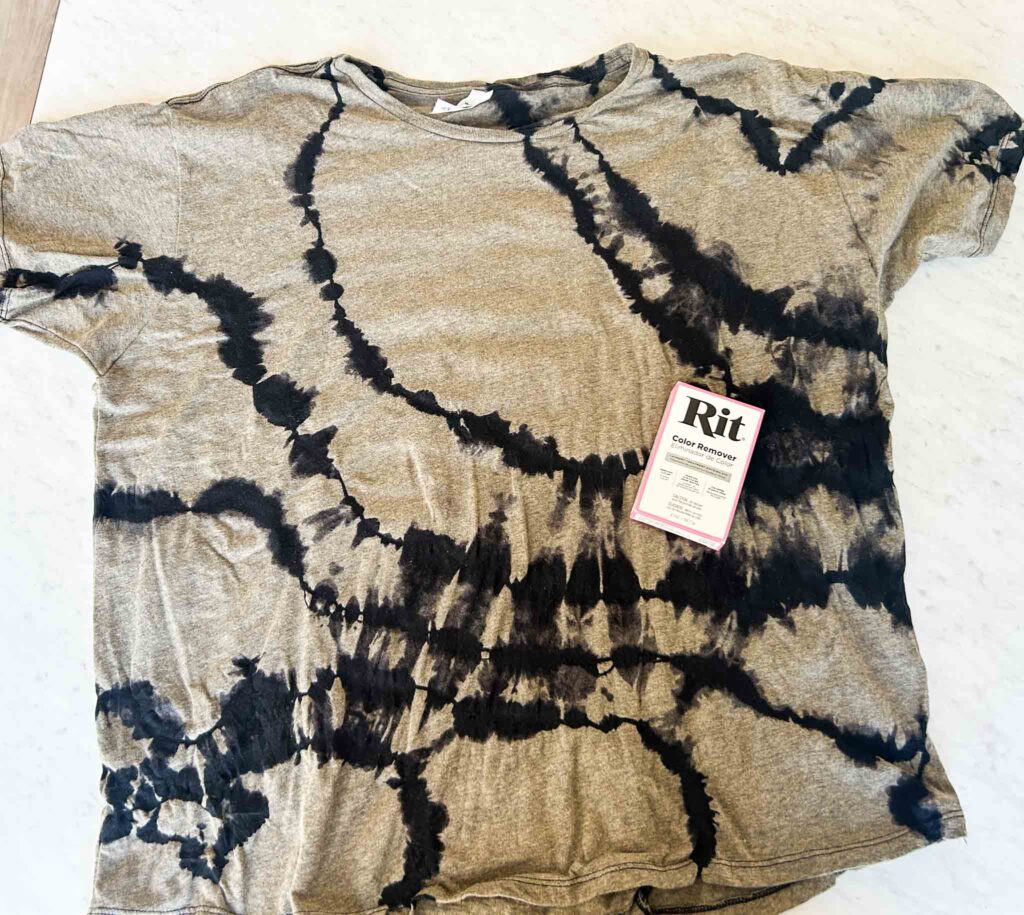
Black is the hardest color to remove from cotton. In my test, the black sections of the shirt did fade noticeably (especially when dry), but they did not return to white. Expect black to lift to a faded gray or muted shade, not back to the original fabric color.
Tie dye bleed-through
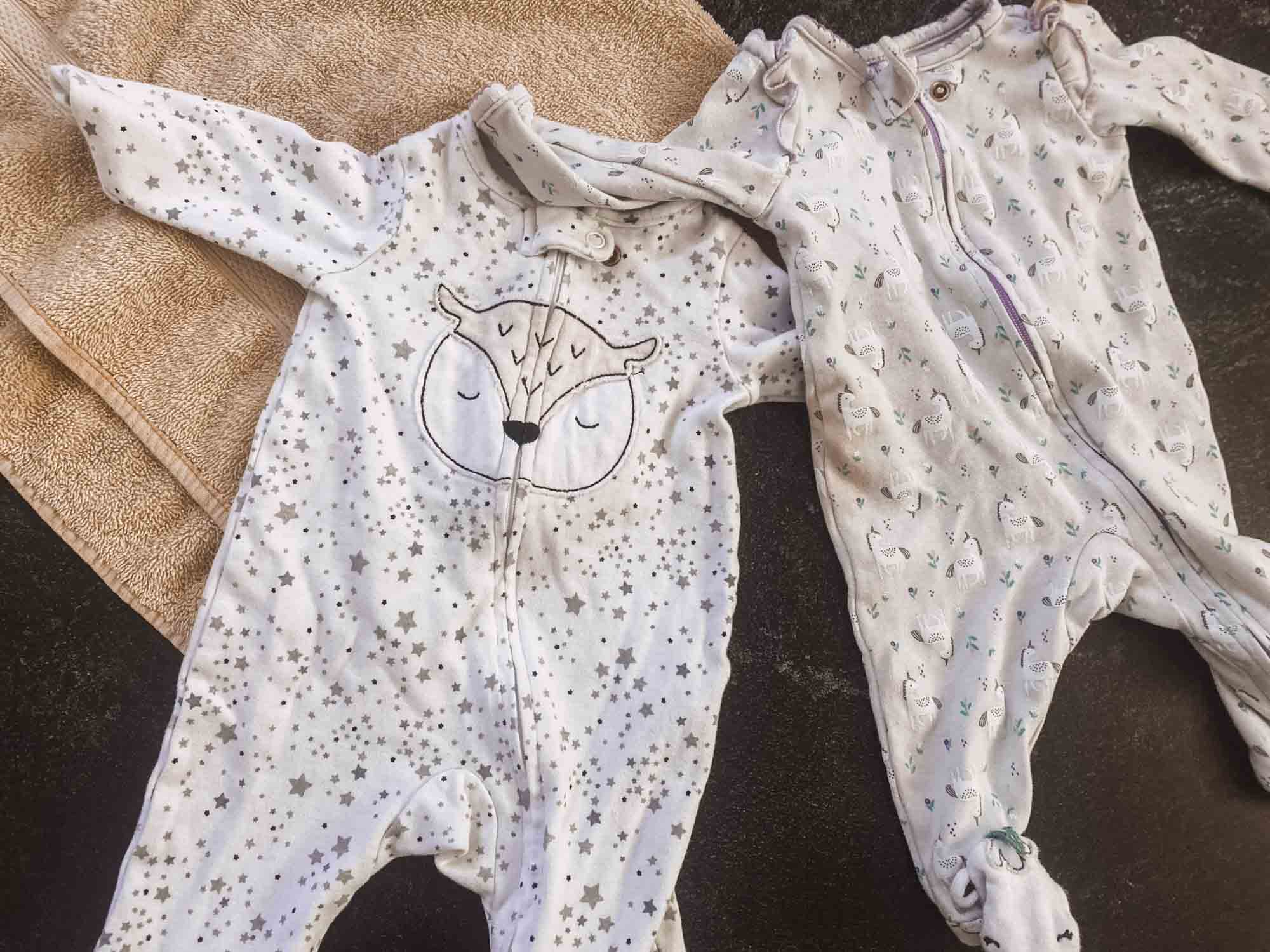
I once accidentally washed a baby sleeper with some ice dye and ended up with teal blotches all over it. Rit Color Remover stripped the bleed-through completely. This is one of the best use cases.
Polyester thread on hems
Worth flagging: most cotton clothing is hemmed with polyester thread. Even when the body of the garment lifts beautifully, the hem stitching will stay its original color. It’s a small detail, but visible up close.
What Fabrics Does Rit Color Remover Work On?
Rit Color Remover works on natural fibers. Here’s the full breakdown:
-
- Cotton: Excellent. The best fabric for color removal.
-
- Linen: Excellent. Works the same as cotton.
-
- Rayon (viscose): Good. Lifts color well.
-
- Silk: Works, but use gentler heat. Silk is more delicate.
-
- Wool: Works, but again, be gentle to avoid felting.
-
- Polyester: Does not work. See below.
-
- Polyester blends (50/50 cotton-poly): Partial. The cotton fibers will lift, but the polyester fibers stay the original color, leaving a heathered effect.
-
- Spandex/elastane: Does not work. Even in small amounts (like 5% spandex in a stretchy tee), expect uneven results.
Always check the tag before you start. If you see anything other than 100% cotton, linen, rayon, silk, or wool, the results will be mixed.
Does Rit Color Remover Work on Polyester?
No. I’ve tested it on multiple polyester items and the color does not lift. Rit Color Remover works by breaking the chemical bond between dye and natural fibers. Polyester uses a completely different type of dye (disperse dye) that’s heat-set into the synthetic fiber, and Rit Color Remover can’t break that bond.
This applies to:
-
- 100% polyester garments
-
- Athletic and performance fabrics (almost always polyester or polyester blends)
-
- Most “moisture-wicking” or “quick-dry” fabrics
-
- Fleece (most fleece is polyester, even when it doesn’t look like it)
If you really need to remove color from polyester, your only real option is a product called iDye Poly Color Remover, which is formulated specifically for synthetic fibers. It’s a separate process from Rit Color Remover and uses different chemistry.
How Long Does Rit Color Remover Take?
Most projects take 10 to 30 minutes on the stovetop. Here’s what to expect by color:
-
- Light or pastel colors: 5 to 10 minutes
-
- Reds, oranges, yellows, pinks: 10 to 20 minutes
-
- Greens, purples: 15 to 25 minutes
-
- Blues and turquoises: 25 to 40 minutes (these are stubborn)
-
- Blacks and dark navies: 30 to 45 minutes (may never fully strip)
If the color isn’t lifting after 45 minutes of active stovetop time, more time won’t help. You’ve hit the limit of what Rit Color Remover can do on that particular dye. At that point your options are to accept the lighter version, or move to bleach (which will damage the fibers but lift more color).
Tips for Best Results
-
- Start with dry fabric when possible. It helps the remover penetrate more evenly.
-
- Use the hottest water you can. Boiling water on the stovetop, hottest cycle in the washer.
-
- Stir frequently on the stovetop to keep the fabric exposed to fresh remover.
-
- Wash immediately after to prevent any loose dye from resettling.
-
- Ventilate. The sulfur smell is harmless but strong.
-
- Don’t reuse cookware. Use a dedicated dye pot.
Rit Color Remover vs Jacquard Color Remover
Wondering whether to grab Rit or Jacquard? I tested both side by side and the results were practically identical. The differences come down to availability and price, not performance.
See my full Rit vs Jacquard Color Remover comparison for the detailed test.
Rit Color Remover FAQs
Yes, on natural fibers. In my testing, Rit Color Remover effectively lifted reds, oranges, yellows, and most purples within 10 to 20 minutes. Blues and blacks are harder to fully strip but still fade noticeably. The key factors are using boiling water, giving it enough time, and starting with a natural fiber fabric like cotton or rayon.
Boil water in a stainless steel pot, dissolve the color remover powder in the water, then add your fabric. Stir occasionally and keep the water at a low boil until the color reaches the lightness you want. Rinse in cold water and wash immediately with detergent. The washing machine method works too: add the full packet to a hot water cycle with no detergent, then wash again with detergent.
No. Polyester uses a different type of dye (disperse dye) that’s heat-set into the synthetic fiber, and Rit Color Remover can’t break that bond. If you need to remove color from polyester, look for iDye Poly Color Remover, which is formulated for synthetics.
Anywhere from 5 to 45 minutes depending on the color. Pastels lift in about 5 minutes. Brights like red, orange, and pink lift in 10 to 20 minutes. Blues and blacks can take 30 to 45 minutes and may never fully strip.
In my testing, Rit Color Remover and Jacquard Color Remover perform identically. Both are excellent on natural fibers and equally affordable. If you can’t find either, OUT! White Brite (available at grocery stores) is a decent alternative.
No. Bleach has already removed the dye and damaged the fibers, so color remover has nothing to work on. Once a fabric is bleach-stained, the only fix is to dye over the stain or accept the bleach mark as part of the design.
Yes. It has a strong sulfur smell while you’re using it. Turn on your stove vent or open a window. The smell does not stick to the fabric after washing, but it lingers in your kitchen for a couple of hours if you don’t ventilate.
Related Posts
Once you’ve stripped a piece, you’re ready to re-dye it. Grab my free guide with 12 of my go-to tie dye folds to get started: 12 Favorite Tie Dye Folds.
This is amazing! I can’t wait to try it on some of my stuff. I also want to declare that I can get baby poop out of clothes 99% of the time. White onesies can be white again. I rinse the yellow out, put the clothes in VERY hot water and put oxi clean powder directly on the stain. Let it soak for a couple of hours and then wash. Usually it’s gone after I do that! If the stain is still there, repeat.