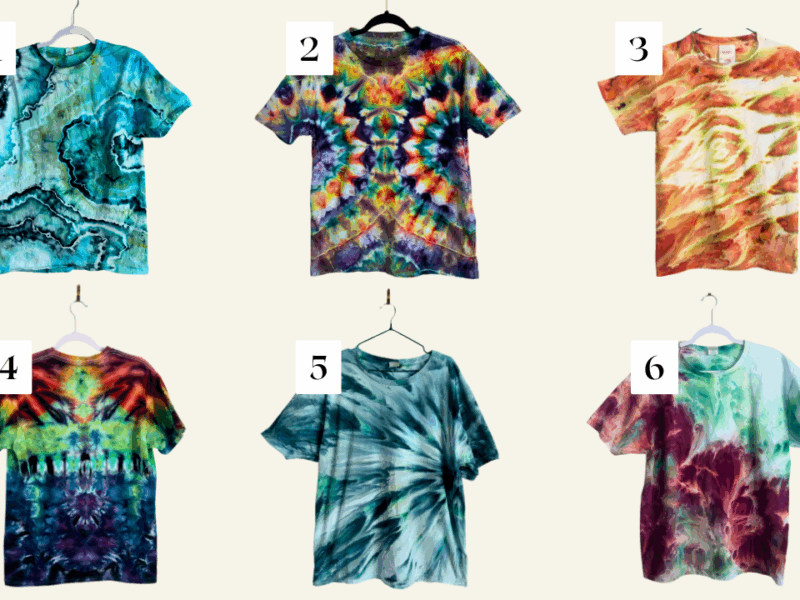
Wondering if the Panda Spin Dryer actually makes your tie-dye colors more vibrant? I tested it side by side with a regular hand-wrung damp shirt to see if it makes a difference in the final results. Here’s my honest Panda Spin Dryer review — from a tie-dye artist who does this every single week.
Why I Tested the Panda Spin Dryer
I go live every Saturday, and for months one of my viewers has told me, “Your fabric is really damp. If it were drier, your colors would be more vibrant.”
So I bought the popular Panda Spin Dryer to see whether it actually helps brighten colors by removing more moisture before dyeing. The idea is that a less-damp shirt should allow the dye to travel farther and split more beautifully.
But… does it?
How I Set Up the Test
To keep things fair, I did a true side-by-side experiment:
- Project: two identical geode tie-dye shirts
- Folding method: same sinew pull, same number of wraps
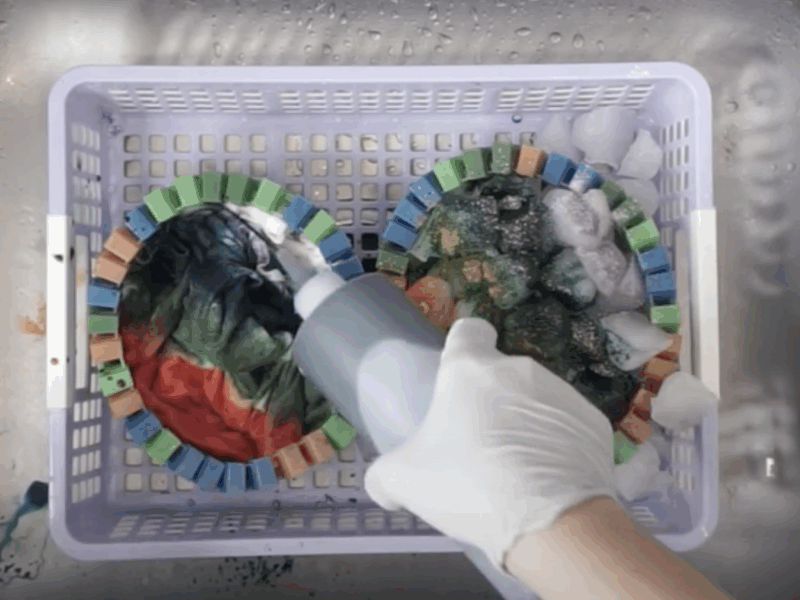
- Colors used: Merry Gold, Crimson Carnage, and Bog Goblin
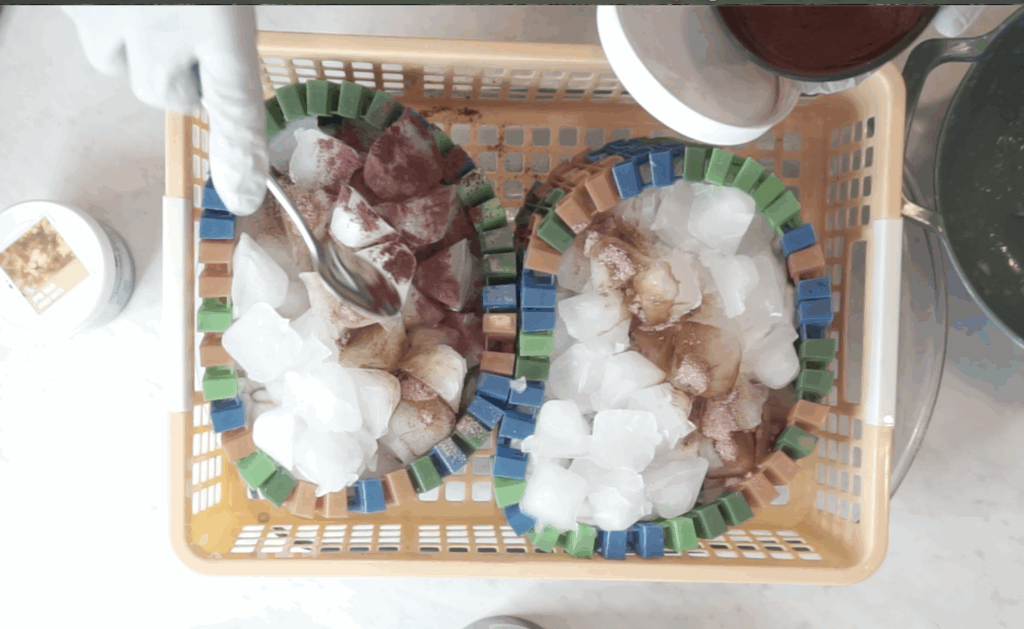
- Method: dye over ice on both
- Only variable: fabric moisture level
One shirt was hand-wrung damp, and one was run through the Panda Spin Dryer. I applied the dye the exact same way on both pieces so I could see whether less moisture would help the color travel differently.


Folding Differences: Did the Dampness Matter?
I expected the spin-dried shirt to feel easier to work with and less slippery — and honestly, it wasn’t that different.
The only time I noticed a small difference was during the sinew tying. Damp, soda-ash-soaked fabric is always a little slippery, but since I wear gloves, the spin-dried shirt didn’t feel significantly easier to handle.
If you struggle with grip while tying, a spin dryer might help slightly… but it’s not a game-changer.

Applying the Dye
I used the same dye placement on both pieces:
- Merigold in the center
- Crimson Carnage around it (similar to Dances With Raisins if you don’t have the special edition color)
- Bog Goblin on the outer areas (a beautiful deep green)
I expected the spin-dried shirt to pull the dye farther through the fabric since it had less moisture… but I was wrong.
Did the Dye Travel Differently?
This was the biggest surprise of the whole experiment.
When I flipped both pieces over after batching, the dye had traveled the exact same distance. The moisture level did not change how far the color pulled through the shirt.

Rinse-Out Time
Both shirts took the same amount of time to rinse out — which makes sense since they:
- used the same colors,
- sat for the same batching time, and
- were the same fabric.
No speed difference here either.

Final Results: Do They Look Different?
Here’s the moment of truth: Do the shirts look different?
Nope. They look almost identical. If I didn’t mark them during folding, I wouldn’t even know which was which.
The shirt on the left is the spin dried shirt, and the shirt on the right was hand wrung. If anything, the hand wrung one looks a bit brighter.
So… Is the Panda Spin Dryer Worth It for Tie Dye?
Here’s my honest answer:
- If you want brighter colors: The spin dryer will NOT make a noticeable difference.
- If you dye a lot and want to save your hands: YES — it’s absolutely worth it.
- If your fabric feels too slippery while tying: The spin dryer may help slightly.
- If you’re hoping for better color travel: You won’t see a difference.
So overall, I do recommend it — but not for color reasons. I recommend it for comfort, convenience, and reducing hand strain. The final results will look the same either way.
Related Tie-Dye Tutorials
- Sinew vs Rubber Bands for Tie Dye
- How to Tie Dye With Black
- One Color Tie Dye Projects That Still Look Amazing
And if you’re new to tie dye, don’t forget to grab my free printable with 12 tie-dye folds — it’s the perfect quick reference for your next project!
Want to come back to this? Pin it for later!