Think you need five different dyes to make something stunning? Think again. In this post, I’m sharing one color tie dye projects that are anything but boring. These are perfect for beginners, quick projects, or when you’re low on dye but still want big impact. And spoiler alert: some of these split into multiple colors all on their own.
Never ice dyed before? Here are some ice dyeing techniques. I also have some of the top tie dye FAQs laid out for you here.
Whether you’re fixing a stained shirt or testing out a new Dharma favorite like Warrior Princess or Avalon, these one-color wonders might just become your go-to.

What Is One Color Tie Dye?
One color tie dye is exactly what it sounds like: using just a single dye powder to create a full piece. But here’s the magic — many Dharma Trading Co. dyes are splitters, meaning they naturally break apart into multiple hues when used with ice dye techniques.
So even if you’re using “one color,” the results can look layered, complex, and full of movement. That makes this technique ideal for:
- Beginners who feel overwhelmed by color combos
- Quick, low-prep projects
- Fixing or refreshing stained garments
- Testing out new colors before committing to combos

Before you start, make sure you have the right supplies! I put together a full guide to the Best Tie-Dye Supplies I use for every project — check it out here.
My Favorite One Color Tie Dye Dyes (with Photos & Notes!)
Eggplant – Deep Purple Stain Fixer
I used Eggplant to overdye a shirt that had visible stains, and it worked so well. It’s a rich, moody purple that covers imperfections beautifully. This one doesn’t split much, so it gives a more even look — perfect for full coverage.

Warrior Princess – Pink, Green & Blue Splits
This is hands down one of my favorite Dharma colors. It’s technically “one color,” but always splits into a rainbowy mix of pink, green, purple, blue and even sometimes gold. The results vary depending on how heavily you apply the dye and whether your fabric is damp or dry and what fabric you’re using.

Mindbender – Purple & Blue Swirls
Mindbender delivers bold, electric results with a magical mix of blue and purple. I’ve used this for both towels and shirts, and it always looks dramatic and layered. Works beautifully on cotton or bamboo. This is the only one on my list that isn’t Dharma. It’s from Dyespin! I can’t vouch for their other colors but I can say this one is well worth it.

Interstellar – True Purple with a Pink Backstain
Interstellar is technically a splitting dye, but I find it gives a very rich purple tone with hints of pink, especially in the backstain. It’s stunning in geodes and works well with gravity dye techniques — just note that it does leave behind a pink tint.
⚠️ Tip: Avoid if you want crisp white spaces

Avalon – Moody Blue & Purple
Avalon gives me total stormy sky vibes. The split between deep blue and soft purple makes it one of the most versatile one-color tie dye options I’ve tested. I love using this for muck dyeing — the results are always unpredictable (in the best way).
🧊 Best for: Ice dyeing with scrunch or ripple folds

Phoenix Flame
Looking for something vibrant? Phoenix Flame splits into yellow, orange, and a hint of green, making it one of the most cheerful dyes you can use solo. I love this one for summer pieces and kids’ items — it’s like a sunset in dye form. I don’t suggest doing classic scrunch with this one because it can look like an infected wound if it’s done wrong. Ask me how I know.

Mermaid’s Dream – Dreamy Teal
This one doesn’t split as much as others, but it’s a gorgeous deep teal that’s striking on its own. Great if you want bold saturation without much variation. It’s perfect for pairing with airy folds or keeping things simple.

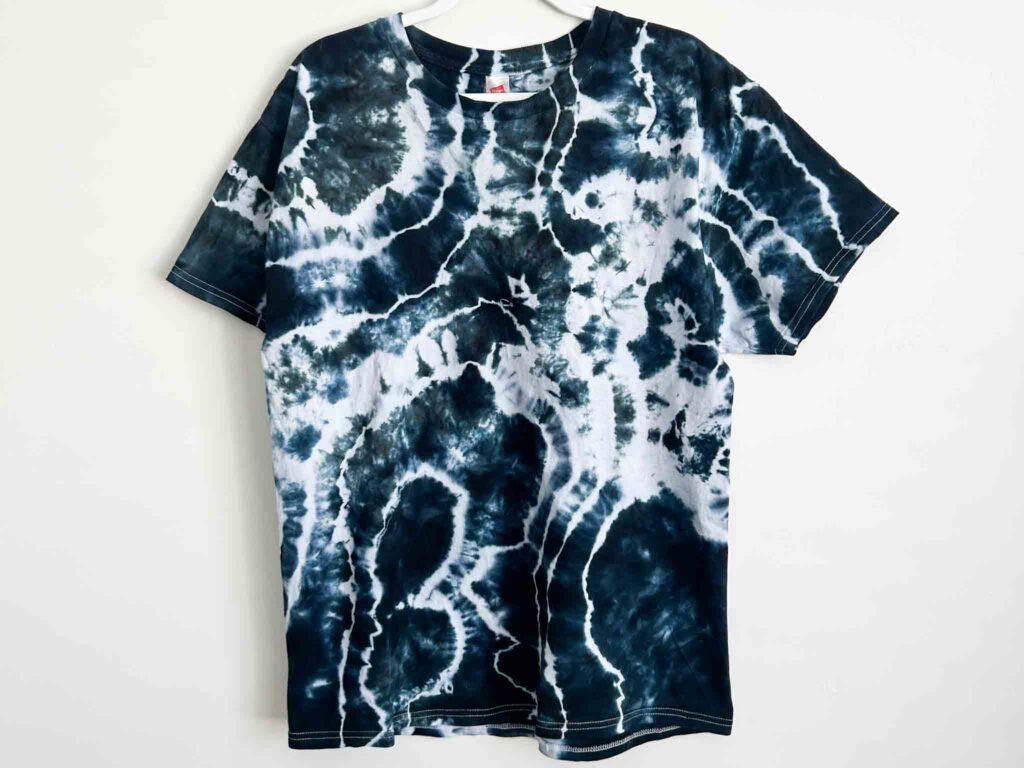
True Black Tie Dye
If you want to try your hand at black, here’s how to get true black tie dye results.
Tips for Success with One Color Tie Dye
- Use less dye than you think – Let the color have room to split and flow.
- Choose the right fold – More folds = more texture and interest.
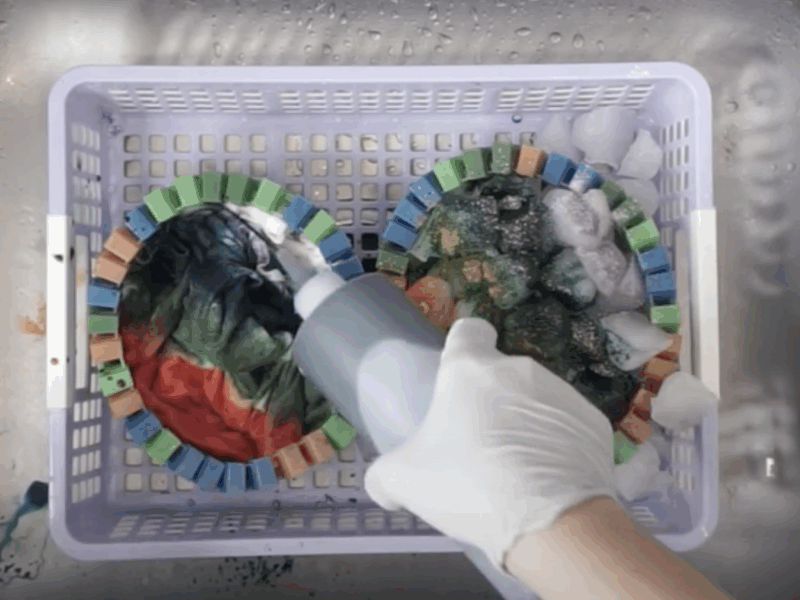
- Try the muck method – Letting your project sit in the runoff can boost the depth.
- Use ice for organic splits – Water tends to dilute split potential.
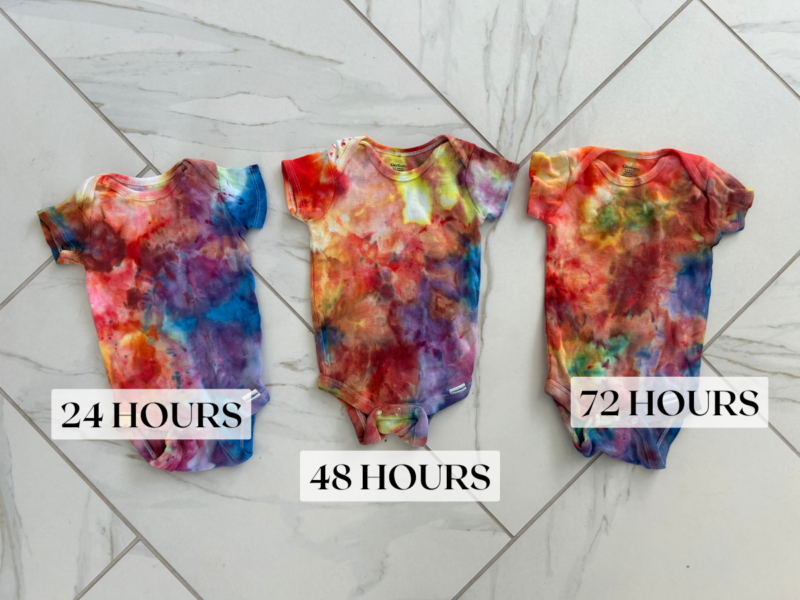
- Don’t rush the batching – Let it sit for at least 24 hours if you want strong splits.
Here are some of the most common tie dye mistakes I’ve seen made if you run into an issue!
Final Thoughts
One color tie dye is simple, satisfying, and incredibly beautiful. You don’t need to overthink your combos or own 20 dyes to create something amazing. Let the dye do the work—and let yourself have fun with the process.
Which color are you going to try first? Let me know in the comments—or tag me in your results! I love seeing what you create.
🔗 More Tie Dye Resources:
📬 FREE eBook – 12 Favorite Tie Dye Folds:
https://practicalandpretty.myflodesk.com/o83j7vh2tg
🛒 Shop My Favorite Supplies on Amazon:
https://www.amazon.com/shop/annamcnamara?ref=ac_inf_tb_vh
🛍️ One-of-a-Kind Tie Dye on Etsy:
https://www.etsy.com/shop/PracticalandprettyUS
Want to come back to this later? Pin it!

Very cool! Can this color-splitting happen even with basic darma colors? I have magenta, primary yellow, turquoise, and hot black. And they are in powder form. Also, I have another question. Have you ever done tie-dye using salts for color texture? Throughout the years when I would get tiedye kits, these salt granules were always included, so I have quite a few bags of salt granules of various sizes, but no directions on how to use them. And I’ve seen the beautiful textures they can create on other clothing. How would you use salts in tie-dye? If you know, could you make a post about this, too? Thanks. 🙂
The hot black will likely split because it’s made up of other colors but those otehrs won’t BUT you are set up to make your own colors because of those base colors you’ve got and if you play around with mixing them I bet you could get amazing splits.
As far as the salt, are you talking about soda ash? Soda ash is to bond the color to the fibers so you can just use that in a soda ash bath but if it really is just salt that’s more a filler to change the texture of your dyes. It’s also used as a filler to dilute dyes. So if you order a really light color from a dye supplier, all the white specs you see there are salt. Hope this helps!
Thanks for replying. Cool! I’m excited to try my colors and see what happens! The salts I was talking about is something different than soda ash, which I also have and know how to use from past tie-dye projects. But these other salts came with past tie-dye kits, mostly from Tulip Dye kits. And they are like granules, some are small, and others are larger, and the kits called them “salts”, but never explained how to use them. I know from seeing professional tie-dye, that these were used on some of it to give a “bubbly” look to it. I would love to be able to use these salts and create this same look to some of my projects.
Very interesting I’ve never seen that! I have seen more bubbly looking powders that are urea which you add to liquid dyes to make your project not dry out as fast. But I’ve never heard of a bubbly look unless someone made bubbles out of dye which is also cool!