Want the bold look of reverse tie dye without the yellowish stains bleach leaves behind? Out White Brite is the secret weapon tie dyers are raving about. In this tutorial, I’ll walk you through exactly how to use White Brite to strip color from fabric, create crisp white patterns, and get results that are cleaner and brighter than bleach.
White Brite is really pretty simple to use if you know what you’re doing ahead of time. Here you’ll find all the details of how to get a successful attempt even on your first try.
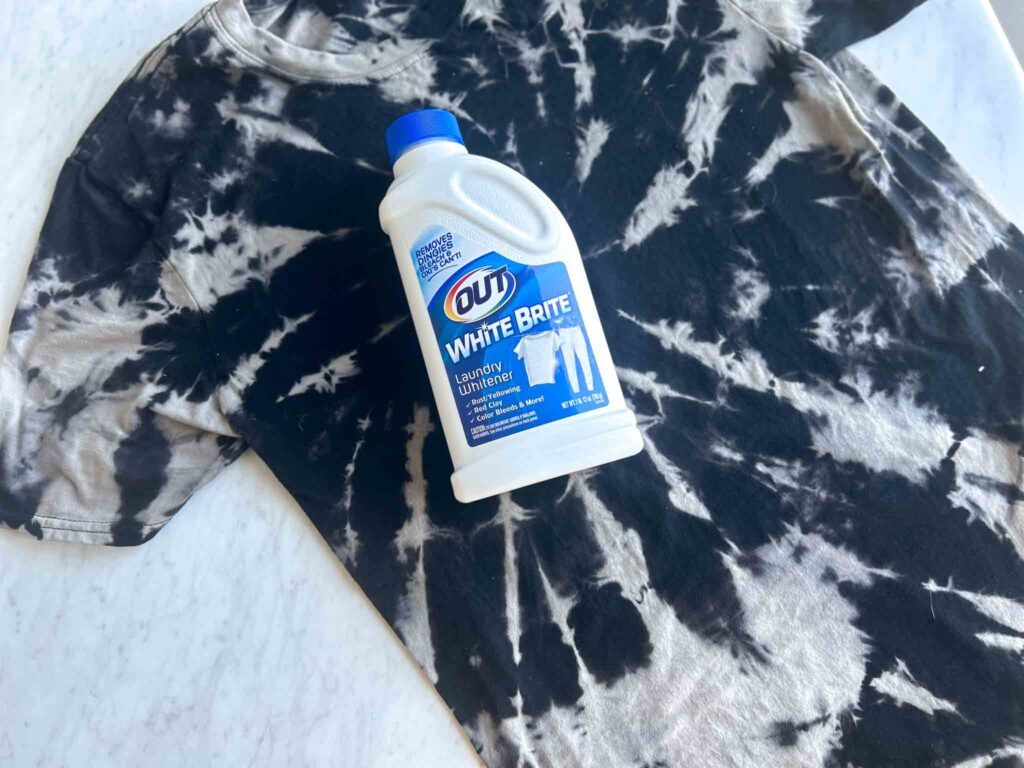
What is White Brite?
White Brite is technically a laundry whitener — it’s designed to remove dinginess, rust, yellowing, and dye transfer from clothes. But here’s the fun part: it also pulls out fabric dye, which makes it perfect for reverse tie dye projects.
Unlike bleach (which often leaves orange or yellow tones), White Brite creates a bright white or gray effect. That makes it a great option if you want a crisp, gemstone-like look without the warm bleach undertones.
👉 I used Out White Brite for this tutorial — grab a bottle if you want to try this method at home.
Reverse Tie Dyeing 101
Reverse tie dyeing is the opposite of traditional tie dye. Instead of adding color, you remove it to create contrast patterns on your shirt or fabric.
Most people use bleach for this, but as I mentioned, bleach tends to leave a yellow cast. White Brite gives you a whiter, cleaner result.
If you’re curious about bleach methods, check out my tutorial on how to reverse tie dye with bleach crystals. Or if you’re into creative patterns, here’s my guide to painting with bleach using a stencil — I even compared bleach to White Brite side-by-side.
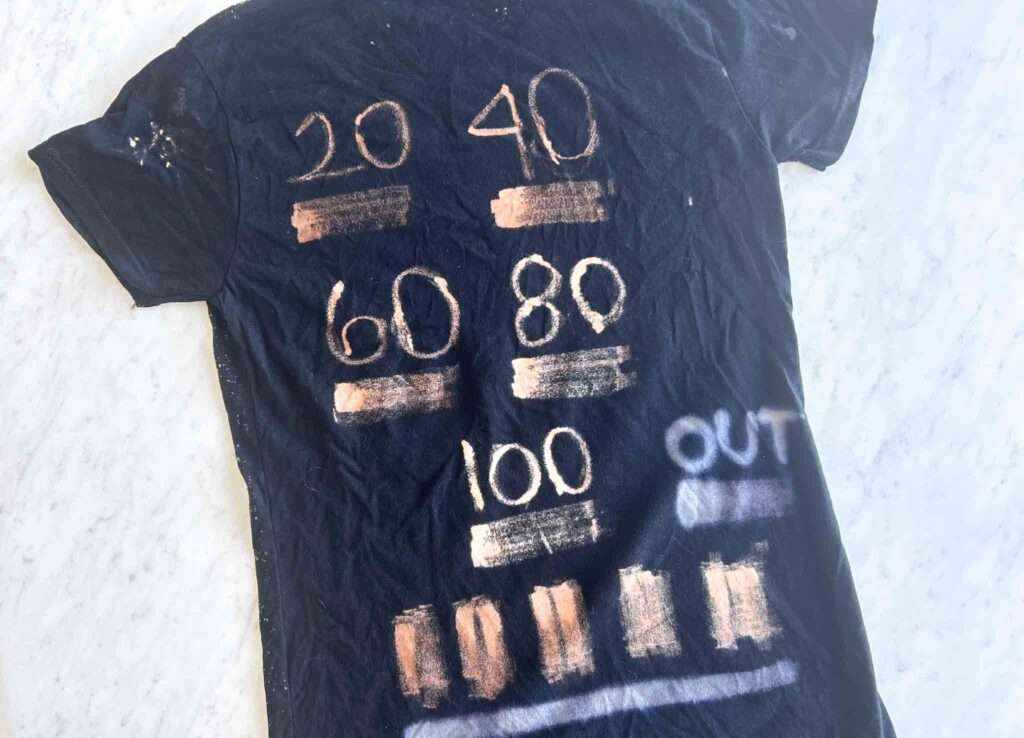
Bleach VS OWB Breakdown
For a full comparison check out my post on White brite vs bleach.
| Feature | Bleach | White Brite |
|---|---|---|
| Resulting Color | Yellow/Orange | Crisp White/Gray |
| Odor | Strong chlorine smell | Strong sulfur smell |
| Fabric Damage Risk | Higher | Lower |
| Best For | Distressed look | Clean, high-contrast designs |
Tools for OWB Reverse Dyeing
- Item to reverse dye (100% cotton preferred. If your material is mostly polyester or another synthetic material such as spandex, white brite will have no effect.)
- Out White Bright
- Pot or Bucket
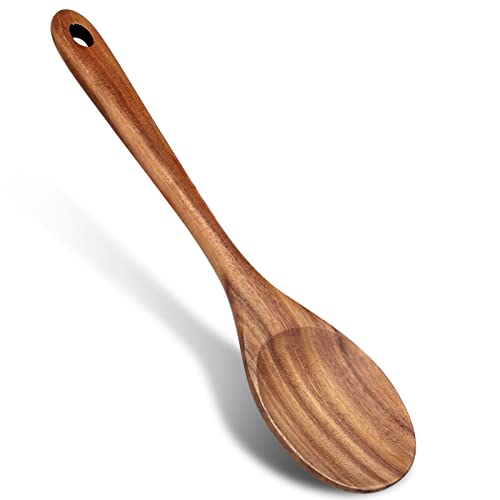
- Stirring spoon
How to Reverse Tie Dye with White Brite
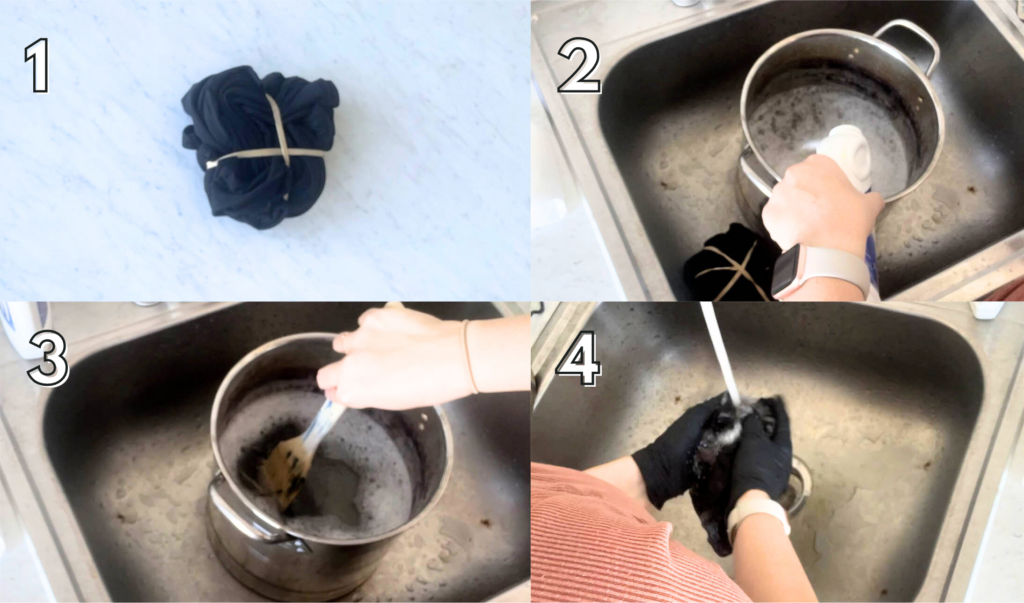
- Prep your fabric
Wet your shirt (or whatever you’re dyeing) and wring it out. Damp fabric helps create sharper lines. - Mix your bath
Fill a bucket or pot with hot water — enough to fully submerge your fabric. - Add White Brite
Stir in White Brite powder. I used about 3 tablespoons for one shirt, but you can adjust depending on fabric size. - Soak your fabric
Place the item in the solution and let it sit for at least 4 hours. Don’t worry if it looks only slightly lighter — it brightens up after rinsing. - Rinse
Rinse the shirt with cold water until it runs clear. - Wash
Run the item through a wash cycle by itself. This sets the effect and removes any leftover product.
🔥 Quick Tips for Reverse Tie Dye with White Brite
• Use 100% cotton for best results (synthetics won’t react).
• Pre-wet your fabric — damp cloth = sharper lines.
• Always wear gloves + mask (the smell is intense!).
• Expect it to look lighter after rinsing — the final wash makes it pop.
Safety Precautions:
This product has a very intense odor and is made of chemicals that can be harmful. Wear a mask or respirator and use in a well-ventilated area.
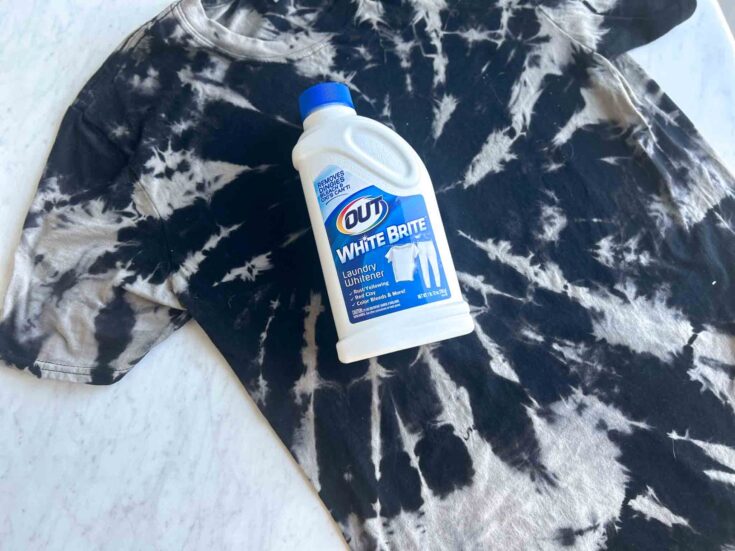
Reverse Dyeing with White Bright
Out White Brite is a fun way to reverse tie-dye. Step-by-step and video instructions on how to get a more white reverse dye effect.
Materials
- White Brite
- 100% cotton dark t shirt or other dark fabric
Tools
- Pot or Bucket
- Stirring spoon
Instructions
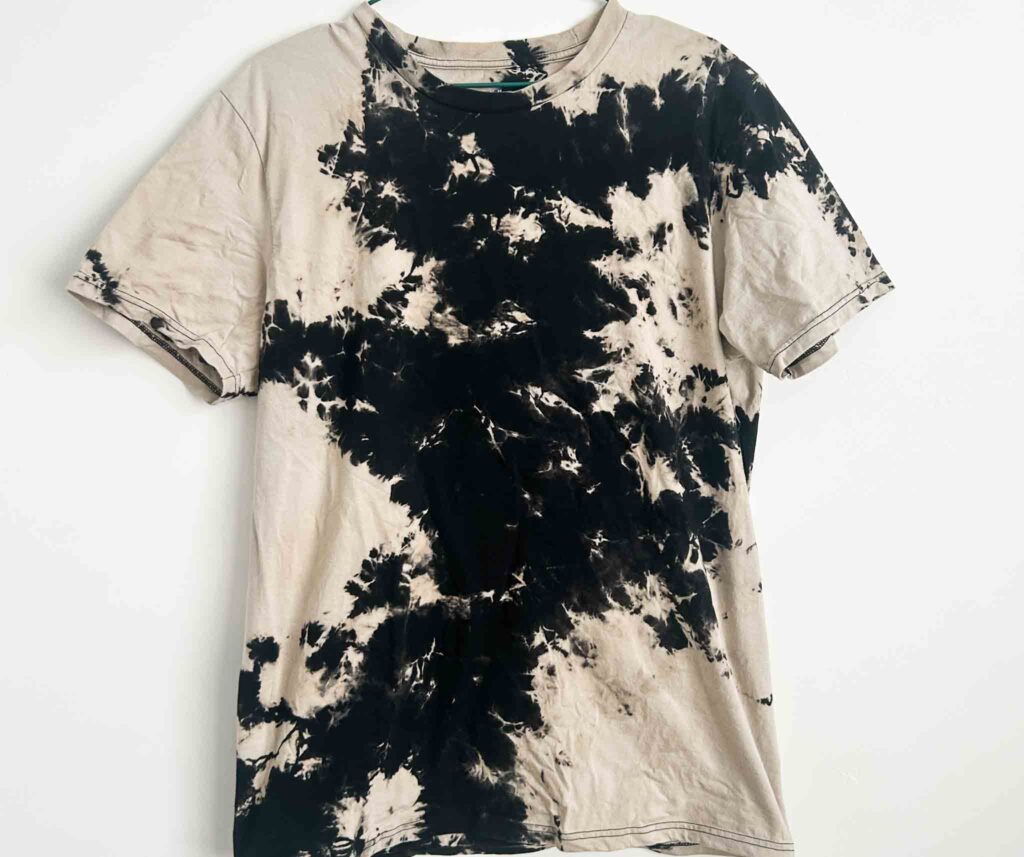
- Wet your fabric and wring it out. Damp fabric will create sharper lines between the white and black.
- Fill a pot or bucket with hot water with enough water to cover the fabric.
- Add the White Bright to the water and stir. I used about 3 tablespoons for my one shirt.
- Allow to sit for 4+ hours.
- After the cloth has sat in the water it may start to turn a bit lighter. It will get much whiter after the rinse!
- Rinse with cold water until water runs clear.
- Run the article of clothing through a wash cycle by itself.
Recommended Products
As an Amazon Associate and member of other affiliate programs, I earn from qualifying purchases.



White Brite FAQs
White Brite does not contain bleach or oxy. It only has three ingredients: sodium metabisulfite, sodium hydrosulfite, and sodium carbonate.
OUT® White Brite® is a multi-purpose laundry whitener designed to remove dinginess, yellowing, rust, and hard water stains, iron-fortified baby formula stains, and red clay and red dirt stains. OUT White Brite also reverses dye stains caused when whites and colors are washed together.
But it doesn’t only remove unwanted stains. It also can pull color out so you can reverse dye with it! That’s why it makes a really fun way to tie-dye.
Out White Brite is a perfect solution to make your shoes look like new again as long as they are a natural fiber. If you’ve got a pair of white Keds, for example, OWB will give them a new life.
OWB is an acronym for Out White Brite. In a lot of tie-dye circles on Facebook groups or in subreddits, you’ll see the acronym ‘owb’. This laundry whitener is what they’re referring to when they say that!
Next Steps
Once your shirt is reversed, you can:
- Leave it as a bold black-and-white design
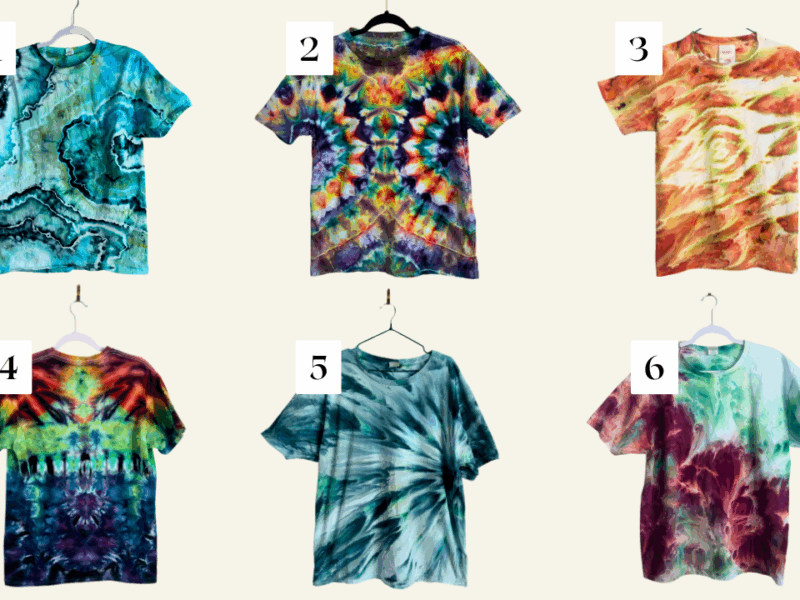
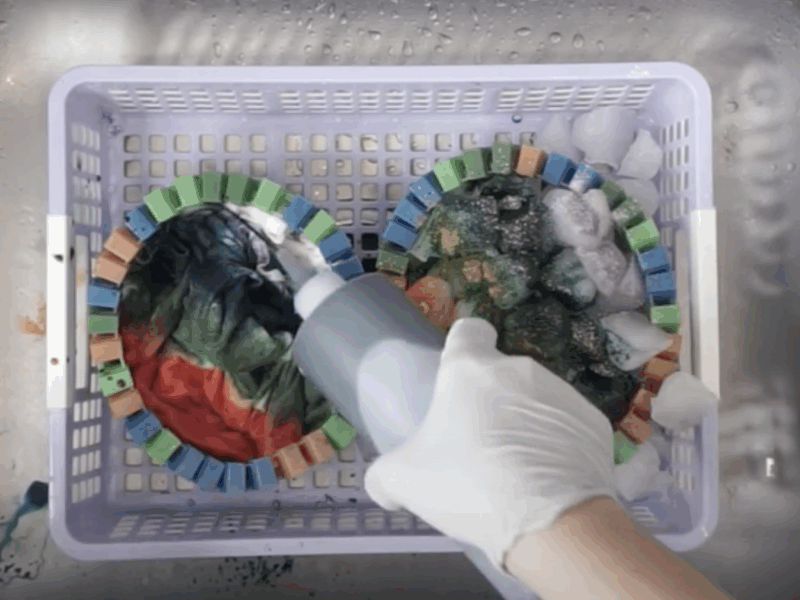
- Over-dye it with bright colors for a layered effect
- Try fun folds! My 5 favorite Shibori folds look amazing with reverse dyeing.
- Check out this post of common tie dye mistakes before you start your next project!
And if you want even more folding ideas, check out my free ebook here!
Pin this for later!

So according to your article this will work on a natural fiber like cotton but not on synthetic fibers. Will this product work on other natural fibers such as silk, or wool which are protein fibers or other cellulose fibers like linen, rayon or bamboo? I only dye natural fibers and would like to use this product on all of them if possible.
Yes it definitely will! And please check back to let me know how it goes! In fact silk, rayon and bamboo have much bolder colors. The dye will flow a bit differently however.