Ever wondered how hot water irrigation vs ice dye methods really differ? In this tutorial I show you side-by-side results using the same colors and fabric såo you can decide which tie dye technique is right for your next project
This project started with two simple white beanies placed in Magic Tracks. One was dyed using the classic ice dye method and the other used the hot water irrigation (also called hot water immersion) technique. Below I break down each step, what I noticed, and the final results.

Supplies You’ll Need
- 100% cotton hats, shirts, or other fabric. The beanies pictured here are from Dharma.
- Procion fiber reactive dyes – I used Sealass, Alchemist, and Power Berry from Dharma
- Soda ash (1 cup per gallon of warm water)
- Magic Tracks or cake molds
- Draining rack
- Rubber gloves and masks for safety
- Ice (for the ice dye sample)
- Pump sprayer and hot water (for the hot water irrigation sample)
To watch this tutorial in video form, click below!
Ice Dye Method
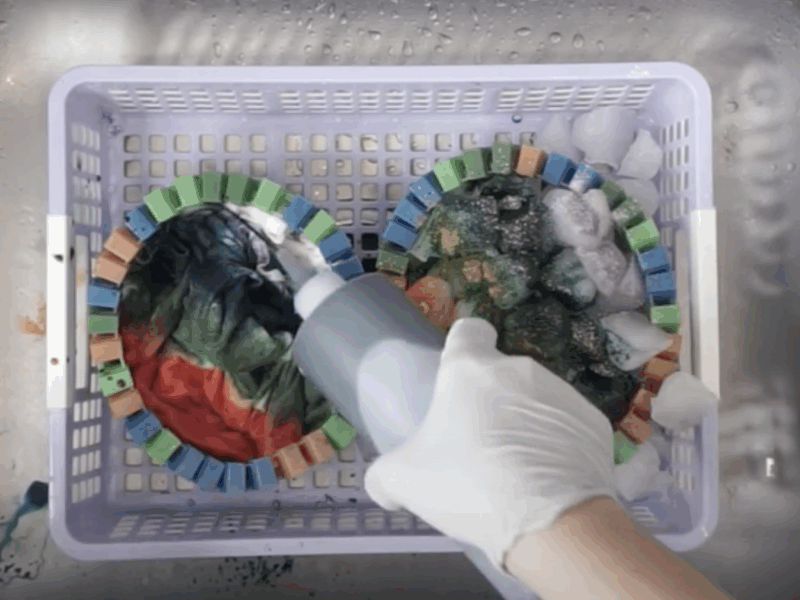
For the ice dye beanie, I wedged the fabric securely in Magic Tracks and sprinkled dye powders directly over the top of the ice. I chose colors known for dramatic color splits, especially Alchemist, to really highlight how ice carries and blends color as it melts. After sprinkling Sealass, Alchemist, and Power Berry, I let the ice melt completely and allowed the project to batch for about 24 hours.

If you keep running into problems with your ice dye, check out these 15 common ice dye mistakes.
Hot Water Irrigation Method
For the second beanie, I applied the same dyes directly to damp fabric. This method requires more dye because it doesn’t spread as much as ice dye. After sprinkling the powders, I used a pump sprayer filled with boiling water to saturate the fabric. Hot water sets the color quickly, but the dye mostly stays where you put it. This can leave more white space unless you add extra dye or let it sit longer than 15 minutes. I kept it to about an hour to compare directly to the ice dye batching time.

Results: Hot Water Irrigation vs Ice Dye
The difference was striking. The ice dye beanie showed softer blends and dramatic color splits with lighter overall saturation because I used less dye. The hot water irrigation beanie was bolder and more speckled, but had more white space and used significantly more dye.
Hot water irrigation is pictured on the left, and ice dye can be found on the right!


- Ice dye pros: amazing color splits, softer blends, uses less dye, easy rinse-out
- Ice dye cons: longer batching time (about 24 hours)
- Hot water irrigation pros: quick setting (about an hour), intense colors, fun speckle effects
- Hot water irrigation cons: requires more dye, can leave more white space unless you adjust timing, longer washout process.
Both techniques create gorgeous, unique results—so the best choice depends on whether you value faster turnaround or more dramatic color variation.
You don’t have to use a ton of colors for a beautiful project. Check out these one color tie dye ideas.
Watch the Full Process
More Tie Dye Ideas
Free printable & supplies:
Grab my free ebook of 12 tie dye folds and shop my favorite supplies:
Amazon storefront: https://www.amazon.com/shop/annamcnamara
Etsy shop: https://www.etsy.com/shop/PracticalandprettyUS
Pin this for later!